Different vegetables take up nutrients in different amounts and at different points in their growth, so the best organic fertilizer for vegetables depends on which crop is in the bed.
Lettuce, cabbage and sweet corn pull heavily on nitrogen.
Tomatoes and peppers need a different balance once they start to flower.
Carrots, beets and beans do worse when you feed them like the rest of the garden.
This guide sorts vegetables into feeding groups and matches each group to organic nitrogen, phosphorus and potassium sources.
It covers timing, soil testing, and the arithmetic commercial growers use to price a bed.
If you also grow roses, bloom feeding is a different problem, covered in this article on compost, bone meal and bagged organic feed for roses.
Why one organic fertilizer rarely suits every vegetable in your plot
Every fertilizer label carries three numbers: nitrogen (N), phosphorus (P) and potassium (K), in that order.
Nitrogen drives leaf and stem growth. Phosphorus supports root development, flowering and early growth. Potassium affects water regulation, disease resistance and fruit quality.
A crop harvested for its leaves wants a lot of nitrogen for as long as it grows.
A crop harvested for its fruit needs enough nitrogen to build a healthy plant, then a shift toward phosphorus and potassium once flowers appear.
A crop harvested for its roots makes small, poor roots when nitrogen pushes all the growth into the tops.
Organic fertilizers add a second variable.
Synthetic nitrogen dissolves and is available right away. Organic sources have to be broken down by soil microbes first, and that happens faster in warm, moist soil and slower in cold or dry soil.
A product that feeds a summer crop within weeks may do almost nothing in early spring.
So the useful question for each bed is which nutrient the crop needs most, when it needs it, and how fast the source releases it.
The groups below are organized around that.
Start with a soil test before you buy anything
A soil test is the cheapest way to avoid buying the wrong product. Most university extension services and commercial labs offer one, and the results show your soil pH, phosphorus, potassium, and often calcium, magnesium and organic matter.
Take the sample properly:
- Collect small amounts of soil from five or more spots in the bed or plot, down to about 6 inches.
- Mix them in a clean bucket and send a portion from the mix.
- Sample each distinct area separately, such as a raised bed, a long-established plot and a newly dug area.
- Retest every one to three years, and sooner if yields drop or you change your soil amendments.
Read pH first. Most vegetables grow best in slightly acidic to neutral soil, and outside that range nutrients become less available even when they are present.
Adjusting pH with lime or sulfur often does more for a struggling bed than adding fertilizer.
Then look at phosphorus and potassium.
Beds that have received compost or manure for several years often test high in phosphorus.
Adding bone meal to those beds wastes money and can contribute to nutrient runoff. Sandy soils tend to run low in potassium and lose nitrogen quickly to rain and irrigation.
Standard soil tests do not measure nitrogen reliably, because nitrogen in soil changes week to week. For nitrogen, rely on the crop group, your organic matter level and what the plants look like in the leaves.
Commercial growers can add a tissue test during the season, which measures what the plant has taken up.
Leafy greens and brassicas: nitrogen-rich options like blood meal, feather meal and composted manure
Lettuce, spinach, kale, chard, cabbage, broccoli, cauliflower and similar crops respond to nitrogen more than to any other nutrient.
Brassicas like cabbage and broccoli also have a long growing period and a large amount of leaf to build, which makes them heavy feeders.
Sweet corn belongs in the same group for feeding purposes, since it needs a large nitrogen supply to fill a tall plant and its ears.
Three organic nitrogen sources suit this group, and they differ mainly in speed:
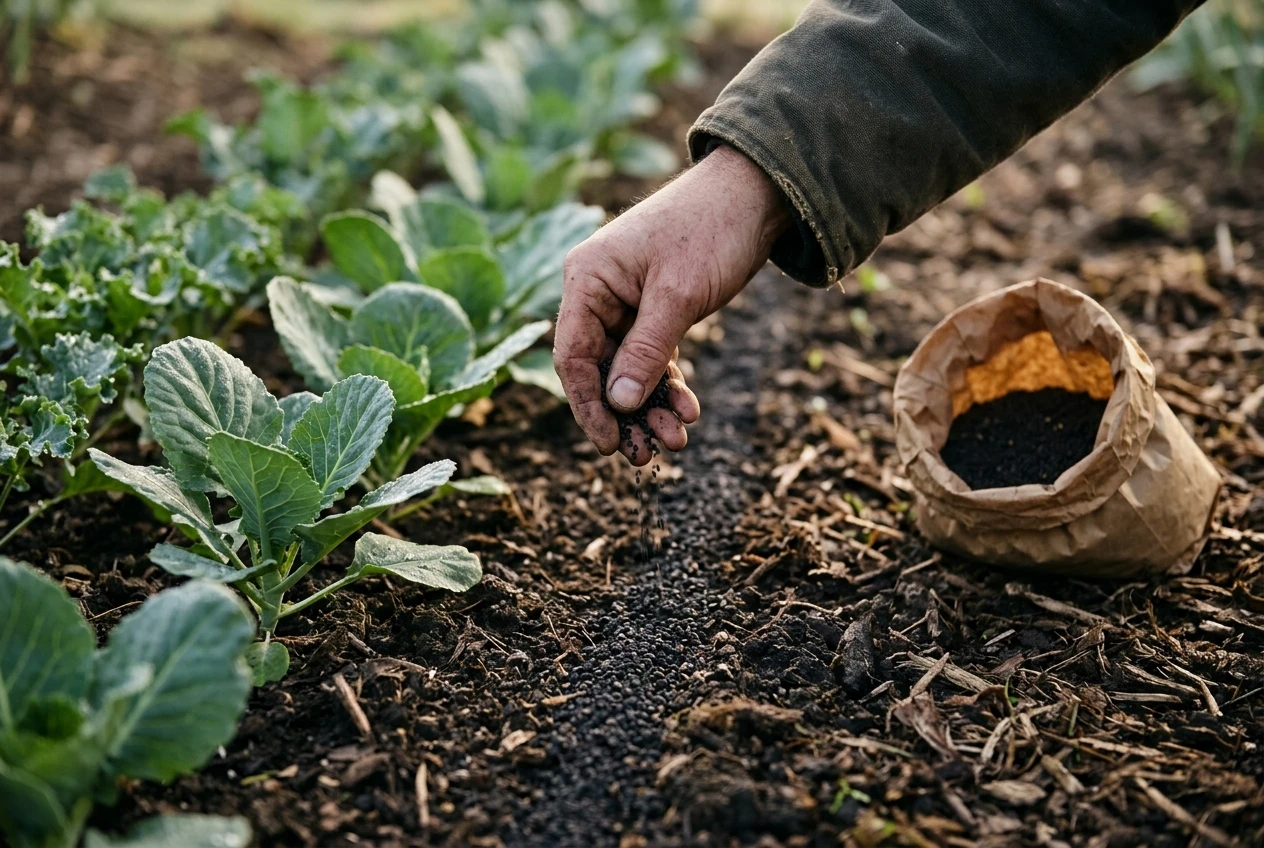
- Blood meal is among the fastest organic nitrogen sources, commonly labeled around 12 percent nitrogen. It works within a few weeks in warm soil. It can burn leaves and roots if applied heavily or placed against seedlings, so scatter it thinly and water it in.
- Feather meal has a similar nitrogen percentage but releases more slowly, over a period of weeks to months, because feathers break down slowly. It suits crops with a long season, such as cabbage and broccoli, and works well mixed into the bed before planting.
- Composted manure is lower in nitrogen per pound, and the amount varies by animal and by how it was composted. It adds organic matter along with nutrients and releases nitrogen gradually. Check the bag or ask the supplier for an analysis rather than assuming a number.
Other plant-based meals, such as alfalfa meal, release nitrogen at a moderate pace and add a little potassium. Label values differ between brands, so compare the numbers printed on the bag.
For timing, work a slow source such as feather meal or composted manure into the bed before planting.
Then side-dress with a faster source when plants are growing hard. For brassicas, that is a few weeks after transplanting and again as heads begin to form.
For corn, a common practice is to side-dress when plants are about knee high and again near tasseling.
Fast-maturing leaf crops like lettuce and spinach usually need only the pre-plant application and perhaps one light liquid feed.
Yellowing in the older, lower leaves of this group is the classic sign that nitrogen has run out, and it is easier to correct early than late.
Tomatoes, peppers, squash and other fruiting crops: balancing nitrogen with phosphorus and potassium
Fruiting crops need a different plan from leafy ones.
Early in the season they need nitrogen to build roots, stems and leaves.
Once flowers set, too much nitrogen keeps the plant growing leaves at the expense of flowers and fruit.
The result is a large, dark green plant with disappointing yield.
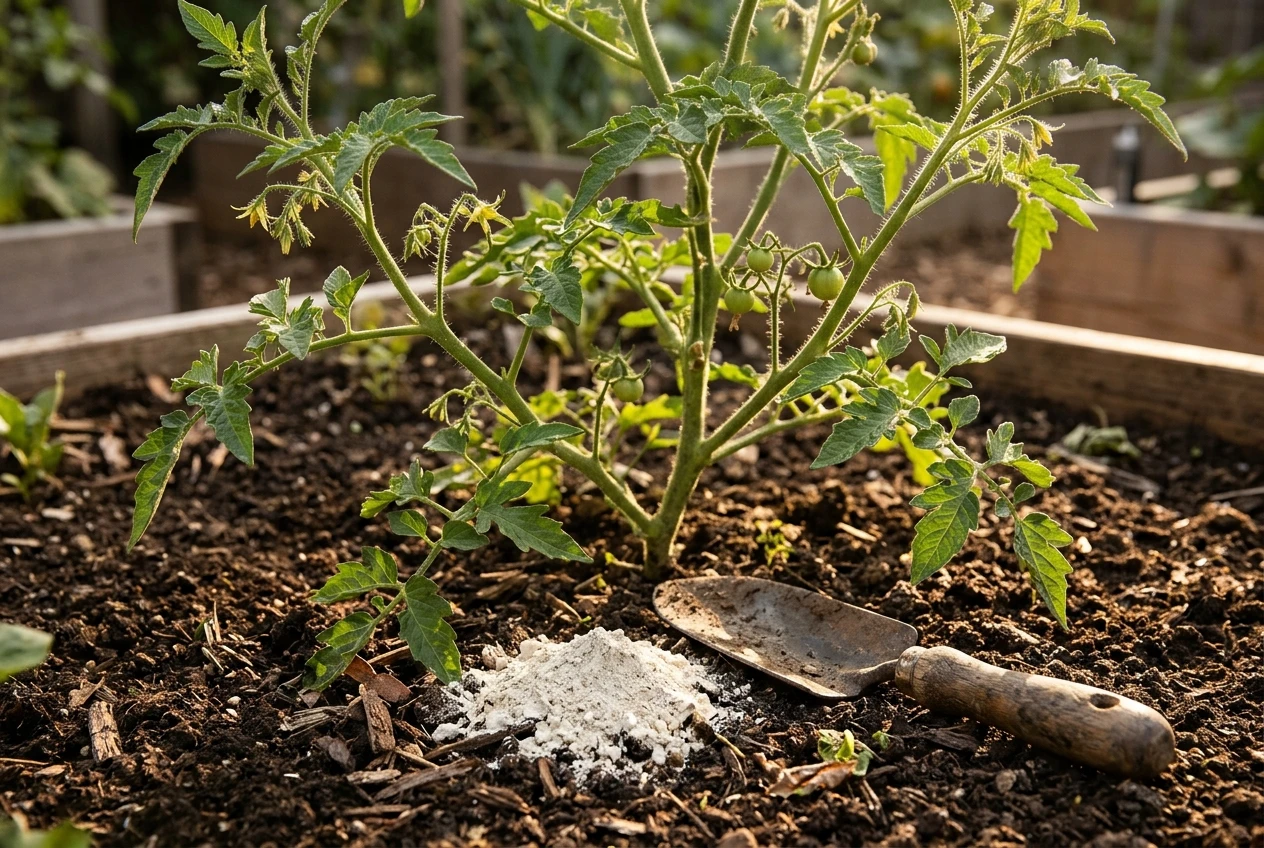
A reasonable approach is to start with a moderate nitrogen supply from compost or composted manure at planting, then shift to a feed with more phosphorus and potassium when the first flower clusters appear.
Organic sources for the two nutrients:
- Phosphorus: bone meal supplies phosphorus and some calcium and releases over a season. Rock phosphate is slower still and works better in acidic soils. Both are only worth adding if your soil test shows low phosphorus.
- Potassium: sulfate of potash and langbeinite, both mined minerals, are accepted in many organic programs and supply potassium without much sodium or chloride. Kelp meal adds potassium along with trace elements, in smaller amounts. Wood ash contains potassium but also raises soil pH sharply, so use it only when your test calls for both.
Check your certifier’s rules on mined minerals if you grow for certified organic sales.
Tomatoes, peppers and eggplant are moderate to heavy feeders. Squash, cucumbers and melons are also heavy feeders, and they respond well to a generous layer of compost under the planting hole.
All of these crops fruit over weeks, so a mid-season side-dressing with a balanced organic feed or compost helps keep them producing.
Blossom end rot, the dark sunken patch on the bottom of tomatoes and peppers, is usually caused by uneven watering that disrupts calcium transport into the fruit.
Adding calcium products without fixing the watering rarely solves it.
Root crops and legumes: what to hold back and why too much nitrogen costs you yield
Carrots, beets, radishes, turnips, parsnips and potatoes are grown for what is underground, and too much nitrogen sends growth to the tops.
You get lush foliage and small, misshapen or poorly stored roots. Fresh manure causes another problem: it can make carrots and parsnips fork and split.
For root crops, prepare the bed with well-finished compost and let that be most of the feeding.
If the soil test shows low potassium, add a potassium source, since root crops and potatoes in particular use it heavily.
Skip high-nitrogen meals such as blood meal and feather meal on these beds.
Legumes, which include peas and beans, form a partnership with soil bacteria called rhizobia.
The bacteria live in nodules on the roots and convert nitrogen from the air into a form the plant can use.
A legume given heavy nitrogen has less reason to form nodules, and it puts on leaf growth instead of pods.
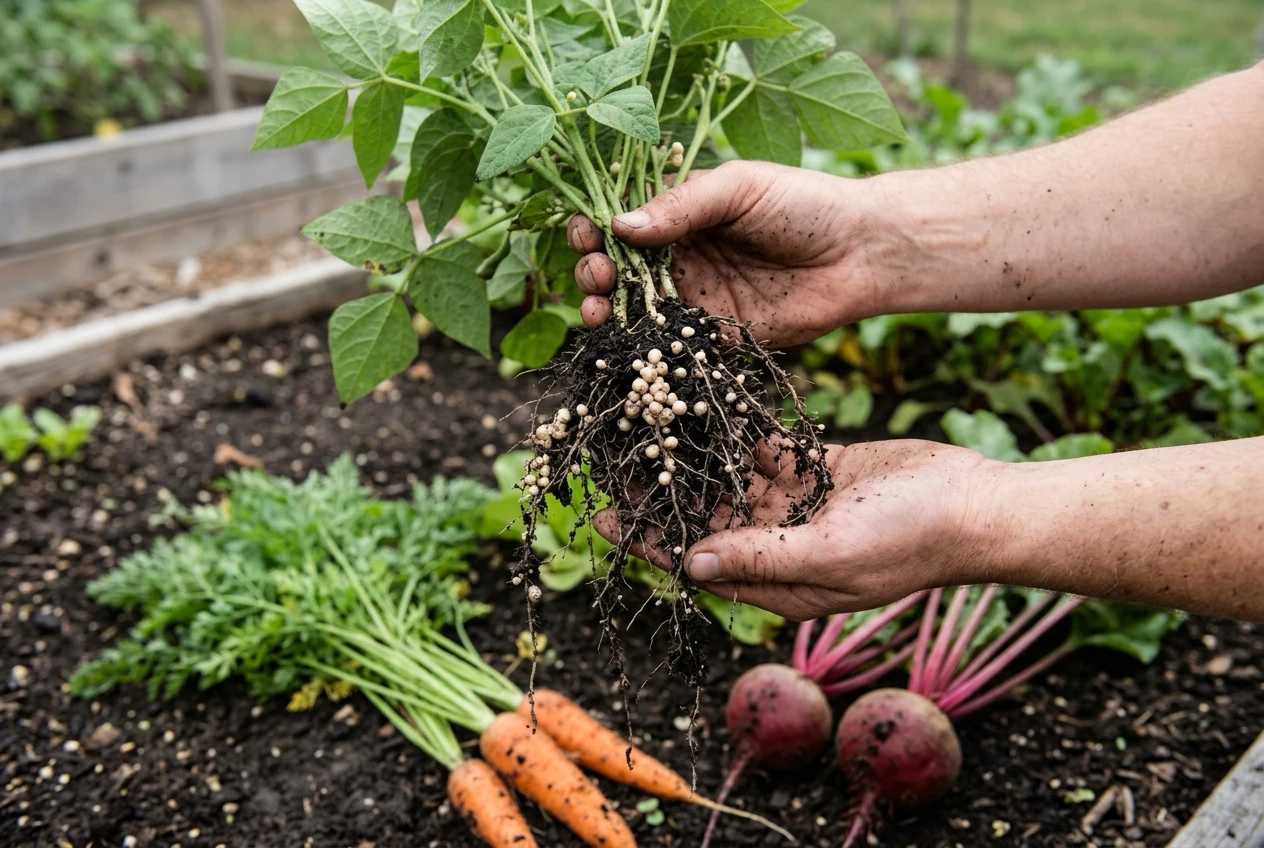
For peas and beans:
- Use an inoculant labeled for the crop if the bed has not grown legumes before.
- Add phosphorus and potassium only if the soil test calls for them.
- Skip nitrogen fertilizer, or limit it to the compost already in the soil.
Legumes also leave some nitrogen behind for the next crop. Following beans with a leafy or heavy feeding crop in the next season uses that benefit.
Compost, worm castings and liquid feeds: building a feeding schedule across the season
Compost builds soil structure, holds water, feeds soil life and supplies a modest, steady amount of nutrients.
It works as the base layer for every vegetable group.
Spread a couple of inches over the bed before planting and work it in lightly, or leave it on the surface as mulch.
Worm castings are a gentler addition.
They are valuable in seed-starting mixes and as a top-dressing around transplants, but they are usually too expensive and too low in total nutrients to serve as the main fertilizer for a whole plot.
Liquid feeds, such as fish emulsion and kelp extracts, give a quick supply when plants show a need.
They suit container vegetables and mid-season boosts, and they work best diluted according to the label and applied to moist soil.
A season schedule by crop group looks like this:
- Leafy greens: compost and a slow nitrogen source before planting, then a liquid feed or light side-dressing every few weeks for longer harvests.
- Brassicas and corn: feather meal or composted manure before planting, a faster nitrogen source a few weeks after transplanting or when plants are knee high, and a second side-dressing as heads or ears form.
- Fruiting crops: compost at planting, moderate nitrogen early, then phosphorus and potassium sources at first flower, and a mid-season compost side-dressing.
- Root crops: finished compost before sowing and potassium if the test calls for it, with no added nitrogen.
- Legumes: inoculant at planting and nothing more unless the test shows a gap.
Stop feeding as a crop reaches the end of its harvest. Late nitrogen on a finishing crop goes to waste or washes out of the bed.
Scaling up: bulk organic inputs, application rates and cost per bed for commercial growers
Bagged products at garden-center prices rarely make sense beyond a few beds.
Small commercial growers usually buy composted manure and compost by the cubic yard or truckload, and meals such as feather meal in 50 pound bags or by the pallet.
Legume cover crops such as clover and vetch grown in the off-season add nitrogen to the soil at the cost of seed and labor.
Rates start with your soil test or your extension service’s recommendation for the crop, which will give a target in pounds of nitrogen per unit of area.
To convert that into pounds of product, divide the target by the percentage of nitrogen on the label:
- Pounds of product = pounds of nitrogen needed ÷ nitrogen percentage as a decimal.
- For example, 1 pound of nitrogen from a 12 percent nitrogen meal needs about 8.3 pounds of product (1 ÷ 0.12).
To compare costs between products, work out the price per pound of nitrogen:
- Pounds of nitrogen per bag = bag weight × nitrogen percentage. A 50 pound bag at 12 percent holds 6 pounds of nitrogen.
- Cost per pound of nitrogen = bag price ÷ pounds of nitrogen in the bag.
- Cost per bed = pounds of nitrogen the bed needs × cost per pound of nitrogen.
Get quotes from your suppliers and run these numbers for each product.
Concentrated meals often cost more per pound of nitrogen than bulk compost, but compost supplies far less nitrogen per ton and a larger share of its nutrients is released slowly.
Many growers use compost for soil building and a meal for the crop’s nitrogen peak.
Be careful with raw manure.
Under the USDA National Organic Program, raw manure must be applied at least 90 days before harvest for crops whose edible portion does not touch the soil, and 120 days for crops whose edible portion does.
Composted manure that meets the program’s process requirements is treated differently. Confirm the details with your certifier before planning applications.
Whether you sell certified or not, keep records of what you apply to each bed, so that next season’s soil test and yields can be compared against them.
Common feeding mistakes that cap yield, and how to spot them in the leaves
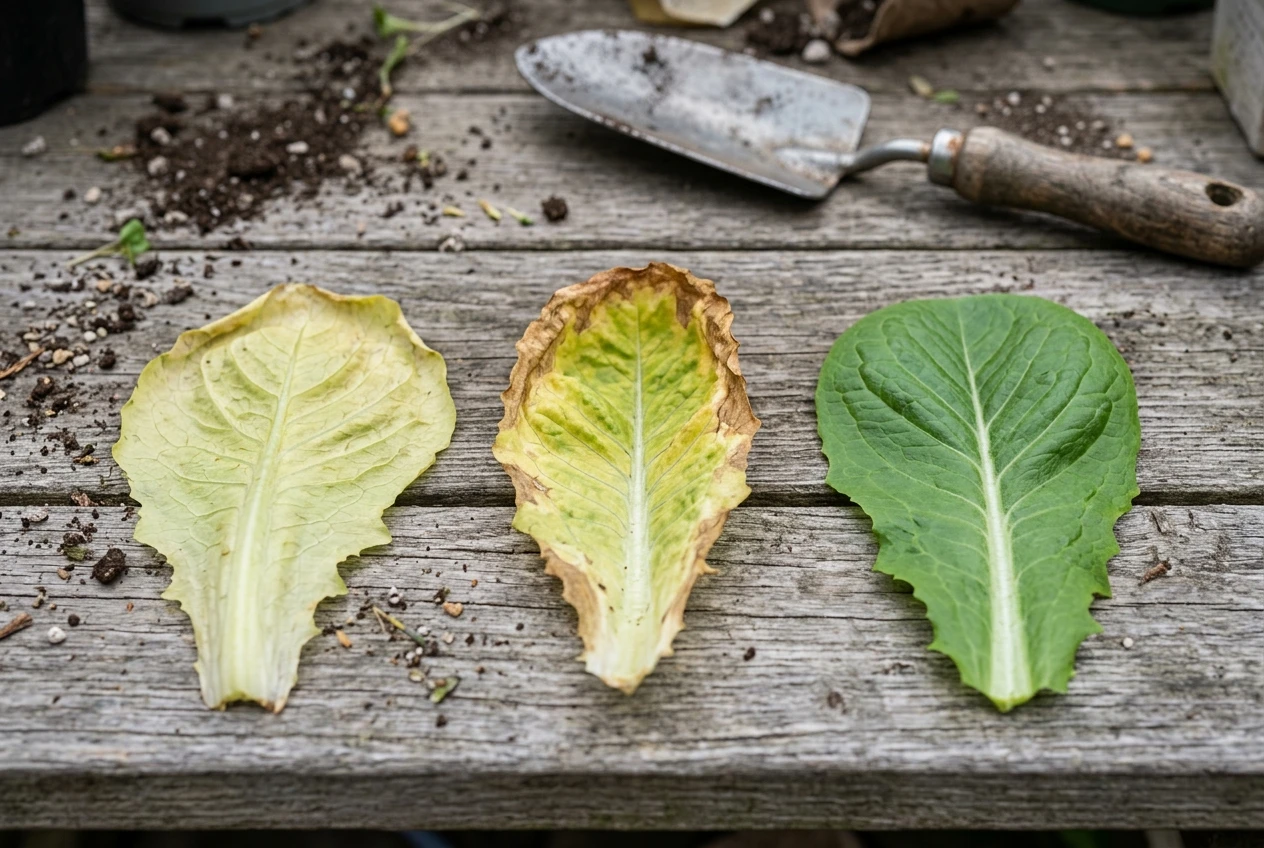
Leaves usually show a nutrient problem before yield drops. The pattern is the clue:
- Pale green to yellow lower leaves, with new growth still green: nitrogen shortage. Older leaves yellow first because the plant moves nitrogen to new growth.
- Dark green, soft, very leafy plants with few flowers or fruit: too much nitrogen. Aphids also tend to favor this kind of growth.
- Purplish leaves on young plants in cold spring soil: often a temperature effect that slows phosphorus uptake, even when the soil holds enough. Check the soil test before adding phosphorus.
- Yellow or brown edges on older leaves: a typical sign of potassium shortage.
- Yellowing between the veins of older leaves: a possible magnesium shortage, which a soil test can confirm.
- Scorched leaf tips or wilting right after feeding: fertilizer applied too heavily or placed too close to the plant.
Some mistakes show up first in the records and not in the leaves:
- Feeding every bed the same way regardless of crop group.
- Adding phosphorus year after year to beds that already test high.
- Applying slow-release organic sources after the crop has already passed its peak demand.
- Feeding dry soil. Nutrients move into plants with water, so irrigate before and after applications.
- Trying to correct a pH problem with fertilizer.
When a plant looks wrong, check water, pH and pests before assuming a nutrient shortage. Several of these problems look alike in the leaves.
Compare organic fertilizers for your crop group
Once you know which group your vegetables belong to, you can compare products by type: nitrogen meals for leafy greens, brassicas and corn, phosphorus and potassium sources for fruiting crops, and compost-based options for roots and legumes.
Compare organic fertilizers from the Hub’s fertiliser supplier partners, starting with the product type that matches your crop group, and use the price-per-pound-of-nitrogen calculation above to judge value.
If you are new to growing food, read How to Start Your First Vegetable Garden Without Wasting a Season before you buy anything.
It will help you set up your beds first, and then the fertilizer choices above will be easier to match to what you plant.