
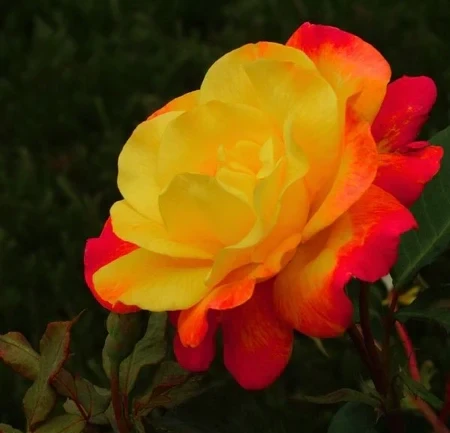
Joseph’s Coat is one of the most talked-about climbing roses among American gardeners, and for good reason.
If you want a rose that seriously stands out, this one delivers a non-stop mix of yellow, orange, pink, and cherry red all on the same plant.
Sometimes, you even find these colors on the very same cluster of blooms.
It is been climbing garden arches and fences since the 1960s, and it still shows up on “most colorful roses” lists today. That alone sets it apart from many other oldtime roses.
Vertical garden spaces really get a major boost when you add a climbing rose.
You do not need a ton of ground to make a big impression.
Climbing roses draw the eyes up, paint fences, and provide a lush wall of blooms where you want the color.
Joseph’s Coat takes this idea to the next level with its shifting palette of oranges, yellows, and reds that always turn heads in any garden.
This review is especially for home gardeners, rose lovers, and even complete beginners who want that “,wow” factor in their backyard, whether you are in Vermont, Colorado, or the middle of California.
I will break down how Joseph’s Coat holds up from USDA Hardiness Zones 5 through 9, so you will know exactly what to expect, no matter your climate or experience level.
Table of Contents
- Quick Verdict: Review Scorecard
- Joseph’s Coat Rose at a Glance
- What Makes Joseph’s Coat Rose Special?
- Flower Color and Bloom Characteristics
- Fragrance Review
- Growing Joseph’s Coat in USDA Zones 5–9
- Choosing the Best Support Structure
- Soil Requirements
- Sunlight Requirements
- Water Requirements
- Fertilizing Joseph’s Coat
- Pruning and Training Guide
- Disease Resistance
- Can Joseph’s Coat Be Grown in Large Containers?
- Garden Design Ideas
- Best Companion Plants
- Pros and Cons
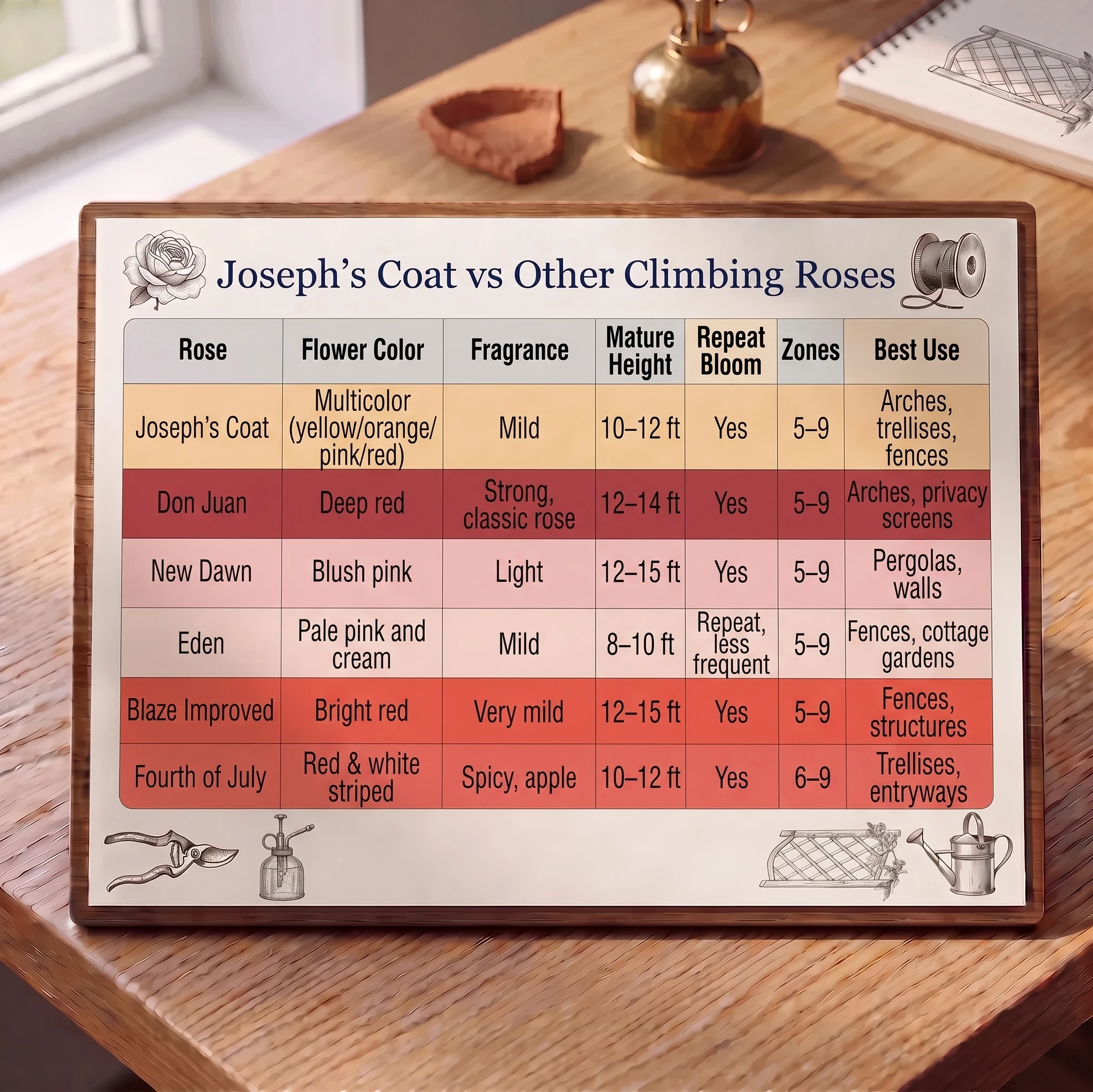
- Joseph’s Coat vs Other Climbing Roses: Table
- Who Should Buy Joseph’s Coat Rose?
- Where to Buy Joseph’s Coat Rose
- Frequently Asked Questions
Quick Verdict: Review Scorecard
If you are just here for the scores, here is how Joseph’s Coat stacks up in the real world and based on my own garden trials:
- Overall Rating: 8.7/10
- Flower Color: 10/10
- Fragrance: 6.5/10
- Bloom Size: 7/10
- Climbing Performance: 9.5/10
- Disease Resistance: 6.5/10
- Repeat Bloom: 8/10
- Cold Hardiness: 7/10
- Heat Tolerance: 8/10
- Beginner Friendly: 7/10
Joseph’s Coat Rose at a Glance
- Botanical Name: Rosa ‘Joseph’s Coat’
- Rose Class: Climbing Floribunda
- Breeder: Swim and Christensen
- Introduction Year: 1964
- Flower Color: Yellow, orange, pink, red (all hues, often at once)
- Fragrance: Mild, light fruity
- Bloom Size: 3–4 inches
- Mature Height: 8–12 feet (can be larger in the South)
- Mature Spread: 3–4 feet
- USDA Hardiness Zones: 5–9
- Bloom Season: Late spring to frost (repeat bloomer)
- Growth Habit: Semi-climbing, vigorous, upright canes
- Sun Requirements: Full sun (6+ hours)
What Makes Joseph’s Coat Rose Special?
You just do not see many climbing roses that give you so many colors at once.
Joseph’s Coat is famous for mixing and shifting its hues, which keeps things interesting all season long.
The big reasons gardeners love it include:
- Multi-colored blooms: yellows, oranges, reds, and vivid pinks all together
- Flower color shifts as the blooms mature and as temps change
- Fast-growing with dense, shiny foliage that covers supports quickly
- Extended bloom season and continuous pops of color through spring, summer, and fall
- Perfect for hiding fences or jazzing up arches and pergolas
- Curb appeal that remains “next-level cool” from spring’s first blooms to fall’s last flowers
For those who want a rose that never fades into the background, Joseph’s Coat is sure to get compliments from neighbors and guests alike.
Its color show calls attention from all over your yard and even catches the eyes of passers-by.
Flower Color and Bloom Characteristics
The buds burst open in a bold golden yellow that practically glows in strong sunlight.
As the flowers open, you will watch orange streaks creep in, followed by washes of pink and cherry red as the blossom matures.
The color changes do not stop at the surface—inside petals might still show swirls of yellow or peach, while outer petals blaze in coral and vibrant pink.
Cool nights and the beginning or end of the season can intensify the display even more, sometimes giving you more saturated orange-reds in fall or fiery yellow in spring.
Every blossom feels totally unique, which is part of its lasting appeal.
- Bud Color: Golden yellow
- Newly Opened Flowers: Yellow with warm orange-tinged edges
- Color Evolution: Changes to deeper orange and hot pink, finishing with flashes of cherry red
- Seasonal Shifts: Blooms look brighter and punchier in the spring and fall, and you will notice new blends of color in cooler weather
- Bloom Size: 3–4 inches across, very showy from a distance or up close
- Petal Count: About 25–30 in each flower, giving a rich semi-double look
- Clusters: Large clusters (often 5–12 buds per stem) make a huge color splash
- Repeat Bloom: Enjoys two to three heavy flushes a year, with scattered blooms between main cycles
Fragrance Review
If strong fragrance is your main mission, Joseph’s Coat might not blow you away.
There is a gentle fruity scent—think hints of appleskin or soft rose—that tends to be most noticeable during early morning or late evening when the air is still.
The fragrance does not have that classic rose punch like some old-school climbers but is a nice soft touch for those who lean in for a sniff.
Owing to its dazzling color show, most gardeners forgive the mild scent and stick with Joseph’s Coat for its lively palette.
- Fragrance Intensity: Mild (detectable up close, not strong across the garden)
- Fragrance Notes: Light fruitiness—apple, sometimes a powdery floral
- Best Time to Smell: Calm mornings or just after sunset
Fragrance rating: 6.5/10
Growing Joseph’s Coat Rose in USDA Hardiness Zones 5–9
Zone 5
Here, winter protection is crucial.
Freezing temps can zap tender canes, so mulch deeply at the base before winter and consider wrapping the plant with burlap or another breathable shield during cold snaps.
Flowers will appear a bit later (often early June), but expect a colorful show once it gets going.
Joseph’s Coat rebounds every summer, especially after it’s settled in for a couple years.
Zone 6
Zone 6 gardeners have things a bit easier.
Sunlight and drainage come first—find a spot with at least six hours of sun and well-prepped earth.
Blooms tend to have especially vibrant hues with cooler night temperatures, and the plant will bounce back quickly even after a rough winter.
Mulching is smart but you can get by with less panic in spring if a late unexpected freeze happens.
Zone 7
Joseph’s Coat hits its stride in this region.
Expect blooming to start as early as late April, and there will be multiple showy flushes each summer.
Canes reach maximum height here, especially if you keep up with deep watering during dry stretches.
Disease risk rises a little, especially if air doesn’t circulate well; so do not crowd it, and prune for good airflow.
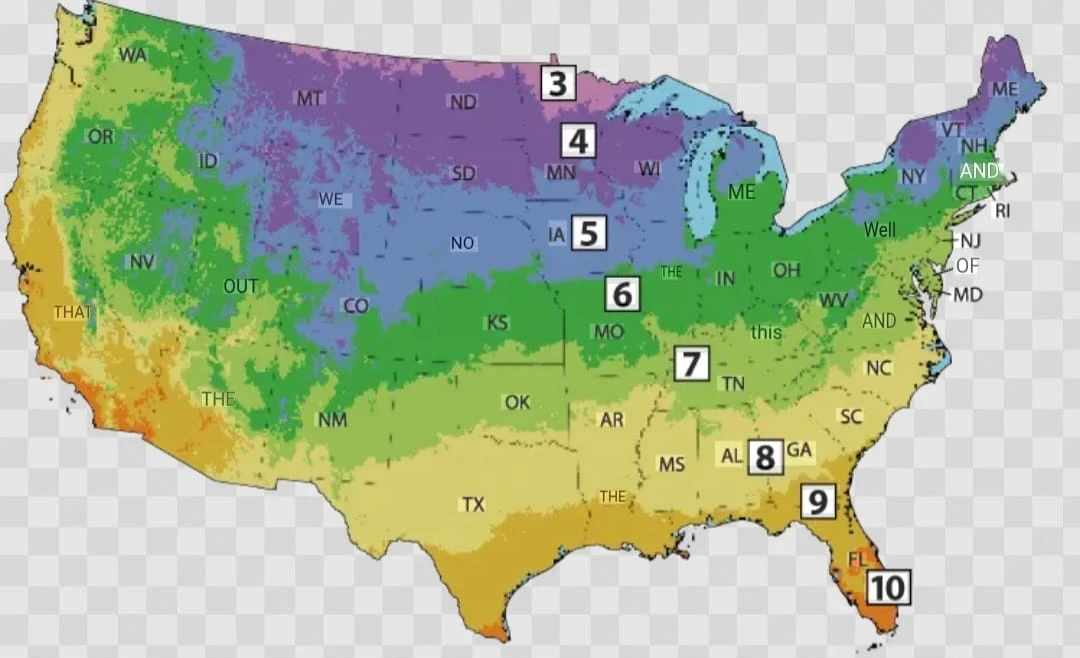 (Map courtesy of google.com)
Zone 8
Summers run hot and dry in Zone 8, so mulch thickly to keep the root zone cool and retain precious moisture.
Afternoon shade is your best buddy during heat waves to help flowers last.
This zone is perfect for creating a fast-growing privacy wall or covering a big arbor in no time.
Regular deadheading keeps new blooms coming, so snip away as flowers fade for the longest show.
Zone 9
Rapid growth is the name of the game in Zone 9.
Water deeply at least once or twice a week when the temperature really soars, and replenish mulch to keep weeds down and soil moist.
Afternoon shade keeps the color richest, but as long as you keep roots cool, even all-day sun works.
Containers demand extra effort for roses in this zone because they dry out fast, so planting in the ground is much less hassle.
Choosing the Best Support Structure
- Trellises: The most popular pick—set it a few inches away from a wall for airflow, and fan out canes to get the densest flower display.
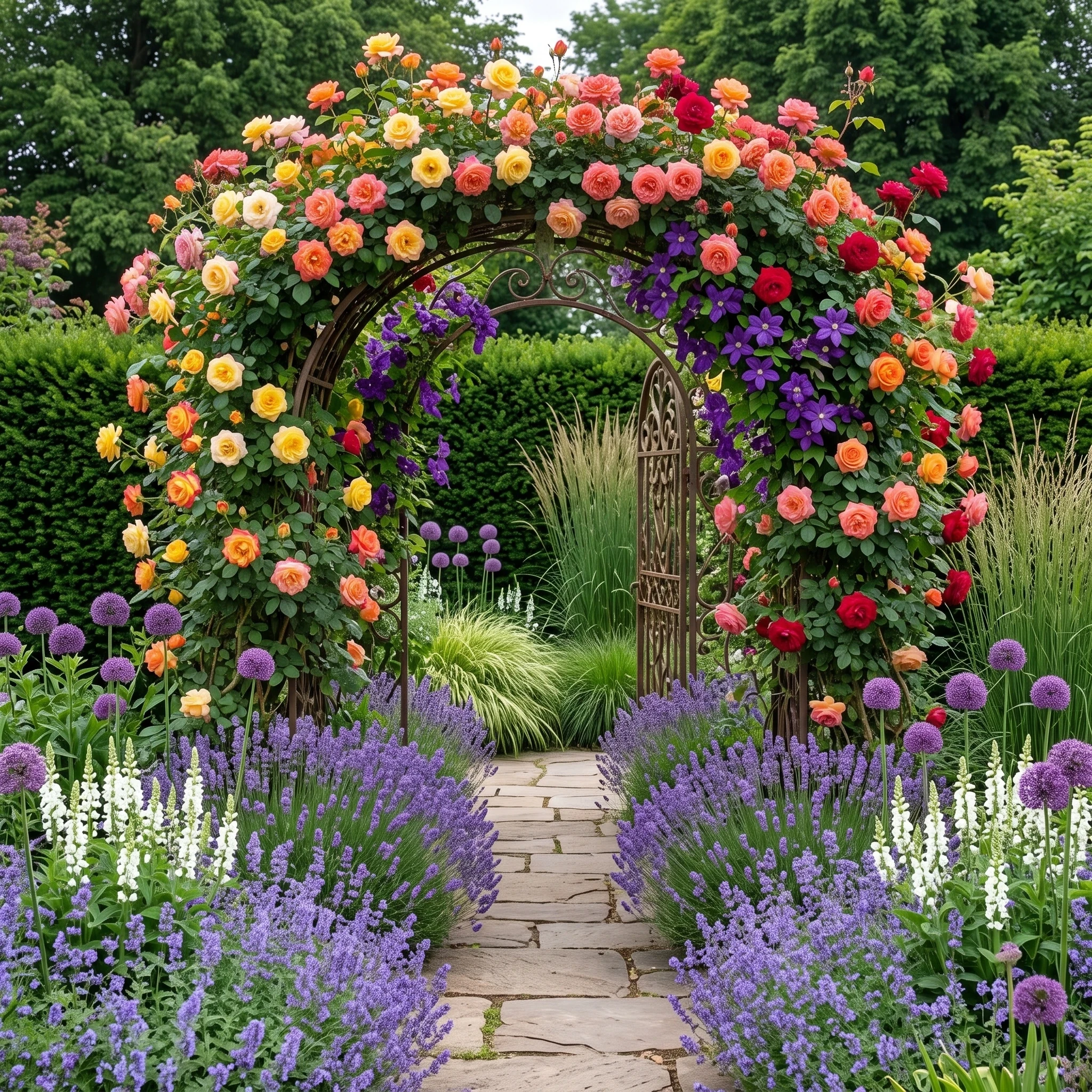
- Arbors: Ideal for walkways or making entrances pop. Train canes along both sides and across the top for a wow-worthy entrance.
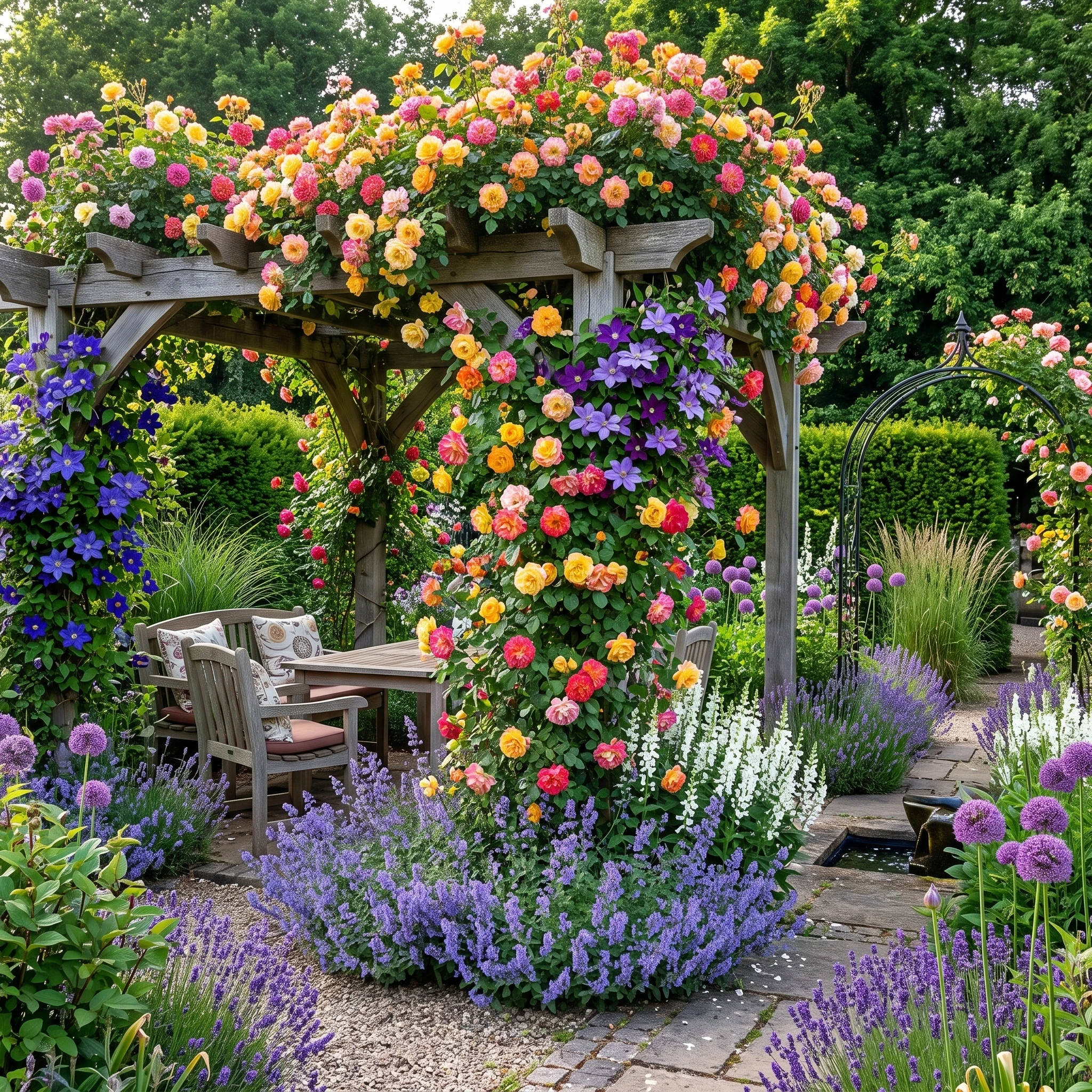
- Pergolas: Joseph’s Coat shines above seating areas, throwing color overhead and along every beam.
- Fences and Walls: Fast to cover plain chainlink or wooden fences—make sure to tie canes in place as they grow.
- Obelisks: Use in perennial beds or raised beds for height without taking over the space.
Try tying your canes out horizontally or arching them sideways.
You will get loads more flowers, because roses put out extra buds on shoots growing side to side instead of straight up.
Soil Requirements
- Drainage: Roses require soil that does not stay soaked. In wet climates, raised beds are a great solution.
- Organic Boost: Blend in compost before planting for crumbly texture and microbe-rich soil.
- Soil pH: Slightly acidic or neutral is best—aim for a range around 6.0 to 7.0 for healthiest growth.
- Mulch: Spread two to three inches of bark or shredded leaves around the base to keep moisture in and weeds out (do not pile against stems).
- Dig Deep: If planting a bare root rose, make your hole at least twice as wide and deep as the original pot or roots.
Sunlight Requirements
All climbing roses need sun, but Joseph’s Coat truly sparkles with six or more hours of direct sunshine daily.
Flower color becomes bolder, and growth more vigorous.
Plant it in a spot that gets all the rays your yard can muster—just a few hours per day leads to fewer blooms and spindly, thin canes.
Water Requirements
- For new roses: Deeply water twice weekly through their first summer to build up roots.
- For established roses: One solid soak per week, or more in a heat wave. Make sure the top inch or so of soil dries out before your next watering.
- Good habits: Water at the base early in the day, preferably with drip irrigation or a soaker hose. This makes a huge difference in dodging disease.
- Heat spells: During summer peaks, be ready to water more often to avoid stress and leaf drop.
Fertilizing Joseph’s Coat
- Spring Start: Use a balanced rose fertilizer (10-10-10 is perfect, or 5-10-5) when new growth starts.
- Mid-season: Give an extra feed after every major flush of blooms—usually early summer and midsummer.
- Organic routes: Alfalfa meal, seaweed extract, or composted manure all step up growth and results.
- Timing: Skip feeding beyond midsummer in Zones 5 and 6 to avoid tender growth that winter could damage.
Pruning and Training Guide
- Getting started: In the first two years, tie new flexible canes loosely to your support structure as they appear.
- Training for blooms: Gently bend and tie young canes horizontally—sideways branches give more flowers.
- Annual cleanup: Prune out dead, damaged, or weak canes at the close of winter, and take out old wood at ground level for fresher growth.
- Regular deadheading: Clip off spent flowers just above a five-leaflet leaf to keep new blooms cycling in.
- Renewing old plants: Every few years, cut the oldest thick canes out at the very bottom to keep the rose lively and vigorous.
Disease Resistance
Joseph’s Coat can get black spot, powdery mildew, and rust in humid, rainy climates.
Spacing and pruning for great airflow pay off.
Always gather up fallen leaves quickly and avoid watering the foliage.
If black spot or mildew appears, snip out infected leaves and treat with a rose-friendly fungicide during damp stretches.
- Black Spot: Somewhat vulnerable—remove infected leaves and allow for good airflow to keep it at bay.
- Powdery Mildew: Watch for white or grayish patches on leaves; prune to thin the plant if it appears.
- Rust: Less common, but shows as orange pustules; dry, breezy conditions help prevent outbreaks.
Can Joseph’s Coat Be Grown in Large Containers?
It is possible, but it takes some work.
Use the largest pot you can find—think half whiskey barrel or even bigger, at least 25–30 gallons.
Container roses dry out faster, so water regularly (often daily in peak heat), and feed more frequently because nutrients leach quicker.
You will also need to secure a sturdy support to the container and protect the whole thing during harsh winters, especially below Zone 7.
In general, planting in the ground is way less trouble, but containers can bring this rose to patios if you are dedicated.
Garden Design Ideas
- Cottage gardens: Let a riot of color climb over rustic arbors or tangled into old fences
- Pergolas and nooks: Create living summer shade over a garden seating area
- Entry arches: Make your front path or gate feel inviting with an explosion of color overhead
- Fences and privacy lines: Replace a bland view with a blanket of color that softens harsh edges
- Blank walls or garages: Dress up plain spaces with climbing color and interest
- Privacy screens: Shield your garden with something beautiful instead of a plain old board fence
Best Companion Plants
With Joseph’s Coat throwing so many warm tones, cooling it down with blues, purples, or whites in the garden is a winning move. Some great combos include:
- Clematis: Blue or purple varieties are a perfect foil to the rose’s warm tones
- Lavender: Fragrant, purple, and great for pollinators
- Catmint (Nepeta): Sea of blue-purple flowers softening the base of the rose
- White Salvia: Taller spikes of clean white blooms for sharp contrast
- Boxwood: Dark green background that lets the colors pop even more
- Ornamental grasses: Adds texture, height, and looks awesome paired with the rose’s hot hues
- Purple Alliums: Round shapes and rich color make for a playful contrast at the rose’s feet and along borders
Pros and Cons
Pros
- Unmatched multicolored blooms for months on end
- Vigorous, fast climbing growth for quick coverage
- Long, repeat flowering season with simple care
- Keeps vertical spaces colorful and lush all season
- Eye-catching as a garden highlight or focal point
Cons
- Needs a substantial support and regular training/tie-in
- Requires pruning and deadheading for optimal performance
- Can get messy and overgrown if neglected for long stretches
- Best for larger gardens or spots with room to sprawl
Who Should Buy Joseph’s Coat Rose?
- Gardeners needing an easy way to add color to trellises, arches, or fences
- Fans of cottage gardens with a love for lively, shifting blooms
- Anyone in USDA Zones 5–9 with a bit of space for serious color
- Those who want to watch their roses change shades all season
- People ready to prune and train for the best results
Less suited for:
- Small, crowded gardens or spots without a sturdy place for climbing
- People looking for a totally hands-off, zero-prune experience
- Rose lovers after big, classic scent—the fragrance here is gentle
Frequently Asked Questions
How tall does Joseph’s Coat Rose grow?
Usually eight to twelve feet tall, but can climb taller in perfect climates or with years of growth.
Is Joseph’s Coat Rose fragrant?
The scent is mild and fruity—pleasant, but subtle and best sniffed up close in the morning chill.
Does it bloom repeatedly?
Yes, two or three main waves of flowers every growing season, and some scattered blossoms throughout the summer.
Which USDA zones are best?
Zones five through nine let Joseph’s Coat thrive—practically anywhere across the U.S. except for the hottest Deep South or the coldest northern edges.
Can it grow on a pergola?
Absolutely. With enough sunlight and sturdy support, Joseph’s Coat will wrap itself beautifully over any pergola.
Is it suitable for fences?
Definitely. This rose is made for covering chainlink, wooden, or even vinyl fences with bold color all season.
Is Joseph’s Coat disease resistant?
It has moderate resistance, but watch for black spot and mildew in wet, humid, or extra-shady spots. Good airflow and keeping leaves dry really help.
How should I train it?
Tie new canes horizontally or arch gently, and prune out older wood every year for more vigorous flower production.
Can it be grown in containers?
Yes, but only in huge pots or barrels—expect to water and feed more often than with in-ground roses.
How much sunlight does Joseph’s Coat require?
At least six hours of sun each day for strong growth and maximum color intensity.
Where to Buy Joseph’s Coat Rose
The source matters when shopping for roses.
For a healthy Joseph’s Coat, here is what to look for:
- Bare-root or potted: Both work. Bare-root roses are budget-friendly and good for early planting; potted can be bought later in the season but usually cost more.
- Canes: Firm, green, and with no shriveling or black stains
- Roots: Moist and well-branched (not dried out or mushy)
- Age: Own-root or two-year-old grafted plants are fastest to establish
- Zone fit: Buy from a nursery that grows plants suitable for your USDA zone. Southern-grown roses can sometimes struggle in northern gardens.
- Right shipping time: Order so plants arrive during your local planting window—early spring for cold climates, late fall for milder regions.
Reputable mail-order nurseries like Nature Hills clearly state mature size, description, and hardiness.
Always scan their reviews and guarantee before buying, so you side-step issues.
Good local nurseries are great in early spring, but order quickly for the best picks.
Final Verdict
If you are after a large climbing rose with multiple color rose with stand-out blooms, moderate scent, and reliable repeat flowering in Zones 5–9, Joseph`s Coat is absolutely worth growing.
It blends well with Clematis, Lavenders , Catmint , Salvias to give stunning gardens
The only real downsides: it is a little fussy about regular care because it grows wild when neglected.
Curious about more unusual and stunning rose colors?
Check out my full guide to :-
Best Unusual Rose Colors for American Gardens: 12 Rare Roses for USDA Zones 5–9,
or dig into my in-depth reviews of favorites like Double Delight Rose, Burst of Joy Rose, Ebb Tide Rose, and Neptune Rose for more rose inspiration and hands-on tips.
Happy gardening!!!!!!!!
Here is a little transparency: Our website contains affiliate links. This means if you click and make a purchase, we may receive a small commission. Do not worry, there is no extra cost to you. It is a simple way you can support our mission to bring you quality content.”
The advice about training the canes horizontally really caught my attention because I have always assumed that a climbing rose should simply be encouraged to grow straight upward. It makes sense that sideways canes would produce more flowering shoots, and I can imagine how beautiful Joseph’s Coat would look spread across a fence instead of growing in one narrow column. My concern would be accidentally bending a cane after it has already become too stiff and snapping it. At what stage should you begin guiding the new canes horizontally? Is it best to start while they are still very short and flexible, or wait until they have grown long enough to reach the main wires of the support?
Hi Hanna,
Thank you so much for your comment!
I am glad the section on training the canes caught your attention because it is one of the best techniques for getting the most out of a climbing rose like Joseph’s Coat.
You are absolutely right to be cautious about bending older canes.
The best time to begin training them is while they’re still young, green, and flexible.
I usually wait until a new cane has grown long enough to comfortably reach the support or the next wire, then gently tie it into position. At that stage, it is much less likely to snap than if you wait until it has become thick and woody.
Rather than forcing a cane into a sharp horizontal position all at once, it is often better to guide it gradually. Using soft plant ties, you can gently encourage it into a more horizontal angle over time, adjusting the ties as it continues to grow.
This reduces stress on the cane and helps prevent breakage.
As you mentioned, training the canes horizontally encourages more side shoots to develop along their length, which means many more flowers instead of blooms being concentrated near the top of the plant.
It is a simple technique, but it can make a remarkable difference to the overall display.
Thanks again for your excellent question, Hanna.
I hope, if you decide to grow Joseph’s Coat, you’ll be rewarded with a fence covered in its beautiful multi-colored blooms.
Happy gardening!