
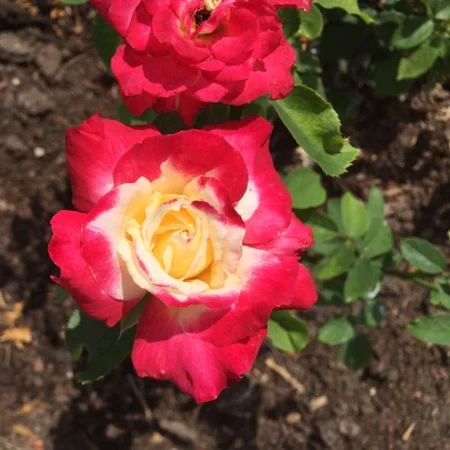
Double Delight Rose is a classic that is hard to beat if you are after fragrance, color, and garden worthy performance.
For decades, this hybrid tea rose has wowed gardeners around the world, standing out with its creamy petals brushed in rich red and a heady scent that is hard to forget.
It is a real showstopper; it still pops up in top rose lists year after year.
What keeps Double Delight so popular?
I would say its charm is a mix of looks, scent, and how well it handles life in American gardens, especially across USDA Zones 5 to 9.
This guide covers everything you will want to know, from its best features right down to practical growing tips.
I have even included fresh ideas and extra details to make this guide super detailed and helpful, so let’s roll.
Table of Contents
- Quick Verdict
- Double Delight Rose at a Glance
- What Makes Double Delight Rose Special?
- Flower Color and Bloom Characteristics
- Fragrance Review
- Growing Double Delight Rose in USDA Hardiness Zones 5–9
- Soil Requirements
- Sunlight Requirements
- Water Requirements
- Fertilizing Double Delight
- Pruning Guide
- Disease Resistance
- Is Double Delight Good for Containers?
- Garden Design Ideas
- Best Companion Plants
- Pros and Cons
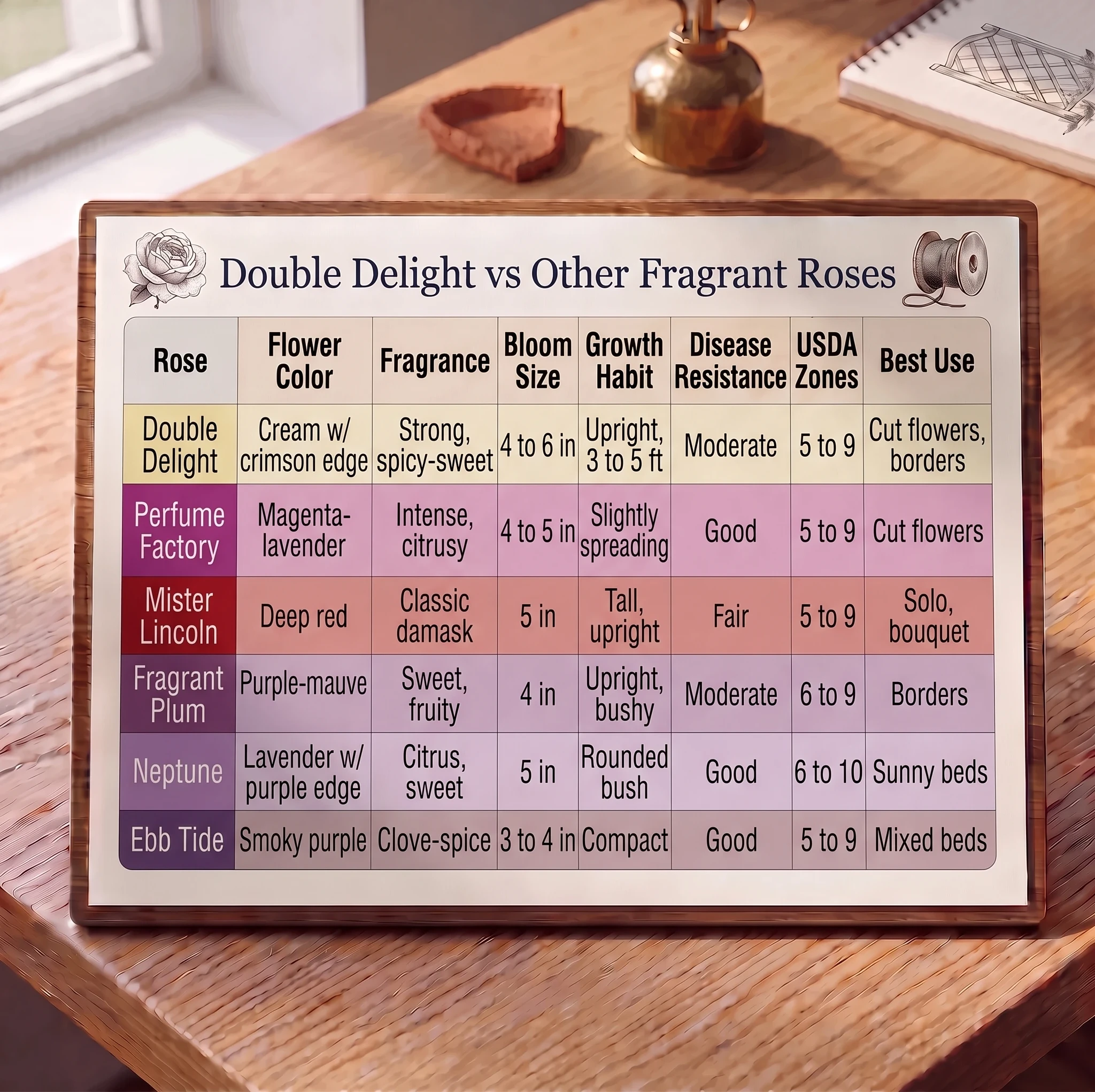
- Double Delight vs Other Fragrant Roses
- Who Should Buy Double Delight Rose?
- Where to Buy Double Delight Rose
- Frequently Asked Questions
- Final Verdict
Quick Verdict
With its bold bicolor blooms, strong scent, and good repeat flowering, Double Delight is still one of the best hybrid tea roses for most home gardeners.
If you want cut flowers with real “wow” factor, this rose delivers.
It handles a range of climates (USDA Zones 5 to 9) as long as you give it some care regarding disease prevention and winter protection, especially in colder spots.
- Overall Rating: 4.5/5
- Flower Color: Creamy white with scarlet to deep crimson edges
- Fragrance: Very strong, spicy-sweet
- Bloom Size: 4 to 6 inches
- Disease Resistance: Moderate
- Repeat Bloom: Excellent, with regular deadheading
- Cold Hardiness: Good in Zones 5 to 9 with winter care
- Heat Tolerance: Handles summer heat in most areas
- Container Suitability: Yes, with large pots
- Cut Flower Rating: Superb. Long stems, strong scent
- Beginner Friendly: Fairly, if you learn basic rose care
Double Delight Rose at a Glance
- Botanical Name: Rosa ‘Double Delight’
- Rose Class: Hybrid Tea
- Breeder: Swim & Ellis (USA)
- Introduction Year: 1977
- Flower Color: Creamy white with vivid red/crimson blush
- Fragrance: Super strong, spicy and sweet
- Bloom Size: 4 to 6 inches across
- Mature Height: 3 to 5 feet tall
- Mature Spread: 2 to 4 feet wide
- USDA Hardiness Zones: 5 to 9
- Growth Habit: Upright, bushy
- Blooming Season: Late spring to frost (repeats)
- Sun Requirements: Full sun (6+ hours for best color)
What Makes Double Delight Rose Special?
There is a reason this rose has a loyal following that spans continents and generations.
The main attractions are its impressive bi-color blooms: creamy white petals with a bright red blush that deepens as flowers age and get more sunlight.
The blooms are big enough to be noticed from across the yard and have a real “exhibition” quality if you are into flower shows.
The fragrance is so strong that one plant can scent a whole sitting area.
You will often get both spicy and fruity notes; the scent is especially potent on sunny afternoons.
Another perk is the repeat flowering: Double Delight blooms in flushes from late spring right into fall if you dead-head regularly.
It is got a stellar reputation, too. Double Delight has won numerous awards, including multiple fragrance and All-America Rose Selections honors; decades after it launched, it is still winning rose show ribbons.
If you are after a rose that blends classic form with modern bicolor drama and a standout scent, this is it.
Many gardeners say that this rose is their go-to for showy bouquets and gifts; it is often the plant newcomers stumble upon and instantly want in their own gardens.
Flower Color and Bloom Characteristics
- Bud Appearance: Pointed, elegant, pale ivory with a hint of blush
- Newly Opened Blooms: Creamy white, with red edging just starting on the outer petals
- Color Changes: As blooms open and get more sun, red edge grows bolder—sometimes covering most of the petal. Cooler weather produces a subtler blush, while hot sunny days give a brighter, more saturated effect.
- Sunlight Effect: The more sun, the more intense the red color
- Bloom Size: 4 to 6 inches across when fully open
- Petal Count: 25 to 30 petals per bloom
- Flower Form: Classic highcentered hybrid tea, ideal for arrangements
- Vase Life: 5 to 7 days with fresh cut and cool water
The large blooms not only capture attention but add elegance to every arrangement; they are excellent for bouquets and make sensational focal points in floral displays.
Fragrance Review
Double Delight’s scent is basically legendary.
On a scale of 1 to 5, I would give it a solid 5 for intensity. The fragrance is a punchy combo of spice, sweet rose, and sometimes even a whiff of fruit—think raspberry or citrus.
I find the best time to catch its full aroma is mid to late afternoon when warmth brings out the oils.
Compared to other fragrant roses like Mr. Lincoln or Perfume Factory, Double Delight’s fragrance is not just strong, it is complex.
If you love old-school rose scent but want a modern look, this is one to try. Even visitors unfamiliar with roses can often spot this one by its next-level cool scent wafting on the breeze.
- Fragrance Intensity: Very strong
- Notes: Spicy, sweet, and sometimes fruity
- Best Time for Fragrance: Afternoon
- Fragrance Rating: 5/5
Try placing a bench nearby or opening patio doors on summer afternoons—you will really give your outdoor space a boost with the scent drifting in.
Gardeners who crave old-fashioned rose perfume will be thrilled.
Growing Double Delight Rose in USDA Hardiness Zones 5–9
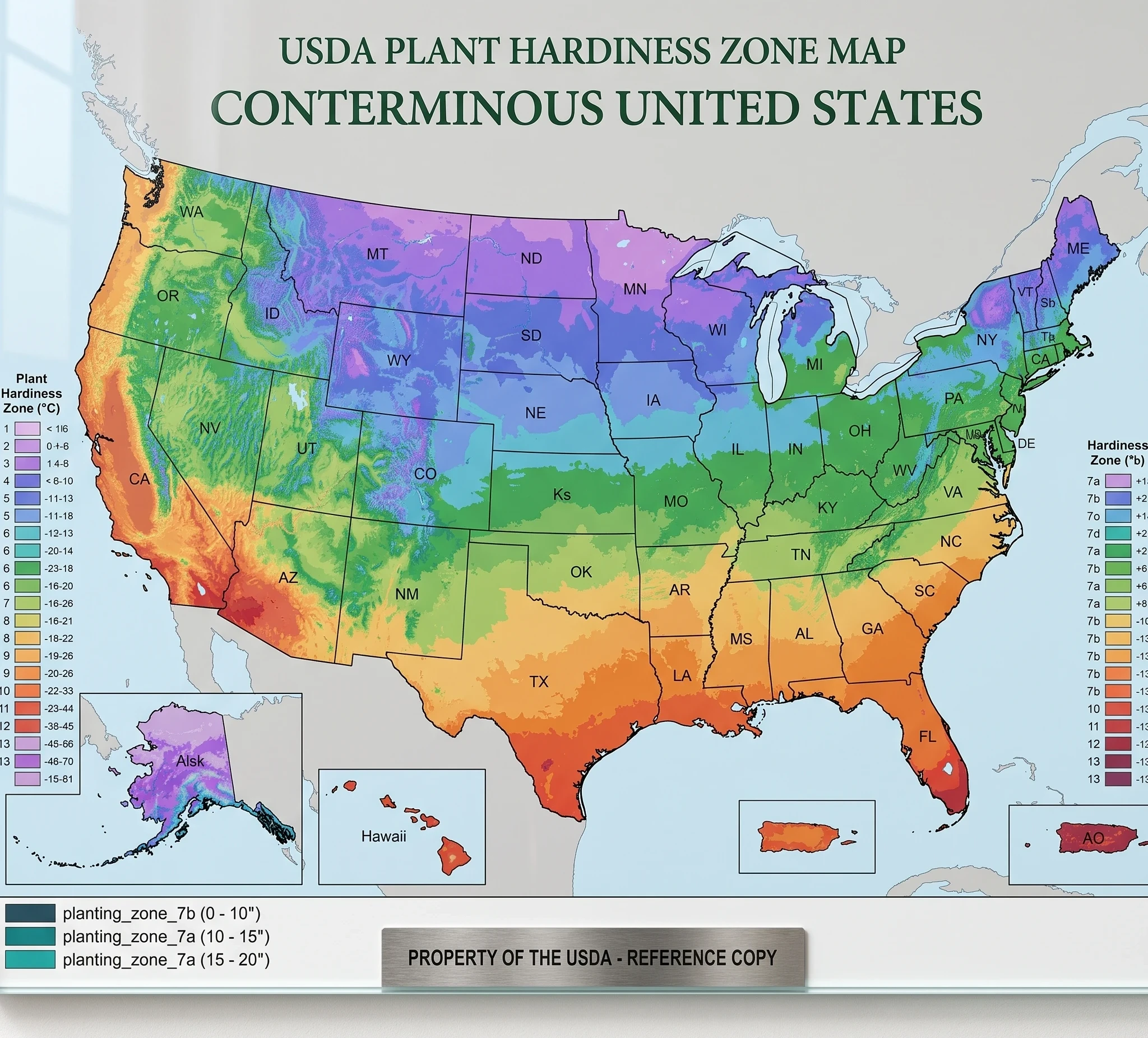
USDA Zone 5
In Zone 5, Double Delight benefits from thoughtful winter protection.
Mulch heavily (8 to 10 inches) around the base in late fall, especially after the ground freezes.
Rose cones or burlap wraps can protect canes from harsh wind and freeze-thaw swings. Expect slightly later spring bloom, but it catches up with repeat flowering once the season warms.
Die-back is more likely, so do not skip insulating roots and canes.
For colder winters, consider mounding soil up around the base of the bush to add an extra layer for roots.
USDA Zone 6
Zone 6 gardens hit that sweet spot: hot summers but winters that are not brutal. Deep watering and good sun bring out deep color.
Minor winter protection, like 4 to 6 inches of mulch, helps, especially after pruning canes back in late fall. Roses here often look their best, with full bloom flushes and minimal winter setbacks.
USDA Zone 7
This is prime Double Delight territory!
Expect strong repeat blooming and very rich petal color.
Aim for early morning sun, as intense late afternoon rays can sometimes fade the blooms a bit.
Dead-head often for the best rebloom; local rose societies often use Double Delight in competitions because of its coloring and scent in this zone.
USDA Zone 8
Heat management gets trickier here.
Mulch helps keep roots cool and moist. Regular deep watering is important during summer heat waves.
Afternoon shade, if possible, helps the blooms hold up, but do not sacrifice too much sun or you risk leggy growth and fewer flowers.
In Zone 8, watch for fast evaporation and keep an eye on soil dryness, especially when droughts hit.
USDA Zone 9
Double Delight pushes its heat limits here, but gardeners still get good performance with the right care.
Plant in a spot with full morning sun but some shelter from the harshest late-afternoon rays.
Frequent mulching and monitoring for water needs are super important, since fastdrying soil stresses the plant and shortens flower life.
A bit of afternoon dappled shade can mean longerlasting, more vibrant flowers in the hottest months.
Soil Requirements
Healthy soil gives a big boost to Double Delight’s performance.
This rose thrives in welldrained, loamy soils loaded with organic matter. I like to work in finished compost and aged manure before planting.
Aim for a soil pH between 6.0 and 6.5—slightly acidic works best.
Avoid clay that stays wet or sand that dries out fast. Mulching keeps things consistent; a 2 to 3 inch layer helps roots stay cool and keeps weeds out.
Prepare a hole about twice the width of the root ball, breaking up compacted soil and amending with compost.
If your garden is heavy clay, mound the planting area a bit for drainage. Raised beds or mounded rows help roses in wetter climates avoid root rot.
Sunlight Requirements
Double Delight needs full sun: at least 6 hours a day.
Without enough light, you risk spindly growth and fewer blooms. Sunlight does not just make for stronger plants; it is the secret behind those vivid red petals.
The more light, the deeper the red. Sun also increases oil production, pumping up fragrance.
In hotter zones, putting roses where they get lots of morning sun but a break from the harshest afternoon rays helps keep blooms from frying at their peak.
If you have partial sun, try for the brightest spot possible—south or west-facing areas work best.
Water Requirements
Roses love even moisture but hate sitting wet.
Newly planted Double Delight roses want watering every 2 to 3 days until established (usually a few months), then about once a week; more in deep summer or if your soil dries fast.
- New Plants: Water deeply 2 to 3 times per week during first month
- Established Plants: Deep soak weekly, up to twice in very hot spells
- Drought Tolerance: Moderate, but best with regular moisture
I always water at the base of the plant in the morning to avoid wetting leaves—this reduces disease risk.
Add a thick layer of mulch to hold moisture longer, which is especially important in hotter climates.
Smart soaker hoses or drip lines speed things up and keep leaf disease away even more.
Fertilizing Double Delight
Keep your plant supplied with steady nutrients for the strongest growth and the best flower show. My feeding plan goes like this:
- Spring Feeding: As new shoots appear, use a balanced rose fertilizer (like 8-8-8 or an organic blend)
- Summer Feeding: Every 4 to 6 weeks through midsummer. Compost or slow-release organic options promote steady growth.
- Micronutrients: Trace elements from seaweed or kelp meal make a difference in color and bloom quality
- Fertilizer Schedule: Early spring, after first flush, and midsummer; stop feeding 6 to 8 weeks before your region’s first frost date
If your soil is naturally low in nutrients, test it every few years and work in extra compost each fall or spring.
Slow-release fertilizers are friendlier on the roots and provide a longer-lasting boost.
Watch for pale leaves or weak growth as signs to feed more.
Pruning Guide
Pruning is not scary—think of it as a yearly haircut to keep your rose bush looking good and flowering strong.
- Annual Pruning: Prune back in early spring when buds swell (not yet opened). Cut out dead wood and thin weak stems. Top remaining canes to 12 to 18 inches for shape.
- Deadheading: Snip off spent blooms to encourage rebloom all summer long.
- Cutting Flowers: Take stems for bouquets when buds are starting to open but still tight for longest vase life.
- Winter Pruning: Zone 5 and 6 gardeners may want to leave more cane for winter and prune harder after last frost.
Aim to keep the center of the bush open for airflow.
Clean, sharp pruners help prevent disease; always remove pruned material from the garden and clean up fallen leaves at season’s end.
The result is a tidier, more productive plant with fewer issues.
Disease Resistance
Double Delight resists some diseases, but humidity and rain can challenge it. Here’s what helps:
- Black Spot: Moderate resistance; keep leaves dry and prune for airflow. Fungicide sprays help if you’ve had issues in previous years.
- Powdery Mildew: Not a frequent problem, but occasional in crowded beds or with overhead watering.
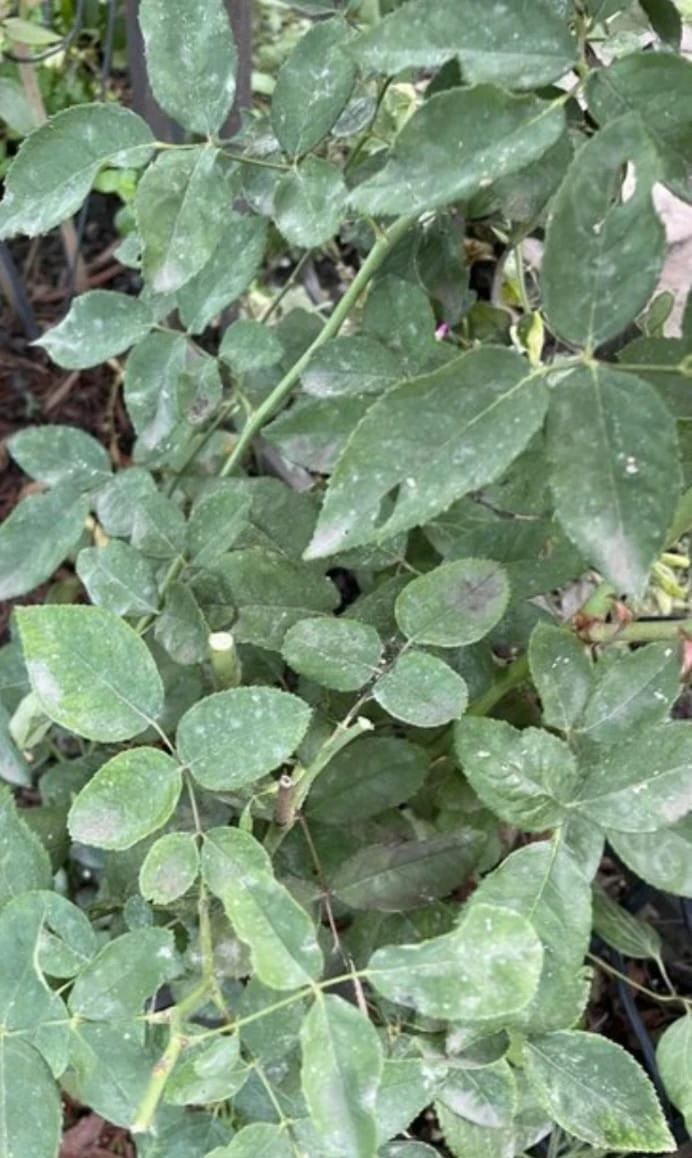
- Rust: Rare on Double Delight. Remove any affected leaves and clean up debris in fall.
Sanitation is big: remove fallen leaves, avoid crowding, and water at the soil level.
Some years may be worse than others, but a simple spray routine and good habits keep most problems in check.
Avoid setting plants against fences or in tight corners where air does not move. In high-humidity zones, consider a dawn watering schedule to let foliage dry out with the morning sun.
Is Double Delight Good for Containers?
Yes!
Double Delight can grow nicely in a large container (at least 18 to 22 inches across, 18 inches deep).
Use quality potting mix that drains well. I like to mix in extra compost or leaf mold for steady nutrients.
- Watering: Monitor closely; pots dry out faster than garden beds
- Feeding: Fertilize a bit more often than in garden beds (every 4 weeks during the growing season)
- Winter: In Zones 5 and 6, move pots to a sheltered spot after leaves drop or insulate containers with straw or bubble wrap
Double Delight makes an awesome patio centerpiece or deckside burst of color and scent that is tough to resist.
Container growing also lets you shift the rose around your growing space to find the sunniest and most protected spot as needed.
Garden Design Ideas
I’ve seen Double Delight shining in all kinds of landscapes. Because its color and scent are so bold, it easily becomes the highlight in:
- Formal rose beds: plant in groups of three for a classic centerpiece
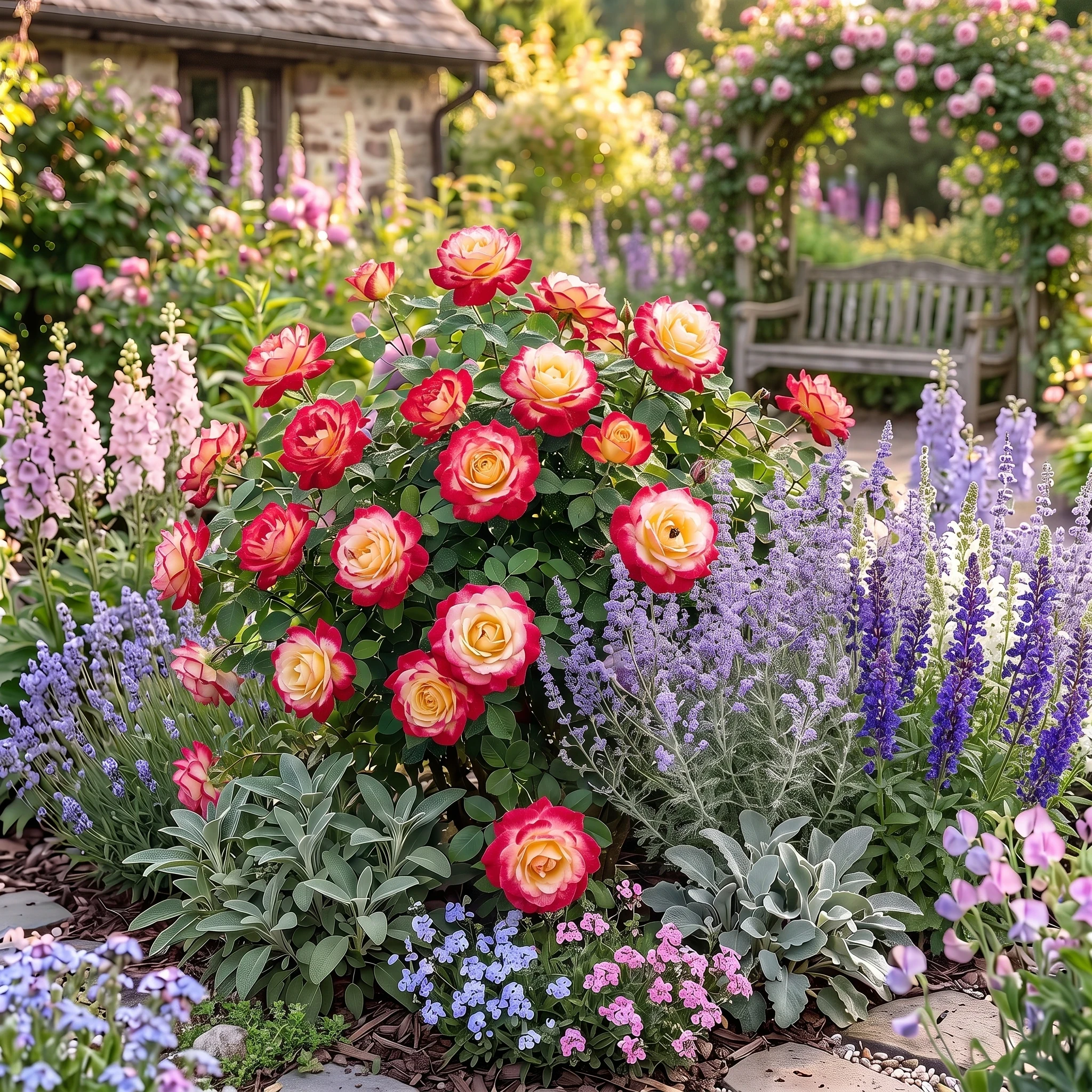
- Cottage gardens: mix with lavender, salvia, or pink and purple perennials for a relaxed look
- Fragrant gardens: combine with other sweet-smelling roses or nearby herbs
- Entryways or front borders: show off blooms right by your door
- Cut flower gardens: grow with cosmos, larkspur, or delphinium for easy bouquets
- Mixed perennial borders: try silverleaved or blueflowered partners below
Double Delight draws pollinators too, so use it as part of a wildlife-friendly design.
You can shape it as a specimen, back border, or backdrop for lower annuals to create levels of interest through the seasons.
Best Companion Plants
Double Delight’s creamywhite and red petals look amazing next to blues, silvers, and purples.
Here are easy combos I’ve used and liked:
- Lavender: Cool blue spikes and silvery foliage, plus extra fragrance
- Catmint (Nepeta): Blue-mauve flowers, soft scent, tough as nails
- White Salvia: Echoes the white petals and adds pollinator action
- Blue Delphinium: Tall and elegant, makes the red pop even more
- Purple Alliums: Round blooms add structure and contrast
- Silver Artemisia: Softens the base with silvery foliage
- Boxwood: Gives a tidy, formal frame if you like neatly clipped edges
You can also try ornamental grasses for movement and seasonal interest, or small spring bulbs (like crocus and grape hyacinth) for underplanting.
This approach gives early color before the rose leaves emerge.
Pros and Cons
Pros:
- Stunning bicolor blooms: real eye candy
- Knockout fragrance: fills a yard or room with scent
- Big, shapely flowers for vases or shows
- Blooms repeatedly from spring to frost
- Long stems perfect for cutting
- Beloved classic with a proven garden pedigree
Cons:
- Needs some disease prevention in damp, humid climates
- Petal color varies with temperature and sunlight
- Loves regular feeding, deadheading, and pruning
Most gardeners say the pros far outweigh the cons; as long as you keep an eye out for disease and stick to a simple routine, Double Delight is a low-risk, high-reward choice for colorful fragrance in your garden.
Who Should Buy Double Delight Rose?
Gardeners who want serious flower power and fragrance will love Double Delight. It is a mainstay for:
- Fragrance seekers—the number one reason people still plant this rose
- Hybrid tea fans—standout looks and reblooming habit
- Cut-flower lovers—long stems and slow-opening buds rule for arrangements
- Cottage and formal gardens alike—from borders to bed centers
- Anyone growing roses in Zones 5 to 9 who’s ready for a few basic rose-care chores
If you want an ultralow-maintenance landscape or prefer easy-care shrub roses, you might look elsewhere.
But for the right gardener, Double Delight is still top tier.
Even veteran rose growers say it can be the heart of a rose collection or a signature feature near an entry or patio.
Where to Buy Double Delight Rose
When you are ready to pick up your own plant, you will find Double Delight at both local nurseries and a ton of online rose specialists.
Here is what I look for when buying:
- Bare Root vs Potted: Bare-root roses are usually shipped in late winter or early spring; they settle in fast once the soil warms up. Potted roses can go in anytime during the growing season.
- Healthy Canes: Look for multiple green canes (stems) with no signs of cracking or shriveling.
- Strong Roots: Roots should be beefy; if potted, fill the container but not circling tightly.
- Right Size Plant: Larger, wellbranched roses bounce back from transplanting better.
- USDA Zone Suitability: Always double-check the hardiness info—good growers will highlight this.
- Plant Guarantees: Most reputable growers offer a 30 to 365 day replacement or refund window.
Big online names like Nature Hills and other established mail order rose specialists usually give you great details, seasonal shipping windows, and careful packaging.
Plus, their plants are graded to suit the zones they ship to.
Check reviews and ask if you are not sure about a shipper; most sellers will happily answer garden questions and help you pick the right rose for your region.
Frequently Asked Questions
Why is Double Delight Rose so popular?
It’s a mix of those amazing bicolor blooms, knockout scent, and repeat flowering. The plant is a classic for both beginners and show growers.
Does the flower color change as it blooms?
Yes, newly opened blooms have subtle blush, which deepens to vibrant red with sun exposure.
How fragrant is Double Delight?
The fragrance is very strong, spicy and sweet, and fills the air around the bush, especially on warm afternoons.
Is Double Delight suitable for containers?
It can do great in a large pot (18 to 22 inches across), especially if you keep it watered and fed regularly.
Which USDA zones are best?
Zones 5 to 9 are ideal, with winter protection needed in the colder parts of Zone 5.
Does it bloom repeatedly?
Absolutely. Blooms in flushes from late spring through fall.
Is Double Delight disease resistant?
It’s moderately resistant but does best with good air flow and cleanup habits.
Does it make a good cut flower?
Yes, one of the best for vases and arrangements—big, long stems and blooms that hold beautifully for several days.
Is Double Delight suitable for beginners?
It’s pretty forgiving if you’re learning how to care for hybrid teas; a solid intro to fancy roses.
How much sunlight does Double Delight need?
Full sun is ideal (6+ hours/day); more light means better color and scent.
Final Verdict
Double Delight’s reputation as one of America’s best bicolor roses is well-earned.
Its blooms stop people in their tracks, and the scent is unmatched.
If you garden in Zones 5 to 9 and want a rose that brings something extra to your beds, borders, or bouquets, Double Delight is a rewarding choice.
Just give it the care that hybrid teas need.
The only major catch?
You will need to stay on top of feeding, watering, and a little disease watching in damp spells.
For fragrance fans and show bloom chasers, it is pretty tough to top Double Delight.
Looking to try even more unique roses?
Check out my guide Top Unusual Rose Colors For American Gardens: 12 Rare Roses For USDA Zones 4–10 (2026 Guide) to and get inspired for every garden style.
With so many eye-catching varieties out there, your next rose garden could be a show all its own!
Happy gardening!!!!
Here’s a little transparency: Our website contains affiliate links. This means if you click and make a purchase, we may receive a small commission. Don’t worry, there’s no extra cost to you. It’s a simple way you can support our mission to bring you quality content.”
This is amazing site, Did not know about hybrid tea rose, it is very interesting, this guide super detailed and helpful, and the “wow” factor, and is Very strong, spicy-sweet, very strong the fragrance is great especially potent on sunny days,
I did not know about the Double Delight’s scent, is basically legendary. do like the Ads in between the post, i like the info on Sanitation, remove fallen leaves, This was a great tip, Blooms repeatedly from spring to frost, will need some disease prevention in damp, humid climates
what I look for when buying, Mostly Strong Roots, these plants are graded to suit the zones they shipping too, that’s good tip, Thank you for a great Blog post, i enjoyed reading
Hi Timothy,
Thank you so much for your kind and detailed comment!
I am delighted to hear you enjoyed the review and found it helpful.
Double Delight has certainly earned its reputation over the years, and its legendary spicy-sweet fragrance is one of the biggest reasons so many gardeners continue to grow it
. As you mentioned, the scent is often at its strongest on warm, sunny days, making it a real standout in the garden.
I am also glad you found the tips on sanitation and disease prevention useful. Simple practices like removing fallen leaves, improving air circulation, and keeping the area around the plant clean can make a big difference in reducing problems, especially in humid climates.
You also brought up an excellent point about strong roots. Healthy, well-established root systems are one of the best indicators of a quality rose and give the plant the best chance to establish quickly and produce vigorous growth.
Purchasing from reputable nurseries that supply plants suited to your growing zone is always a wise investment.
Thanks again for taking the time to read the article and leave such encouraging feedback.
I really appreciate your support, and I hope you continue to enjoy the other rose reviews as well.
Happy gardening !!!!
Raymond