
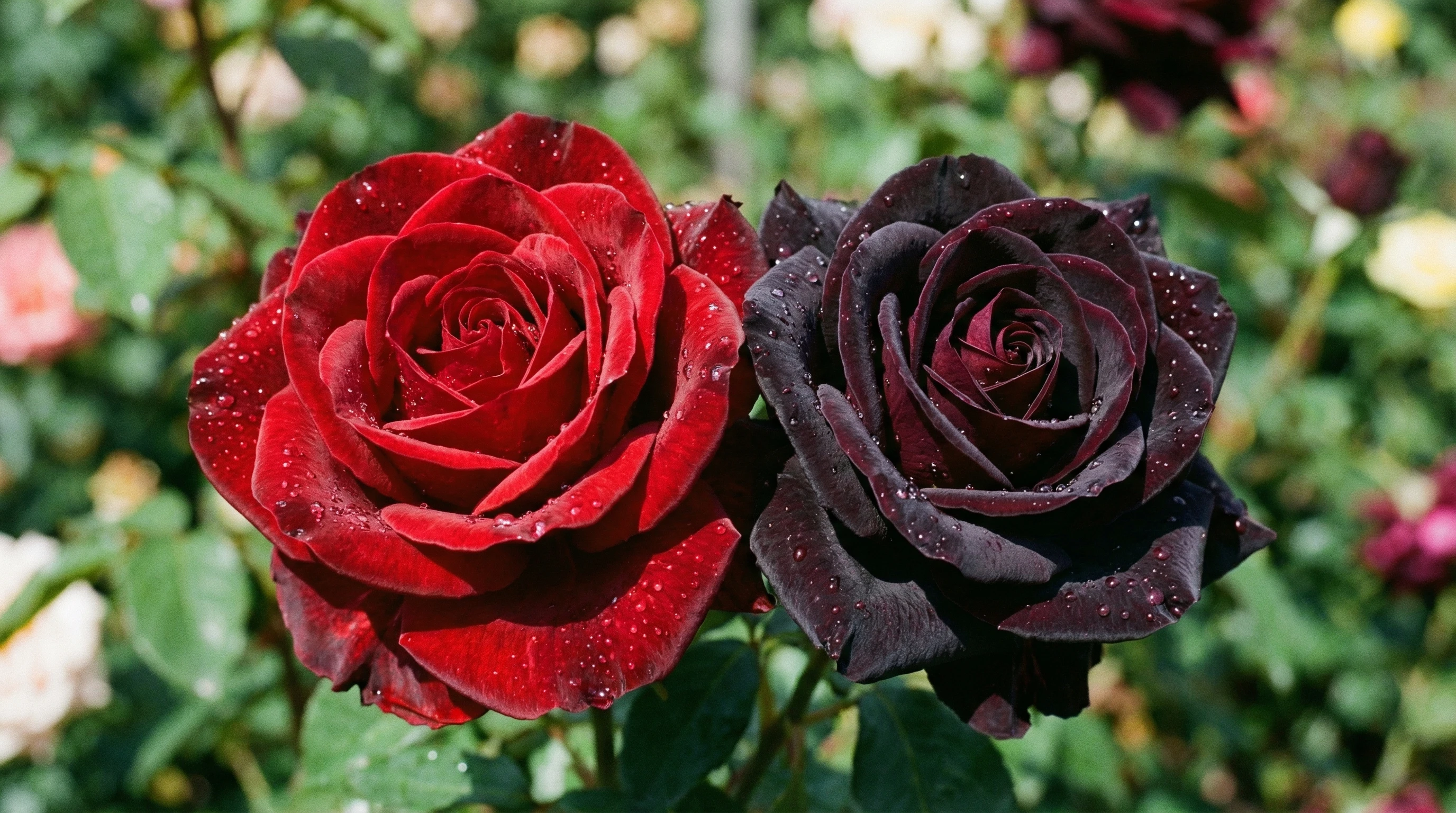
Few flowers get as much attention as the so-called “black” rose.
People love the drama, the rarity, and the mystical feel—almost like something out of a fairy tale.
But walk into any garden center or browse online, and you’ll notice that most “black” roses look more like a moody shade of red than true jet black.
Meanwhile, deep red roses grip the spotlight for classic elegance, but are they really just a darker part of the red spectrum, or does the mystery go deeper?
Here’s the thing: the line between genuinely black roses and very dark reds can be confusing.
Growers, florists, and collectors all have their own takes, and marketing language only adds to the hype.
This guide clears up what’s real and what’s legend, getting into the science, appearance, symbolism, and even which ones will actually thrive in your backyard.
Interested in more unusual rose colors? Check out Unusual Rose Colors: A Complete Guide or get the full scoop on the meaning and care of unique varieties with Black Roses: Symbolism, Cultivation, and Popular Varieties.
The Reality: Can Roses Actually Be Black?
The dream of a velvety, pitch-black rose stretches back centuries, but take a closer look and you’ll see the story isn’t as simple as it seems.
Why True Black Roses Aren’t Found in Nature
Roses get their color from pigments called anthocyanins.
These are great at producing reds, purples, and even deep burgundies, but there’s a catch: none of the natural rose pigments can completely absorb every wavelength of visible light the way true black (like that found in black clothing, which uses a different pigment called melanin) does.
This means even the darkest roses come off as deep red, purple, or burgundy under sunlight.
Some plants, like certain tulips or calla lilies, can look just about black, but even those have a hint of deep purple or maroon if you look close.
Why the Black Rose Legend Sticks Around
Even though truly black roses don’t grow in the wild, nurseries and seed sellers know that the romance of a black bloom is great for business.
Sometimes, catalogs, or even social media filters, make roses look darker than they really are.
Lighting or photography tricks can make a burgundy rose turn nearly black in pictures, which hooks people into hoping such a thing exists in real life.
This blend of science, art, and marketing keeps the black rose myth alive and well.
So, What Are “Black Roses” Really?
When you see a black rose at a store or on Instagram, it’s almost always just a clever example of lighting, labeling, or, sometimes, dye.
Ultra Dark Red Varieties Sold as Black Roses
Some roses do a neat trick of looking almost black to the naked eye. Cultivars like ‘Black Baccara’, ‘Black Jade’, or ‘Black Beauty’ are actually a rich, deep maroon, sometimes with velvety petals that soak up light.
Petal thickness and surface texture can help create that illusion, especially in colder weather or shade, where colors look richer and more saturated.
During certain seasons or bloom cycles, these flowers might look especially moody and dark, but bring them out in the bright sun, and most people will see their underlying red or purple hues.
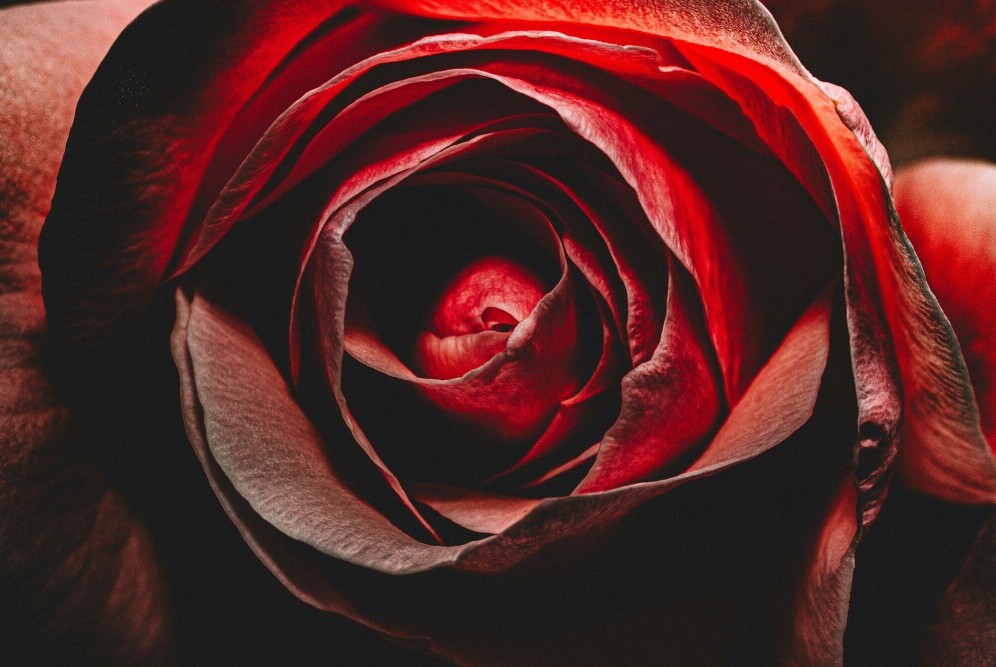
Dyed and Artificially Colored Roses
To get a true black color for an event or bouquet, florists often dye white or cream roses with special flower safe dyes.
These can look very dramatic in a vase, but the color won’t last as the flower wilts, and you won’t find anything like this blooming in a backyard.
Trying to grow a dyed rose in your garden won’t work—the original plant doesn’t have genetically black petals, and dyed roses aren’t “black rose seeds” at all.
There’s also a wider debate about the sustainability and honesty around these dyed flowers, especially when they’re sold as something they’re not.
What Makes a Deep Red Rose?
While black roses have a mysterious vibe, deep red roses bring their own drama, but they’re very much “real” in the world of roses.
Key Features of Deep Red Roses
Deep red roses get their color from strong anthocyanin pigmentation.
This pigmentation stays consistent over time and isn’t just a trick of the light.
The color can range from dark, velvety crimson to a rich burgundy, but in full sun, these roses keep their depth without flipping to a pure black.
One thing that really sets deep red roses apart is their ability to stay bold and beautiful in a wide range of garden conditions.
Popular Deep Red Rose Varieties
Some names that pop up a lot in this group include:
- ‘Black Baccara’ – famous for dark, almost mahogany red petals with a velvet finish
- ‘Barkarole’ – rich, dark red, lush blooms and strong stems
- ‘Crimson Glory’ – a classic hybrid tea rose with a strong fragrance and big, fluffy flowers
A lot of these roses offer not just great color but also hearty blooms, nice fragrance, and repeat flowering, making them worth planting if you want something bold but reliable.
Why Some Roses Look Black (But Aren’t)
The illusion of a black rose is all about chemistry, climate, and even garden location.
Light, Temperature, and Petal Chemistry in Color Depth
Cooler weather brings out extra pigment in certain roses, leading to those super saturated, dark petals.
Clouds or shade can make blooms look even deeper. When a new flush of flowers opens (especially after a cool night), the blooms are at their richest.
Meanwhile, bright sun or heat can quickly fade those petals, leaving a lighter, sometimes washed out red or purple instead of deep black.
Florist and Garden Growing Differences
Roses grown in greenhouses or cooler, shaded garden spots can hold onto their dark color longer.
But take that same rose and put it in a hot, sunny spot, and you’ll likely see the color switch up.
Florist photos can be edited or shot in perfect lighting, which doesn’t always line up with what you’ll see in your own garden.
How Rare Are Black Roses vs Deep Red Roses?
True Rarity—Black Roses vs Deep Reds
While truly black roses are pretty much a myth, the few very dark cultivars are rare because they’re so carefully bred (and usually more expensive).
Deep red roses, however, are well established, and their best cultivars are fairly easy to find at reputable nurseries or from rose specialists.
The real catch comes from the rarer, highly bred deep reds that fetch a higher price.
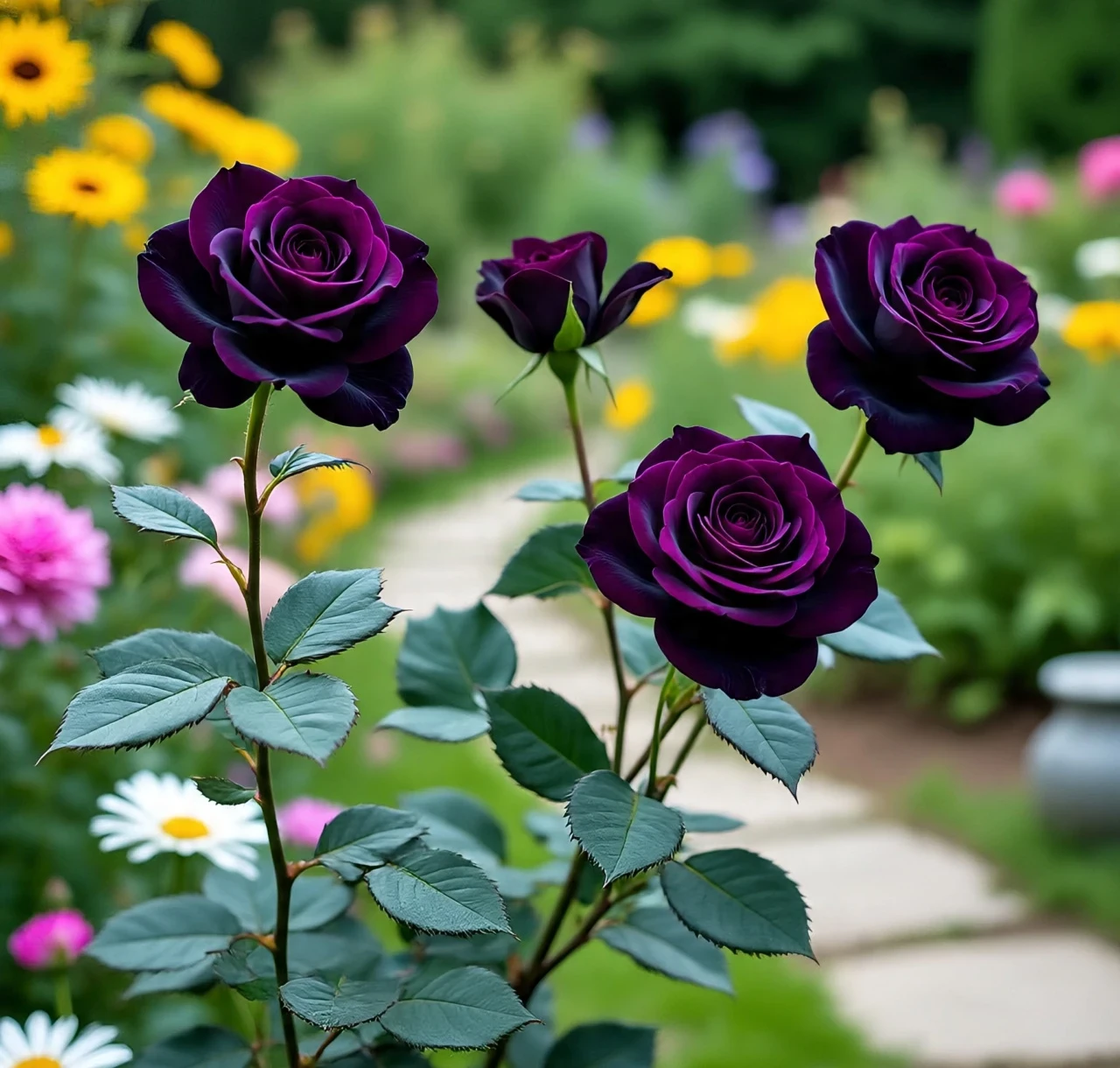
Availability and What You’ll Find at Nurseries
Anyone promising live “true black” rose plants is bending the truth. You won’t find seeds or bushes that reliably produce black roses in the way people expect. On the other hand, deep red roses with stable coloring are widely sold and come in different price points, so most home gardeners can find something that fits their budget and style.
Which Type Works Best in Home Gardens?
Challenges of Growing Ultra Dark (“Black”) Roses
It’s tempting to try the darkest roses, but they can be tricky.
Ultra dark varieties often have petals that fade quickly in heat and suffer more from garden diseases.
Their color may also swing from moody to almost ordinary over different seasons or weather patterns.
If you want bold color and constant wow factor, these roses can be fussy, needing shaded spots or extra pampering to look their best.
Deep Red Roses: The Real Performers
Deep red roses, on the other hand, tend to handle everything from hot summers to rainy springs without losing their flair. They usually work in containers, beds, borders—basically anywhere you’d put a regular rose, but with a dramatic twist. Consistent color, strong fragrance, and solid disease resistance make them reliable and easy to care for if you’re not looking to micromanage your garden.
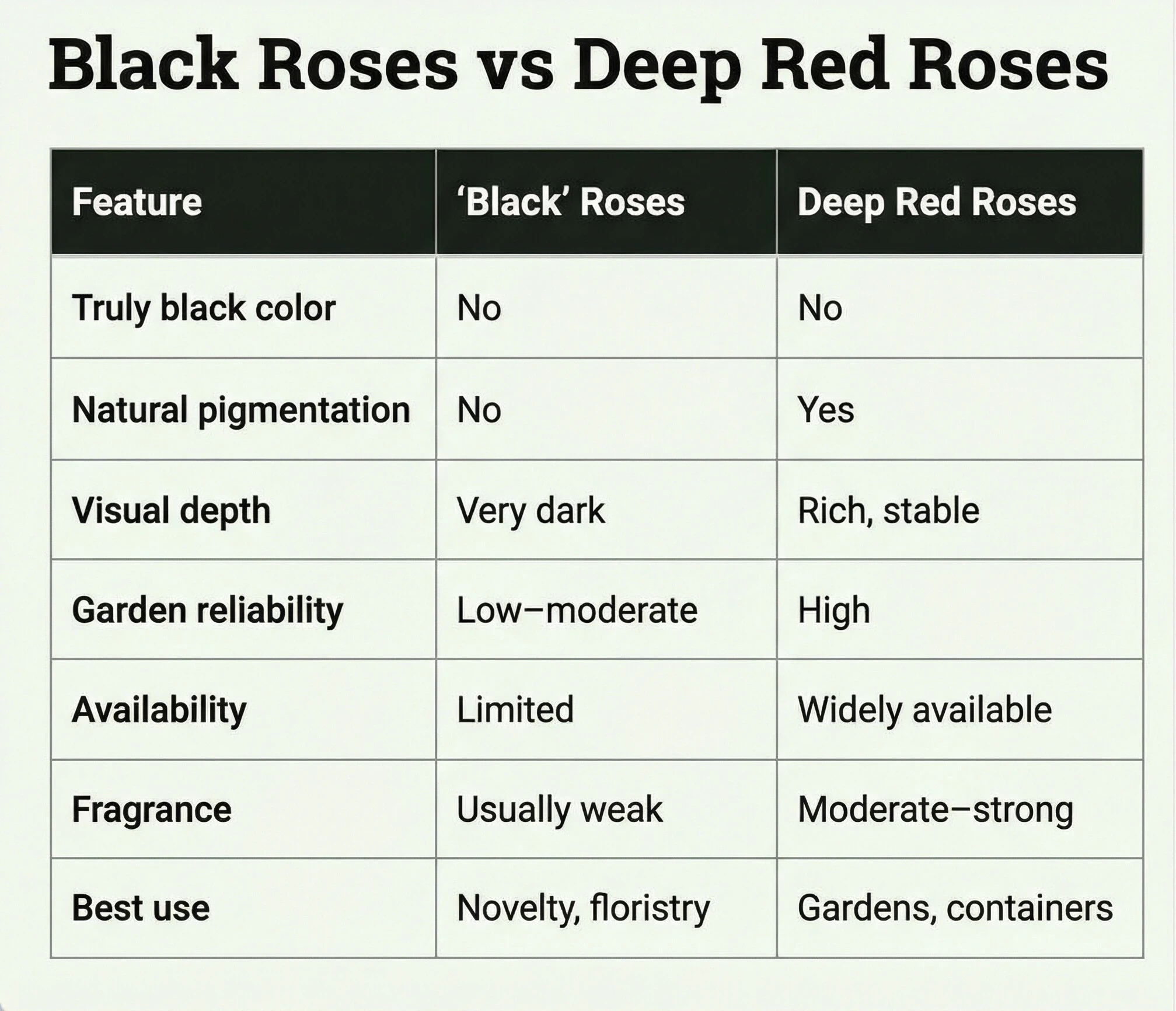
Symbolism and the Meaning Behind the Colors
Color isn’t just about looks; it signals emotion, too.
Black roses are loaded with mystery, representing farewells, rebellion, or the start of something new.
Their vibe is moody, intense, a bit of an enigma. Deep red roses, meanwhile, are the classics for love, romance, and elegance.
They work in everything from wedding bouquets to anniversary gifts and never go out of style.
If you’re picking for the message as well as the look, it helps to know what each color stands for. There’s more on this in Black Roses: Symbolism, Cultivation, and Popular Varieties.
How to Pick: Gardening Goals and Color Preferences
When to Choose “Black” Roses
- You’re going for high drama and don’t mind color switching up between seasons or blooms
- Cooler climates or some shade are available to bring out the darkest color possible
- You don’t mind extra upkeep to avoid sun fade or petal spotting
When Deep Red Roses Are the Better Fit
- You want rich color and a classic rose experience (fragrance, repeat bloom, reliability)
- Easy maintenance and adaptability across soil types or climates matters to you
- You’re planting for impact that lasts beyond just one season
Buyer Pitfalls: What Trips Up Most People
- Expecting garden roses to turn out jet black (the science just isn’t there)
- Falling for “black rose seeds” from questionable sellers
- Assuming darker roses are more sun or heat resistant (they’re often not)
- Piling on fertilizers thinking it’ll get roses darker. Genetics play a bigger part
Black and Deep Red Roses: FAQ
Are black roses actually real?
No garden variety produces a truly black rose. What people call black roses are just really dark reds or burgundies.
Why do some red roses look almost black?
Cool weather, shade, and thick, velvety petals can push some reds so dark they look black at a glance.
Do black roses keep their dark color in summer?
Usually not. Heat and strong sun fade the dark pigments, making petals lighter and more red or purple.
Are deep red roses easier to grow?
Most deep reds are just as easy as regular hybrid teas and don’t need special care to keep their color or health.
What’s the darkest rose I can buy?
‘Black Baccara’ is a classic for lush, deep color, but there are several hybrid teas and floribundas with serious darkness. Check local nurseries for a good match to your climate.
Which Rose Truly Delivers on Color?
If you’re searching for true black, roses will only ever get “close enough” with deep burgundy shades.
Science hasn’t found a way to make a fully black petaled rose, but deep red roses really nail that gothic drama with way less fuss and a lot more garden performance.
The good news is there’s a lot of beautiful middle ground, and color can swing toward very dark with the right conditions, even if it’s never pure black.
Explore More Rose Color Comparisons and Tips
Check out more rose-themed guides like Unusual Rose Colors: A Complete Guide, Blue Roses vs Lavender Roses, and (coming soon) Green Roses vs White Roses.
If you love repeat bloomers, you might enjoy my Repeat Flowering Roses series for even more reliable color in your garden.
Hello Raymond!
This was such an interesting read. I honestly never realized how much nuance there was between so-called black roses and deep red ones until reading this. I’ve always lumped them together in my mind, but the way you explained the differences made me slow down and really think about what we’re actually seeing when we look at them.
I loved how you touched on the emotional side of it too. Flowers carry so much meaning, and black roses especially seem to stir up curiosity and mystery in a way deep red roses don’t quite do, even though they’re both beautiful. It made me think about how intentional someone has to be when choosing one over the other.
For someone who doesn’t have a lot of experience picking roses, how noticeable is the difference in person compared to photos? And do black roses tend to work better as a focal point, or do they blend well when mixed with lighter blooms?
Thank you for breaking this down in such a thoughtful, easy-to-follow way. I’ll definitely look at roses a little differently now.
Angela M 🙂
Hi Angela
Thanks for saying that!
You are right — most people lump black and deep red roses together, but once you see them side by side, the difference is actually pretty striking.
1. In person vs. photos: how noticeable is it?In person, the difference is way more obvious than photos make it seem. Photos, especially with phone cameras, tend to flatten color and boost contrast. That makes a deep red like ‘Black Baccara’ look almost black on screen. But when you see it in daylight, you’ll catch that velvety red undertone — it’s dark, but it’s still red.True “black” roses like ‘Black Jade’ or ‘Baccara Black’ have that smoky, purplish-brown base.
In person, especially in shade or evening light, they look almost charcoal with a hint of deep wine. The effect is moodier and less warm than deep red.
It is one of those things you notice immediately when you’re standing in front of them.So if you’re buying online: check photos taken in natural light, and read the variety name. If it says “deep red” or “crimson,” it’ll look red in person. If it says “black,” expect that dark, almost gothic tone.
2. Focal point vs. blending with lighter blooms
Black roses work best as a focal point. Because they are so dark, they naturally draw the eye and create contrast. A few stems in a vase or a small grouping in a bed instantly make everything around them look brighter.
When you mix them with lighter blooms — think soft pink peonies, white lilies, or pale cream garden roses — the contrast is what makes them pop.
The light flowers look softer, and the black roses look even more dramatic.
They do not really “blend” in the way pastels do.
Instead, they act like a frame that makes the lighter colors stand out.Deep red roses are more flexible. They blend nicely with other warm tones like orange, gold, and burgundy, and they can also hold their own as a main feature.
Quick way to think about it: Use black roses when you want mystery, drama, and contrast.
Use deep red when you want romance and richness that still plays well with other warm colors.
Glad this changed how you look at them!
If you are thinking of adding either to your garden or a bouquet, tell me what other flowers or colors you are working with.
I can suggest combos that will make whichever you pick look intentional, not accidental.
What vibe are you leaning toward for your next arrangement — moody and dramatic, or romantic and classic?
Best regards,
Raymond