
Most advice about seed ends once you have picked varieties.
For a grower moving from a few packets to orders measured in thousands of seeds or by weight, the harder question is where the seed comes from and what happens if it is bad.
This guide covers how to source vegetable seed for a small farm as a supply problem: how much to buy, how to read what you are buying, how to spread the risk, and how to keep records that improve each order.
Why seed is the input that fails quietly
A bad batch of fertiliser shows up in a lab report.
A leaking irrigation line shows up as a wet patch.
Poor seed shows up weeks after you have paid for it, as thin stands, uneven emergence, off-type plants, or disease carried in on the seed itself.
By then the bed is prepared, the labour is committed, and the planting window may be closing.
The cost is also hard to trace.
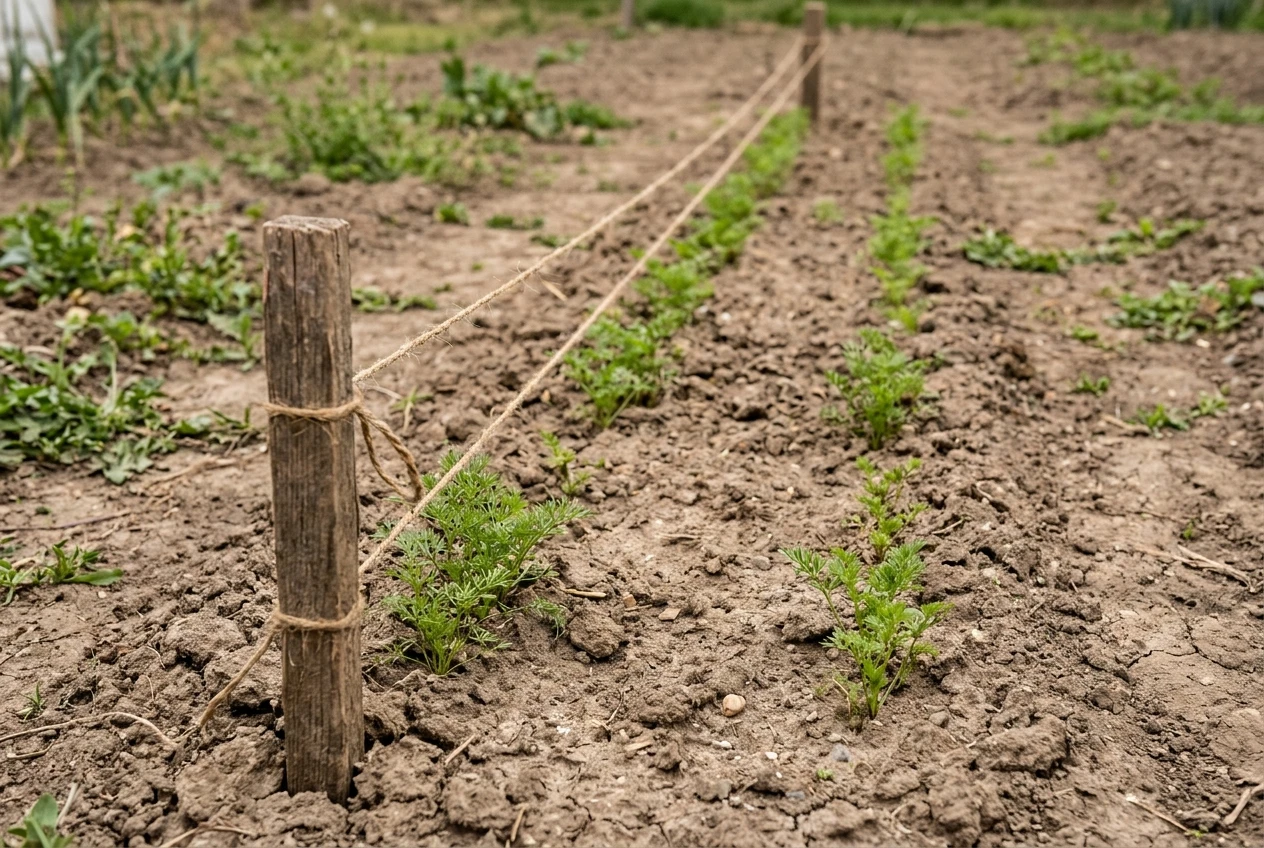
If a block of carrots comes up patchy, the cause could be soil crusting, irrigation timing, seed age, or a low-germination lot, and without records you cannot tell which.
Growers often blame the weather and reorder from the same source.
Seed is a small share of total production cost but sets the ceiling for everything after it.
Fertility and water only help plants that actually establish, which is why the sourcing decisions below come before the inputs covered in the soil fertility program and the irrigation plan.
Work out how much seed you need before you order
Start from the number of plants you want to harvest, then work backwards.
Buying by feel leads to either a shortfall in the key week or a shed full of seed that will not be viable next year.
The basic calculation:
- Decide how many harvestable plants you need (or metres of row, for direct-sown crops).
- Divide by the germination rate on the seed lot, written as a decimal.
- Divide again by your expected establishment rate: the share of seedlings that survive thinning, transplanting, pests and weather.
- Add a margin for sowing errors and replacements.
For example, say you want 5,000 broccoli plants to harvest. The lot germinates at 90 percent and you expect 90 percent of seedlings to survive transplanting.
That is 5,000 divided by 0.81, or about 6,170 seeds, before your margin. Your own establishment figure should replace the 90 percent guess as soon as your records can supply one.
For direct-sown crops, work from the seeding rate per metre of row, multiplied by total row length. Then allow for the extra seed that thinning wastes, and for any gaps you will need to resow.
Seed is sold by count for some crops and by weight for others, and the number of seeds per gram differs between crops, varieties and even lots.
Check the count or ask the supplier before converting a weight into a seed number. A small difference in seed size changes your order noticeably on a large planting.
What to check on a seed packet and a seed lot
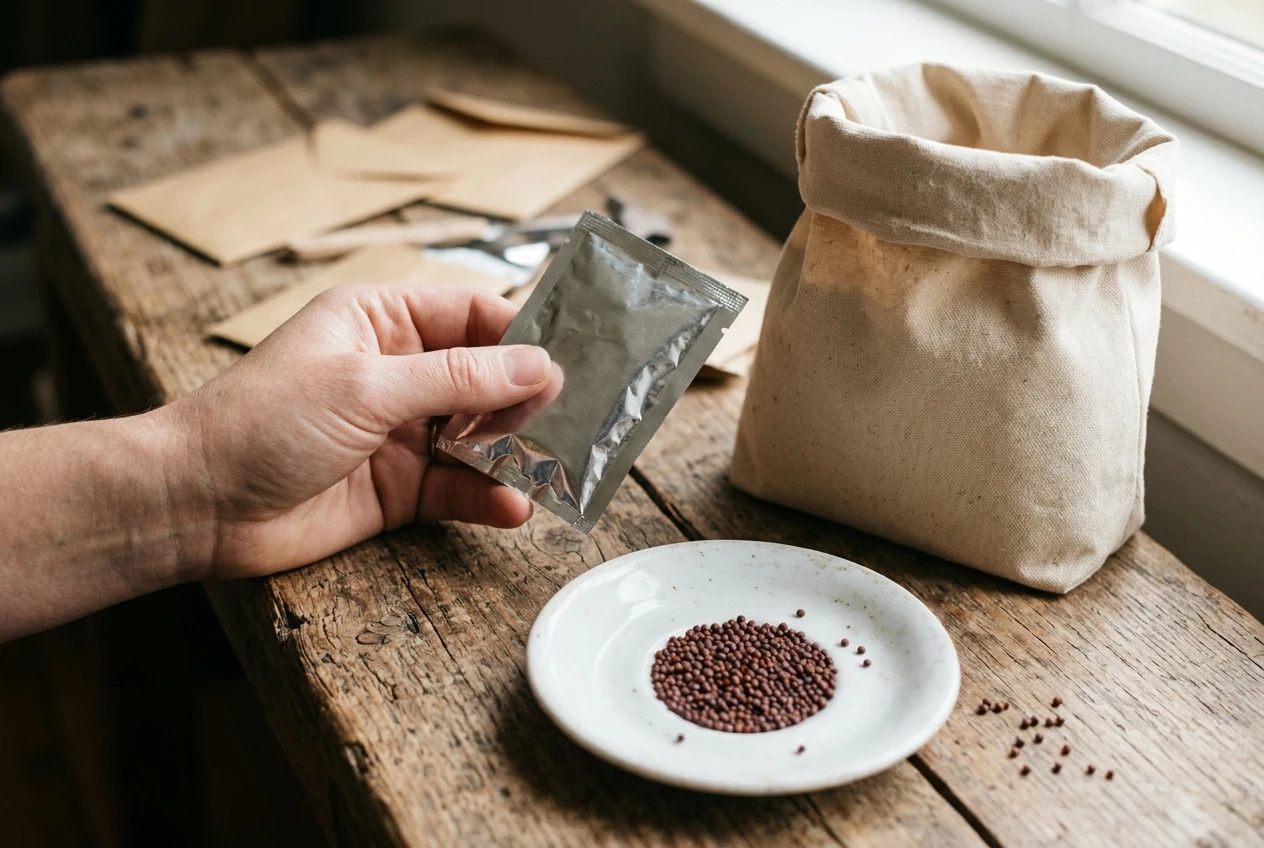
The label tells you whether the seed is worth its price. Read it before you compare costs.
The details to look for:
- Variety name and crop. Confirm the exact variety, not just the crop type. Similar names circulate for different varieties.
- Lot number. This identifies one batch of seed. Two packets of the same variety can come from different lots with different quality, so record the lot number every time.
- Germination percentage and test date. Germination is measured under lab conditions on a specific date. A recent test on a high-percentage lot is a better sign than an old one, because viability falls as seed ages.
- Purity. This describes how much of the contents is the intended seed rather than other crop seed, weed seed or inert matter.
- Treatment. Seed may be untreated, fungicide-treated, or coated. Treated seed matters for handling, storage and any organic certification you hold.
- Organic status. If you sell as organic, check what documentation the supplier provides and what your certifier requires.
- Pack date or “sell by” information. Where a date is printed, it tells you how old the seed is before it reaches your storage.
Label requirements differ by country and region, so some of this information may be missing on cheaper retail packets.
If the germination percentage or lot number is not printed, ask the supplier.
A supplier who cannot tell you the germination figure for a lot you are buying in volume is giving you information about the risk.
Retail packets, bulk and wholesale, and regional seed companies: where each fits
Each source suits a different stage of growth, and most farms use a mix.
Retail packets suit small plantings, new varieties you are trialling, and crops where you need only a few hundred plants.
The cost per seed is the highest, but you avoid holding leftover stock.
Once you plant the same crop in large blocks, packets become expensive and the lot-to-lot variation is harder to manage.
Bulk and wholesale seed suits your main crops, where you know the variety works and plant it every season.
Per-seed cost falls, and larger packs often come with fuller lot information.
The trade-off is commitment: you buy larger quantities, so storage and viability over time matter, and an error in your order costs more.
Some wholesale suppliers set minimum order sizes or require an account, so ask about this early, not during the sowing rush.
Regional seed companies are worth including because they trial and select varieties in conditions close to yours.
They can speak to your day length, season length, soil type and common local diseases in a way a national catalogue cannot.
They are also easier to phone when something goes wrong with a lot.
Their range may be narrower, so they often fit best for crops where regional adaptation matters, such as storage crops or varieties with a tight maturity window.
None of these is the right answer for every crop. Match the source to the crop’s importance, the quantity, and how much variety performance depends on local conditions.
Spread your risk: two suppliers for your key crops and small trial blocks for new varieties
If one crop provides a large share of your income, do not source all its seed from one supplier.
A single poor lot, a late delivery, or a variety sold out for the season can then take out that entire crop.
For your three or four most important crops, split the order between two suppliers.
There are two ways to split:
- Same variety, two sources. This protects you against a poor lot or a delivery failure. If one lot performs worse, your records will show it, and you can shift the next order.
- Two comparable varieties, two sources. This protects you against variety-specific problems such as a disease or a weather event hitting one variety harder. It also gives you a direct comparison within your own conditions.
Splitting costs you some price breaks, so apply it where the crop’s value justifies it.
A minor crop planted in a small block does not need the same redundancy.
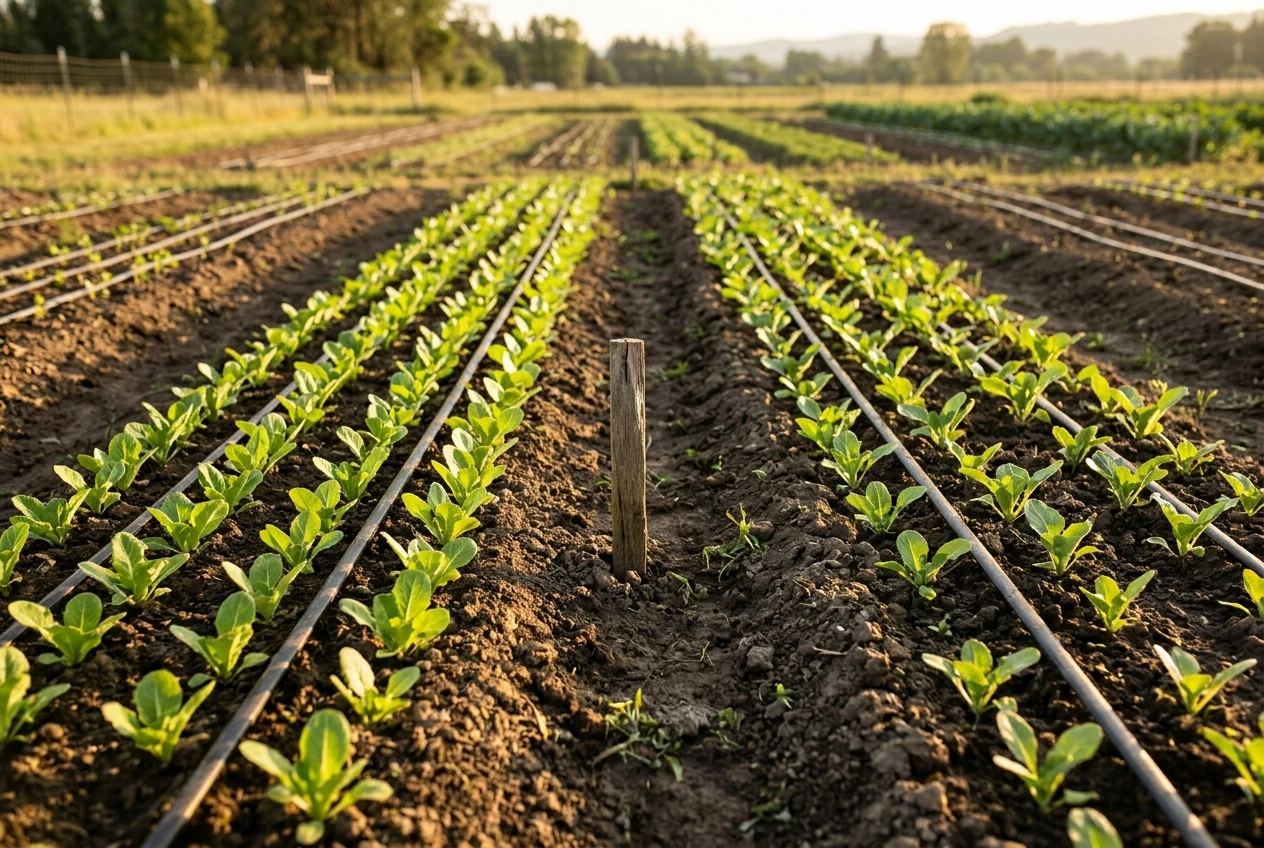
New varieties should enter your system as trials, not as full replacements.
Give a new variety a small block next to your current variety, planted on the same date and managed the same way.
Compare emergence, uniformity, days to harvest, marketable yield, and how the crop handles in storage or on the market stall.
One season in a small block costs little. One season of a failed variety across a full planting costs the crop.
Treat a supplier’s description as a claim to test. Maturity days and yield figures in catalogues come from the supplier’s trial conditions, which may not match your site.
Order early, store cool and dry, and germination-test left-over seed
Popular varieties sell out, and the best lots go first.
Placing your order in the off-season gives you time to resolve a shortage by switching variety or supplier, instead of accepting whatever is left in spring.
Ask suppliers when their ordering windows open and what their delivery lead times are, then put those dates in your calendar.
When seed arrives, check it against your order: variety, quantity, lot numbers, and the condition of the packaging.
Report problems immediately, while the supplier can still replace the order in time.
Store seed cool, dry and dark. Heat and humidity shorten seed life more than anything else you control.
Keep packets in sealed containers, away from direct sun and from sheds that swing between hot days and damp nights.
Some crops hold viability for several seasons and others lose it quickly, so do not assume left-over seed behaves like the previous year’s.
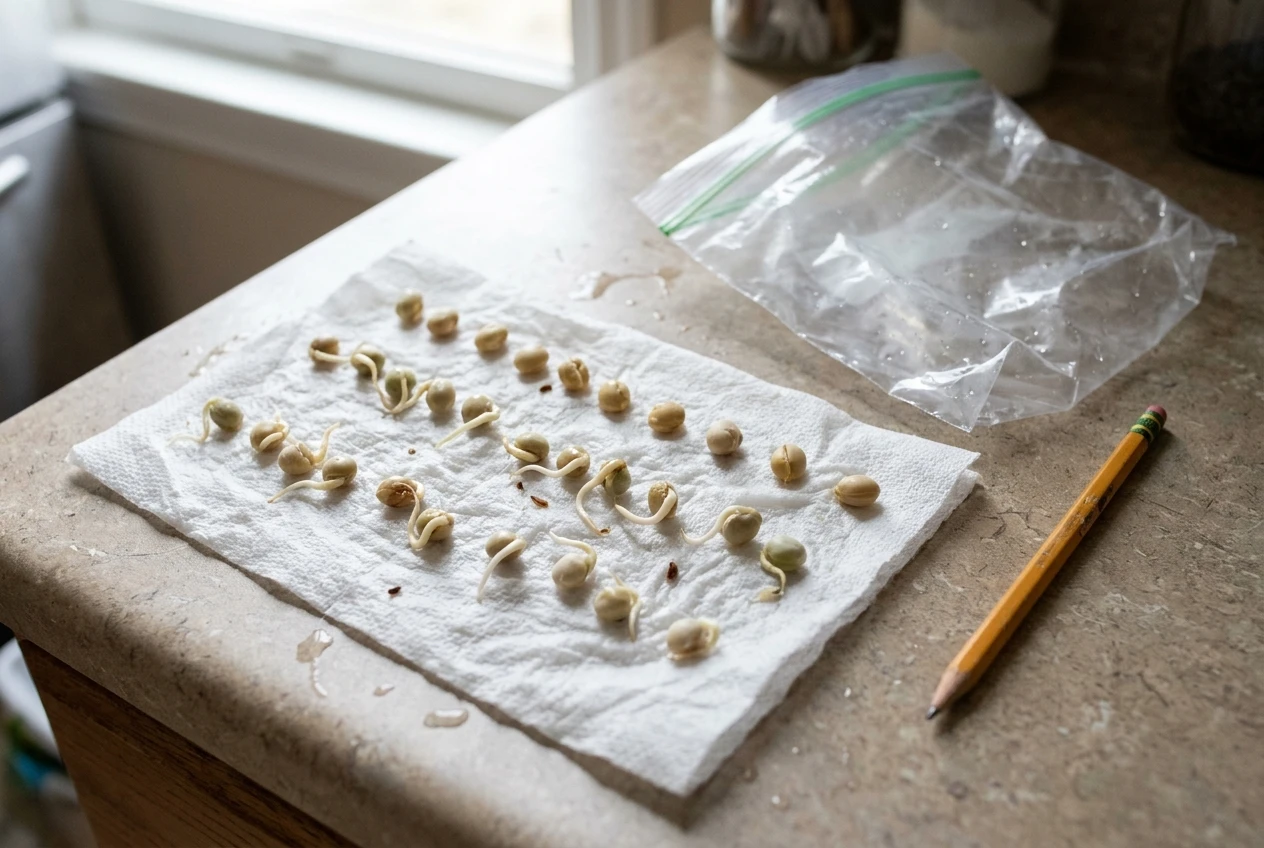
Before using leftover seed in volume, run a germination test:
- Count out a set number of seeds, such as 50 or 100.
- Place them between damp paper towels in a bag or container at room temperature.
- Check at the expected germination time for the crop and count the seeds that sprouted.
- Divide sprouted seeds by total seeds to get your percentage.
Use that figure in your quantity calculation.
A lot that tests lower than you hoped can still be planted, but you need to sow more of it, or save it for a less critical block.
Keep a seed record that makes next year’s order better
A seed record turns each season’s results into a better order. A spreadsheet is enough. For each sowing, record:
- Crop and variety
- Supplier and lot number
- Germination percentage on the label, and your own test result if you ran one
- Sowing date and method
- Emergence date and rough stand percentage
- Transplant survival or thinning losses
- Problems noticed, such as off-types, disease, or uneven growth
- Harvest dates and marketable yield
- Quantity left over
This record answers questions you cannot answer from memory.
Did the second supplier’s lot emerge more evenly?
Was establishment really 90 percent, or closer to 75?
Did the variety you trialled mature when the catalogue said it would?
Each answer feeds back into the quantity formula and the supplier split.
Keep the lot number linked to the result. If a problem appears, you can report it to the supplier with specifics, which makes a replacement or credit conversation far easier than a general complaint.
The same records also show you where poor emergence came from other causes, such as a watering gap, and the irrigation article covers how water delivery affects establishment across a larger area.
When buying transplants from a nursery beats starting from seed
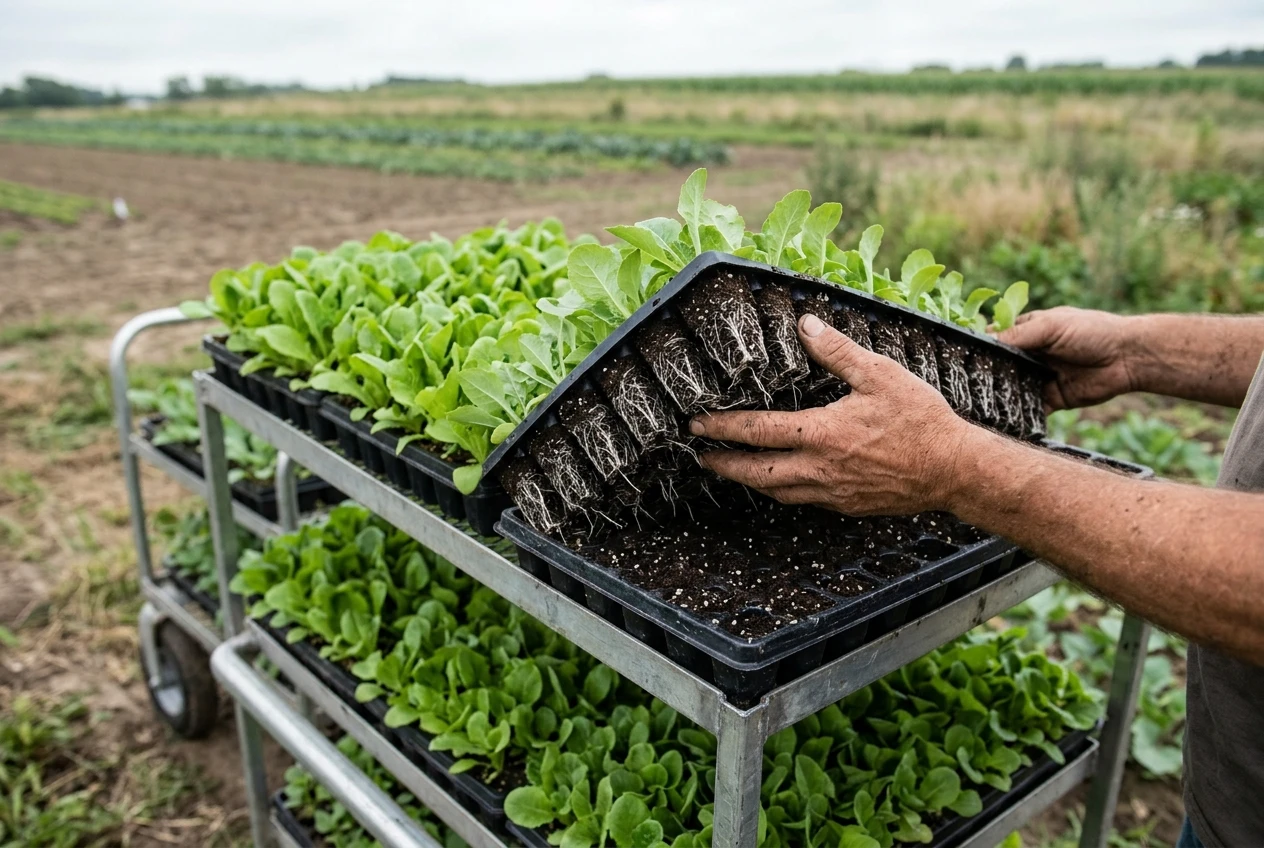
Raising your own transplants gives you control over variety and timing, but it needs bench space, heat, labour and attention in the weeks when everything else is also busy.
Buying transplants from a nursery moves part of that risk to someone else.
Buying transplants tends to make sense when:
- You grow a crop in small quantities and the setup for starting it yourself is not worth it.
- A crop is slow or fussy to start, and you lack the protected space for it.
- Your seed-starting capacity is full during your busiest sowing weeks.
- The crop is normally propagated from plants, crowns or cuttings instead of seed, as with strawberries and many perennial flowers.
- You want to test a variety quickly without committing to seed in volume.
Nursery transplants carry their own risks.
Ask the nursery which seed lots and varieties it uses, inspect plants on arrival for disease, pests and root condition, and keep a record of the nursery as a supplier in the same way you record a seed company.
If you decide to build your own starting space, the guide to greenhouse frames and glazing will help you size it for the volume you plan.
Your next step
Pick your three most important crops and request catalogues or quotes from two seed suppliers for each before your next ordering window.
Compare lot information, germination figures and delivery lead times alongside price, and put the results in your seed record as the first entries for next season.