
The Neptune rose has become a favorite among American gardeners who want something special—a lavender hybrid tea with show-stopping blooms and unforgettable fragrance.
If you have ever walked through a rose garden and caught that heady, sweet scent drifting on the breeze, chances are you are chasing after a rose just like Neptune.
Lavender roses are always in high demand for their unique color and lush scent, but finding one that really thrives in USDA Zones 5–9 is another story.
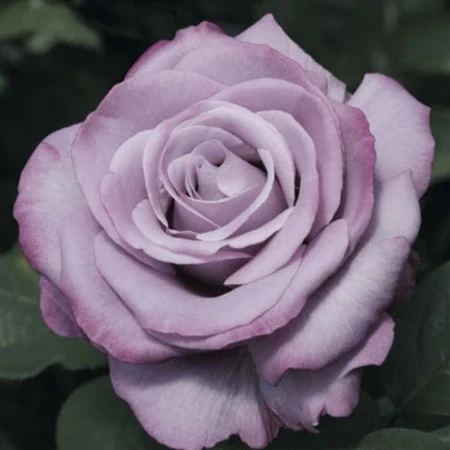
That is why I am excited to break down everything I have learned about Neptune, sharing what makes its perfume, color, and growth habits stand out for anyone looking to add a splash of lavender to their garden or bouquets.
I wrote this review for gardeners, rose collectors, flower arrangers, and anyone who cannot resist a good-smelling rose.
Whether you garden in the cold winters of Zone 5 or the warm climates of Zone 9, this guide will cover Neptune’s performance, how it holds up over the seasons, and how it stacks up to other popular lavender roses.
You will find growing tips, fragrance notes, soil prep, pruning advice, and plenty more. I will share hands-on details and practical ideas you can use right away.
Table of Contents
- Quick Verdict
- Neptune Rose at a Glance
- What Makes Neptune Rose Special?
- Flower Color and Bloom Characteristics
- Fragrance Review
- Growing Neptune Rose in USDA Hardiness Zones 5–9
- Soil Requirements
- Sunlight Requirements
- Water Requirements
- Fertilizing Neptune Rose
- Pruning Guide
- Disease Resistance
- Is Neptune Rose Suitable for Containers?
- Garden Design Ideas
- Best Companion Plants
- Pros and Cons
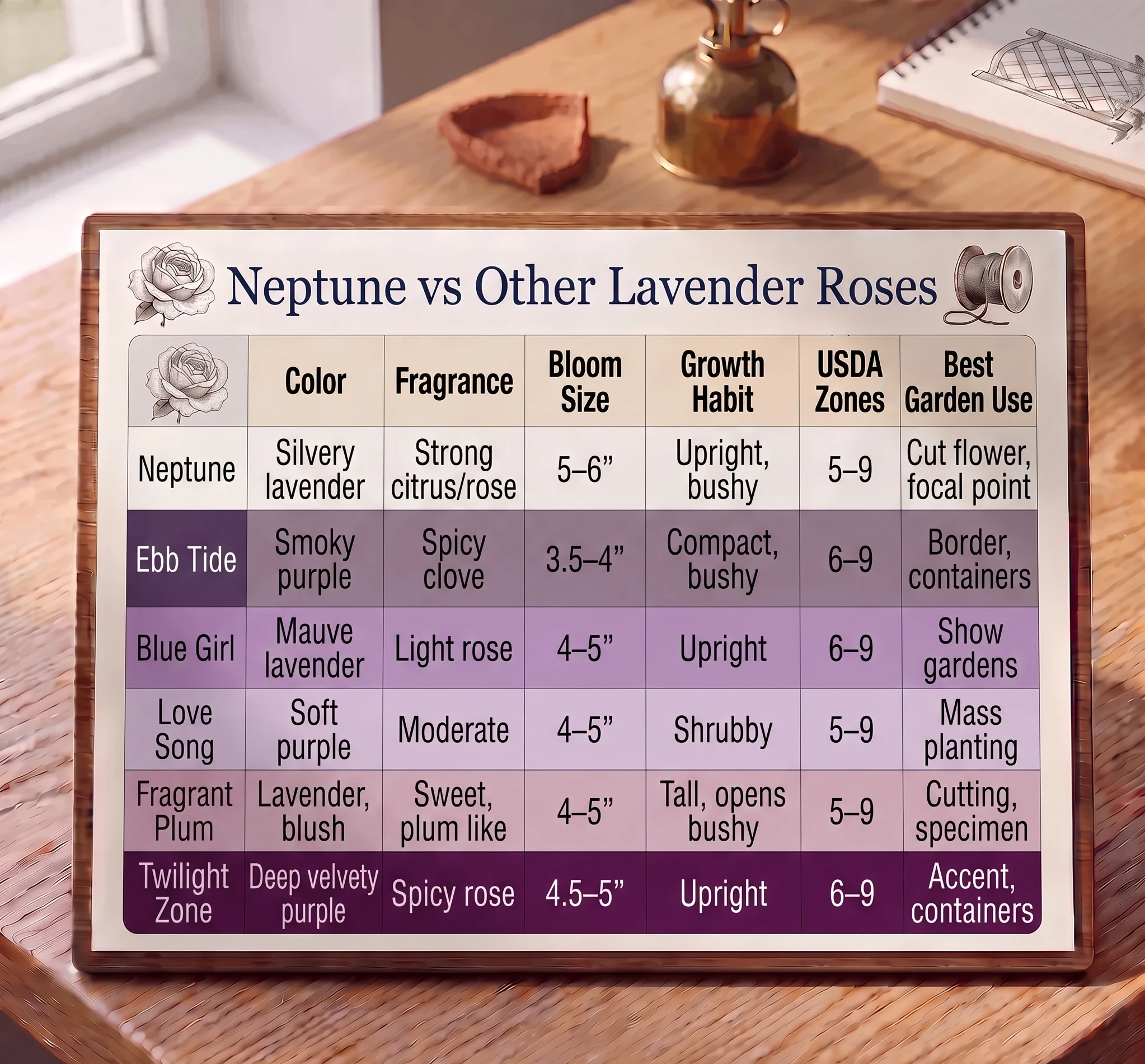
- Neptune vs Other Lavender Roses
- Who Should Buy Neptune Rose?
- Where to Buy Neptune Rose
- Frequently Asked Questions
- Final Verdict
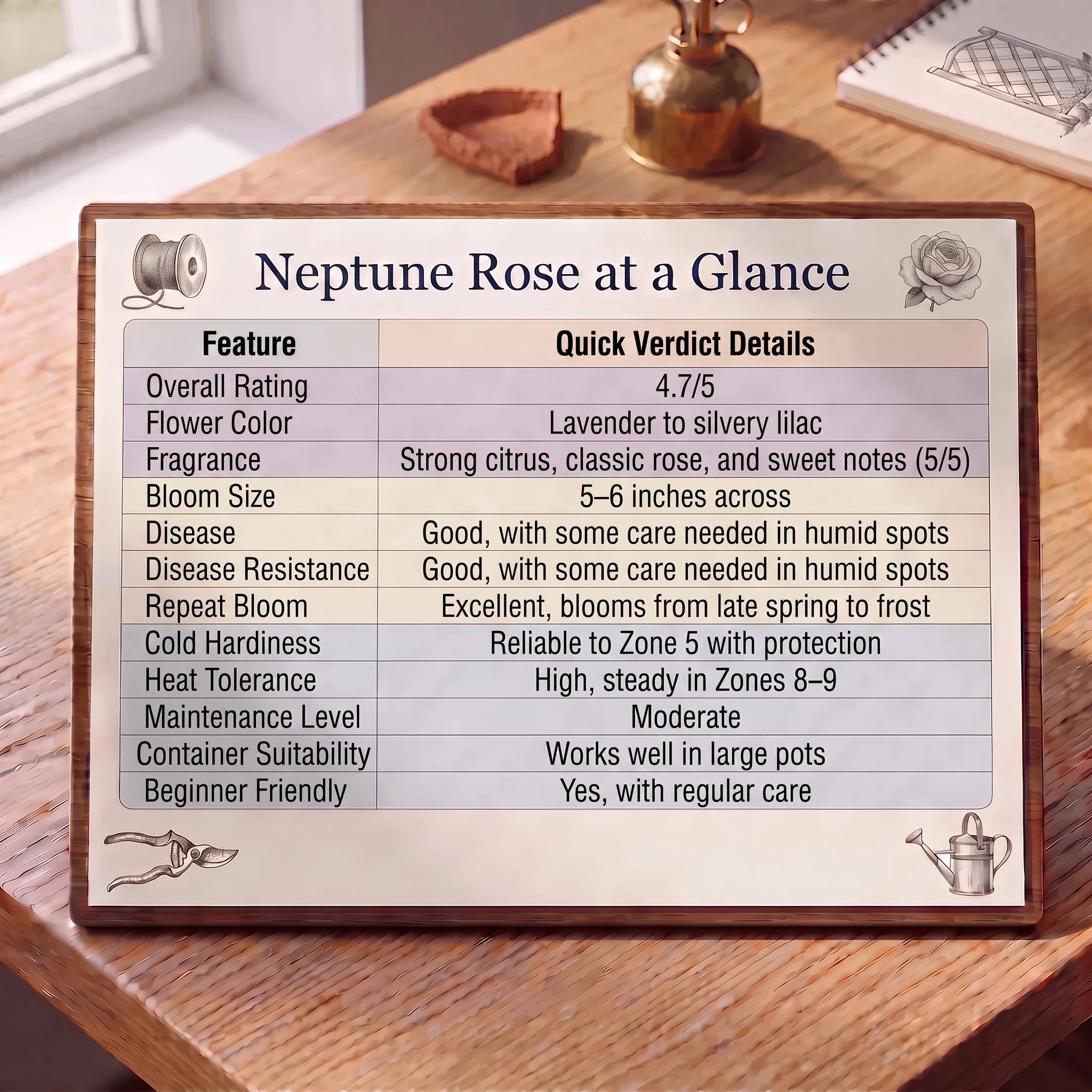
Neptune Rose at a Glance
- Botanical Name: Rosa ‘Neptune’
- Rose Class: Hybrid Tea
- Breeder: Jack E. Christensen (introduced 2003)
- Flower Color: Lavender (silvery lilac, can fade with age or sun)
- Fragrance: Strong, citrus rose blend
- Bloom Size: 5–6 inches
- Mature Height: 4–6 feet
- Mature Spread: 3–4 feet
- USDA Hardiness Zones: 5–9
- Blooming Season: Late spring to fall, repeats plenty
- Growth Habit: Upright, bushy
- Sun Requirements: Full sun (6+ hours), afternoon shade helps in hottest zones
What Makes Neptune Rose Special?
Neptune has a bunch of cool features that make it worth considering for any flowerbed or fragrant border.
The blooms themselves are huge, easily 5 to 6 inches wide, with that classic high centered hybrid tea form you see in flower shows.
The color starts off a silvery lavender, sometimes with a blush of pink, then settles into a lilac that glows against deep green leaves.
Each flower sits on a long, sturdy stem perfect for cutting.
Repeat blooming means you will get waves of color and fragrance, from late spring all the way to frost if you keep up with dead-heading.
Neptune is also known for its striking presence in the garden.
The bush has enough heft to be a good anchor in a border or as a statement piece in a container.
For anyone obsessed with having fragrant, exhibition quality blooms, Neptune really delivers, offering both the perfume and the elegant hybrid tea shape that is tough to find in other lavender varieties.
Flower Color and Bloom Characteristics
Bloom Color: Neptune’s blooms start as a pale, silvery lavender that looks almost blue in morning light.
As the season goes on or as flowers age in the sun, the outer petals can fade to a lighter lilac or pick up a pinkish tinge.
On cloudy days or in cooler weather, the color stays deeper and richer. In full sun and the heat of midsummer, the outer petals lighten, but the inner heart of the bloom keeps its lavender tone.
You will notice that the changing color brings a neat variety to cut bouquets and flower beds alike.
Flower Size And Petal Count: Each flower gets impressively large, easily topping out at 5 or even 6 inches across. Neptune tends to produce one huge bloom per stem (occasionally doubles), with a formal, well shaped center. The petal count ranges from 25–30.
Bloom Form: Classic high centered hybrid tea, great for arrangements or show benches. The flowers tend to open slowly, so you get plenty of time to enjoy their full beauty and fragrance outdoors or in a vase.
Repeat Bloom Performance: With good care, Neptune will cycle through flushes. Expect the heaviest bloom in late spring and again in early autumn, plus scattered flowers in between.
Vase Life: Neptune lasts 5–7 days in water when cut at the tight bud stage, especially if harvested early in the morning.
Fragrance Review
If fragrance is your top priority in lavender roses, Neptune really stands out.
The perfume is instantly noticeable when you walk by; no need to bury your nose in the bloom to catch it.
I always get a strong initial hit of citrus (imagine fresh orange peel or lemon zest), layered with an old fashioned damask rose aroma and a sweet, almost candy like finish.
It is a complex scent and super pleasant, not sharp or powdery the way some lavender roses can be.
I find the fragrance is strongest mid morning, just as the dew is drying, and again in the early evening when the sun starts to dip.
On hot afternoons, the scent gets a little lighter, but it never vanishes.
Versus other fragrant hybrid teas like Fragrant Plum or Twilight Zone, Neptune edges them out for depth and quality of scent.
Fragrance rating: 5/5 – sweet, rich, and unmistakable in the garden or on the kitchen table.
Growing Neptune Rose in USDA Hardiness Zones 5–9
USDA Zone 5
Neptune will survive and bloom in Zone 5, but takes a little care through winter.
Mounding extra mulch around the base in late fall helps protect against deep freezes.
Try to plant Neptune where snow tends to settle, as the blanket helps insulate canes.
Expect slower spring emergence, then normal growth and bloom by late spring.
Without winter protection, canes may die back, but strong roots usually push new growth from the crown.
USDA Zone 6
Warmer winters and longer spring mean Neptune wakes up sooner.
With a sunny spot and weekly watering, you will get big, fragrant blooms from late May onward.
Good air circulation and mulching keep disease low.
USDA Zone 7
Growth is even more vigorous, and by midsummer the bush is packed with flowers.
Spring pruning and regular deadheading reward you with excellent repeat blooms.
Watch for black spot if you have humid summers and thin inside growth for airflow.
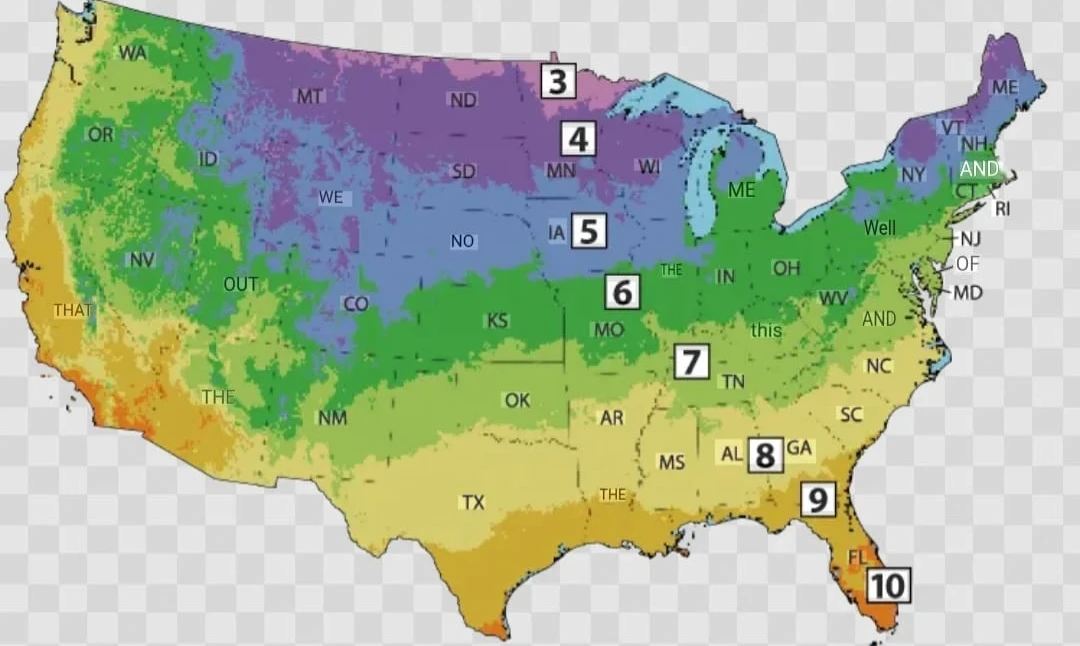
USDA Zone 8
Neptune really thrives here, pushing new buds quickly after early spring pruning.
In the hottest parts of summer, providing afternoon shade helps prevent faded color and heat stress.
Stay on top of deep watering and feeding for lush results.
USDA Zone 9
Steady heat means the blooms keep coming, but the petals can fade sooner in direct, hot sun.
Morning sun and light afternoon shade work best.
Increase watering during dry stretches; these big blooms drink up a lot during peak heat.
Soil Requirements
Neptune likes rich, well drained soil with plenty of organic material.
I always work in a couple of shovelfuls of compost or aged manure and check that the drainage is solid.
Soggy ground leads to root rot. Aim for a soil pH between 6.0 and 6.5 (slightly acidic) for best results.
If you are starting a new bed, loosen the soil at least 18 inches down and wide enough for good root spread.
Sunlight Requirements
This rose loves sun.
To get the richest color and strongest fragrance, Neptune needs at least 6 hours of direct sunlight each day. In the hottest climates (Zones 8–9), a couple hours of late afternoon shade helps protect the blooms from fading or scorching.
Too much shade means fewer blooms and less scent, so pick your location wisely.
Water Requirements
Watering deeply is key, especially for young plants as they establish in their first year.
I usually soak the root zone once a week, aiming for about 1–1.5 inches of water each time.
Drip irrigation is my favorate as it does not wet the leaves which in turn causes mildews.

In sandy soils or hot zones, you may need to bump that to twice a week.
Neptune is pretty drought hardy once settled, but regular, deep watering gives the best bloom and fragrance.
Avoid watering overhead, because wet leaves invite fungus and disease.
Fertilizing Neptune Rose
Spring feeding gives Neptune a big boost.
I like to use a slow release organic rose food right as buds start swelling, then another light feeding in early summer after the first flush of blooms.
Whether you go organic (like alfalfa or seaweed based) or synthetic is up to you; either works as long as you follow directions.
Skip late summer fertilizer, as new growth at that time is vulnerable to early frost.
Too much feeding, especially high nitrogen products, can give you leaves at the expense of blooms and scent.
Pruning Guide
Annual spring pruning helps Neptune put up big blooms and stay healthy.
I take out anything dead or damaged, then trim the bush back to 12–18 inches above the ground, cutting just above outward facing buds.
During the season, snip spent flowers right above the first set of five leaves (deadheading) to keep the repeat blooms coming.
For cut bouquets, take stems early in the morning while buds are just starting to open; this gives the best vase life and encourages more shoots.
In the north, tidy up dead or crossing wood in late autumn as you prep for winter.
Disease Resistance
Neptune is considered pretty disease tough, but any hybrid tea benefits from a little backup.
It holds up to black spot and powdery mildew, especially if you plant with space for airflow and avoid splashing water on leaves.
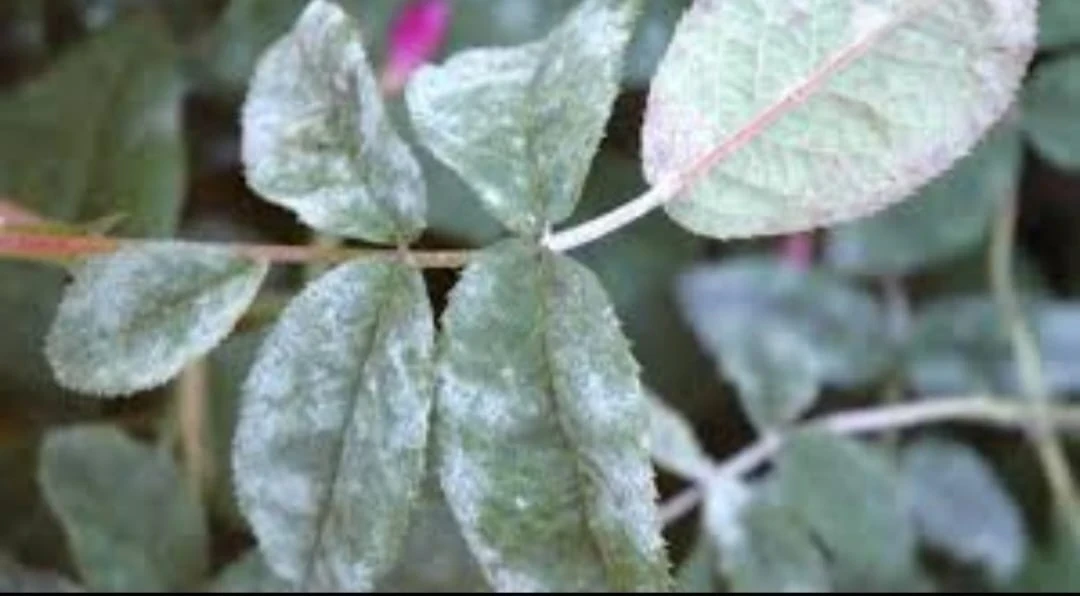
A good mulch layer helps keep spores from bouncing up. In humid seasons or crowded beds, I occasionally use an organic fungicide preventatively; nothing too fancy, just a quick spray after summer storms.
Rust is rare in my experience, but keep an eye out if you get long, wet springs.
Is Neptune Rose Suitable for Containers?
Neptune does well in containers, provided you give it space to spread out. Choose a pot that’s at least 18 inches wide and deep.
Go for a high quality rose or shrub potting mix, and use slow release fertilizer mixed in or added as a top dress.
I keep containers in a spot that gets strong morning sun and just a touch of afternoon shade.
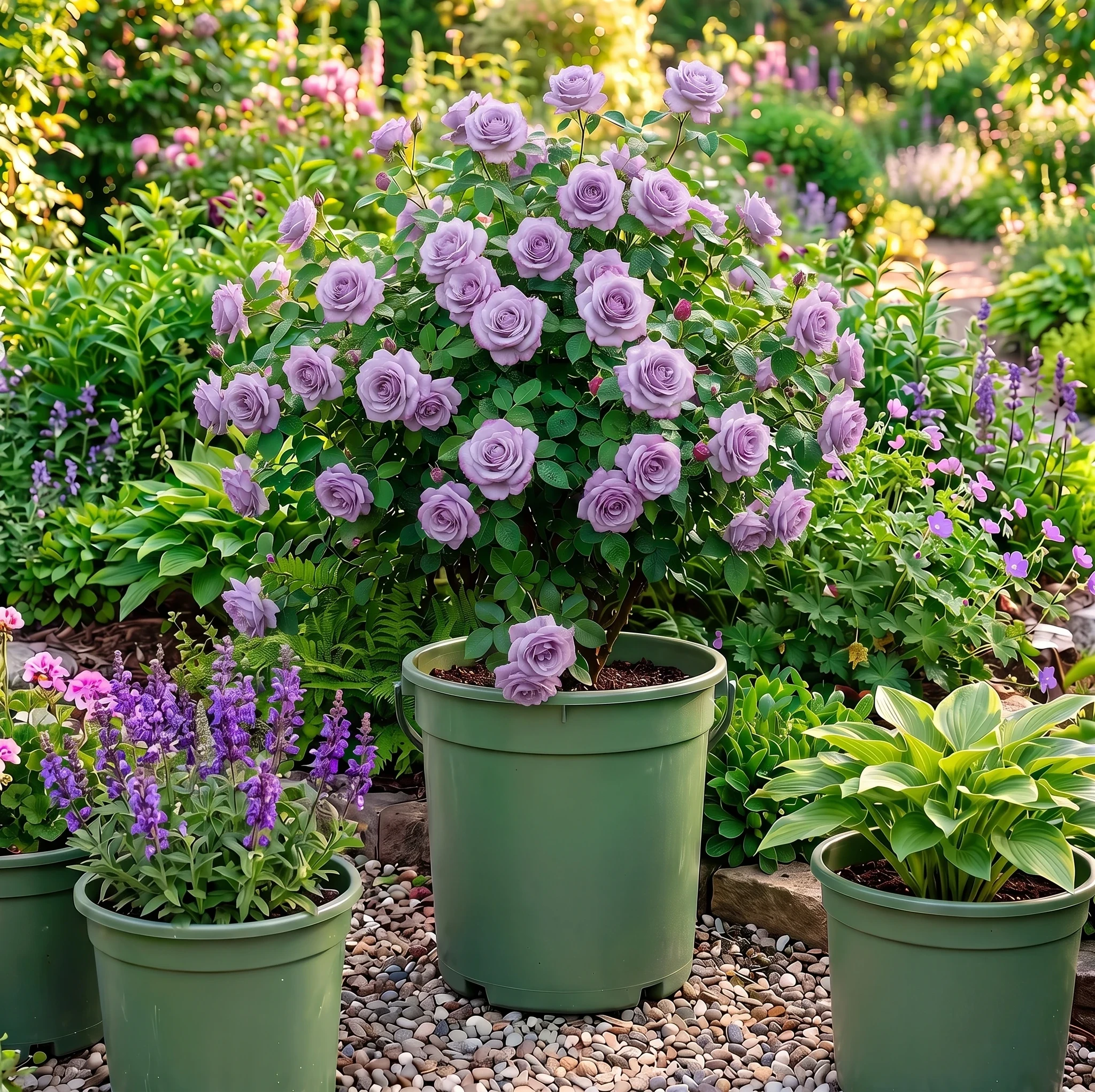
Expect to water more often, since big blooms and pots dry out quickly.
In cold zones, slide your pot into a sheltered, unheated garage or bury it in compost to overwinter safely.
Garden Design Ideas
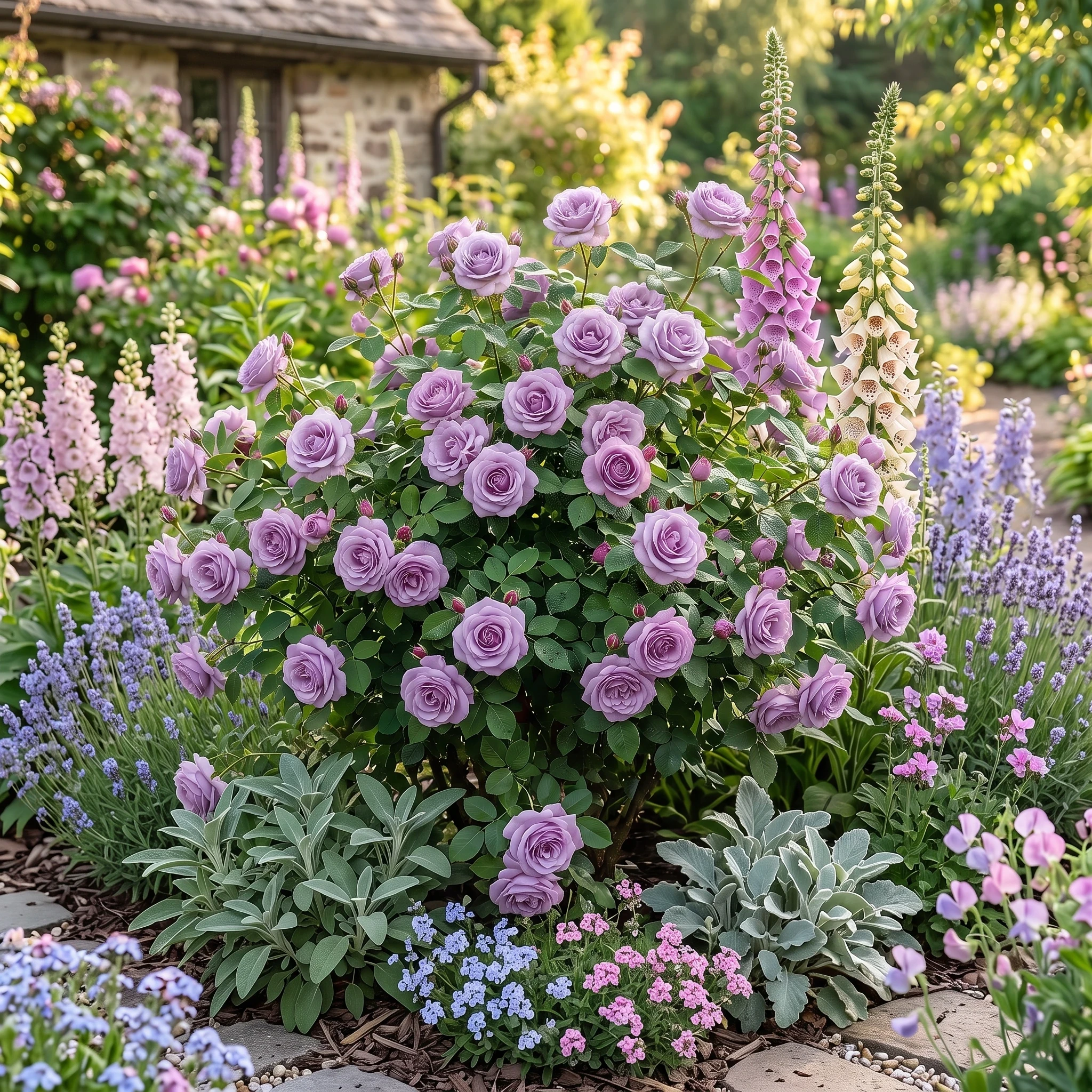
Neptune looks at home in lots of garden styles, from formal rose parterres where the lavender blooms pop against low hedges, to loose cottage gardens tangled up with catmint and daisies.
I love tucking Neptune into fragrant borders or moon gardens. Its pale color and scent stand out in the evening.
It is also a star for cutting gardens, since the long stems and robust perfume make it a regular in my kitchen bouquets.
For mixed perennial borders, Neptune pairs beautifully with ornamental grasses like blue oat grass or feather reed.
The grass movement highlights the rose’s upright habit and softens the transition between shrubs and flowering perennials.
If your climate allows it, plant a trio of Neptunes together for a truly eye-catching display.
Mass planting increases both the color impact and the collective scent, attracting more pollinators.
You can even edge their bed with white alyssum or blue annual lobelia for extra contrast.
Best Companion Plants
- White Salvia
- Catmint (Nepeta)
- Lavender (English or Spanish)
- Russian Sage (Perovskia)
- White Shasta Daisy
- Silver Artemisia (Powis Castle or Silver Mound)
- Boxwood (for low, evergreen structure)
These companions keep the color scheme soft and make the lavender flowers pop.
They also help with pest management and support pollinators.
For a fragrant garden, combining Neptune with other scented plants like dianthus or scented-leaf geraniums takes your outdoor space up a notch and makes summer evenings magical.
Pros and Cons
Pros:
- Knockout fragrance you can smell from afar
- Large, beautiful lavender blooms
- Excellent for cutting and arrangements
- Reliable repeat blooming
- Eye-catching garden presence
- Performs in a wide range of USDA zones
- Strong, sturdy stems for vase and show
Cons:
- Needs regular deadheading and care for best performance
- Large flowers can get wrecked by heavy rain
- Benefit from some fungicide spray if black spot is common in your area
- Can outgrow smaller spaces unless pruned
Who Should Buy Neptune Rose?
Neptune is a rock solid pick for people who crave fragrance, love hybrid tea form, and need a rose that performs well across USDA Zones 5–9.
If you make bouquets regularly or just love popping big, showy blooms in jars, Neptune brings the wow factor every time.
It is also really satisfying for collectors or anyone building an exhibition style bed. Those perfectly shaped flowers really stand out.
If low maintenance is your only priority or your garden has barely any space, you might want a smaller, easier care shrub rose instead.
For everyone else, especially gardeners chasing after scent and color, Neptune does not disappoint. Its ability to thrive in various climates, along with its massive blooms and scent, makes it a star for both home gardeners and floral designers.
You will get the full hybrid tea rose experience with an extra dose of lavender coolness.
Where to Buy Neptune Rose
Look for strong, green canes and a solid root system; whether you are buying bareroot or potted.
Bigger plants bounce back quicker and flower the first season. Check plant tags or descriptions for your USDA zone, and avoid early shipping if your ground is still frozen.
Most established online nurseries (like Nature Hills) help guide buyers with clear shipping schedules, plant care tips, and zone selection.
Do not hesitate to ask sellers for a recent photo of the plant, especially for local pickup or specialty rose nurseries.
If you are shopping locally, try specialty nurseries or farmers markets in spring.
Sometimes you can stumble upon a Neptune in a less expected place; these plants usually adjust to your local climate faster.
When in doubt, check in with experienced rose growers or local gardening groups who might know the best sources in your area.
Frequently Asked Questions
Is Neptune Rose truly lavender?
Yes. Neptune is one of the clearest true lavender hybrid teas. The color can switch from silvery lavender in cool weather to lilac with pink edges in midsummer.
How fragrant is Neptune Rose?
Neptune has a strong, easily noticeable fragrance with citrus and classic rose notes. You can count on this rose to scent your garden or home without any effort.
Does Neptune bloom repeatedly?
Definitely. Neptune will bloom in flushes from late spring until frost if you keep up with deadheading.
Is Neptune Rose suitable for containers?
Yes; just make sure your pot is at least 18 inches wide and deep, and water more often during hot spells.
How tall does Neptune Rose grow?
It typically grows 4–6 feet high and around 3–4 feet wide when mature.
Is Neptune disease resistant?
Pretty good for a hybrid tea, with some care and attention to airflow and watering. Occasional fungicide helps in humid spots.
Which USDA zones are best for Neptune?
Neptune performs very well in Zones 5–9 with a bit of winter protection at the colder end.
Does Neptune make a good cut flower?
Yes. Long stems, big blooms, and lasting fragrance make it a winner for fresh arrangements.
Is Neptune better than Ebb Tide?
Depends what you want. Neptune is bigger and more strongly fragrant, while Ebb Tide is darker, smaller, and more compact for containers and borders.
How much sunlight does Neptune need?
At least 6 hours a day; more is better. In hot southern gardens, some late afternoon shade keeps the color from bleaching.
Final Verdict
Neptune is one of the top choices out there for anyone wanting outstanding fragrance, big hybrid tea blooms, and true lavender color in USDA Zones 5–9.
The repeat blooming habit, reliable garden performance, and impressive vase life bring plenty of joy to both garden and home.
Regular care (like pruning and deadheading) keeps the bushes looking great, and while it does need more attention than some easy care landscape roses, the rewards are well worth it.
If you are hunting for a beautiful, fragrant centerpiece or a cut flower star, Neptune is definitely worth adding to your list.
I recommend it for fragrance hunters, collectors, hybrid tea fans, and anyone interested in unusual rose colors that actually perform for American gardens.
If you are ready for more ideas, check out my super detailed guides on rare-colored roses and track down other lavender stars that can step up your garden game.
Enjoyed this review?
Check out my in depth guides to rare rose colors and see how Neptune’s lavender cousins measure up.
Worth a look if you want more inspiration or new ideas for your rose garden:
- Best Unusual Rose Colors for American Gardens: 12 Rare Roses for USDA Zones 5–9
- Ebb Tide Rose Review
Happy gardening !!!!!!!!!!
Here’s a little transparency: Our website contains affiliate links. This means if you click and make a purchase, we may receive a small commission. Don’t worry, there’s no extra cost to you. It’s a simple way you can support our mission to bring you quality content.”
Wow, another great rose color! I just read your review about the Ebb Tide rose, but this one is stunning as well. The sheer variety of roses is always amazing to me.
Once again, you were diligent in giving all the pertinent information that is helpful to a gardener. Does this rose pair well with the Ebb Tide? I think I splash of purple and lavender would be beautiful.
– Scott
Hi Scott,
Thank you once again for your thoughtful comment!
I am really super excited you enjoyed both the Ebb Tide and Neptune rose reviews.
I completely agree with you—a combination of Neptune’s soft lavender blooms and Ebb Tide’s rich, deep purple flowers creates a stunning display.
The contrast between the two colors is beautiful, and because both varieties are highly fragrant, planting them together can create a garden that’s as delightful to smell as it is to look at.
The main thing to keep in mind is to give each bush enough space for good air circulation and ensure they receive at least six hours of direct sunlight each day.
With proper care, they complement each other wonderfully in borders, rose beds, or mixed perennial gardens.
Thank you again for following along with the series and for your great question.
I hope you have the opportunity to grow both varieties—they really do make an exceptional pairing.
Happy gardening!