
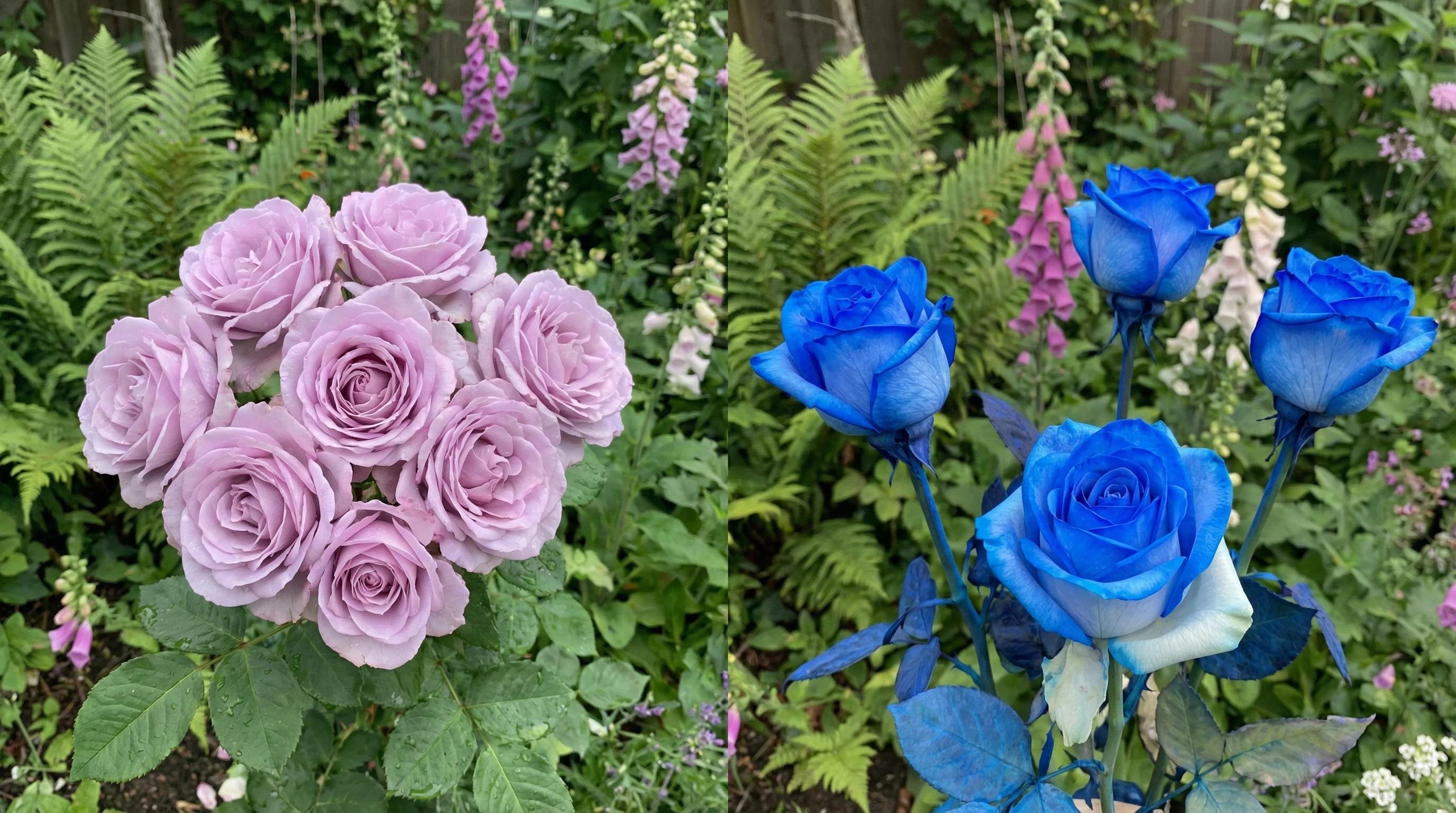
Blue and lavender roses get gardeners talking, and for good reason.
Their unique colors grab attention at garden centers and online, with dreamy Instagram shots showing off shades that almost look too pretty to be real.
But there’s a lot of confusion between “true blue” roses and those with soft lavender or purple tones.
I’ve seen plenty of home gardeners left scratching their heads over what’s authentic, what’s rare, and which is actually possible to grow in their own backyard.
This guide gives you straight-up answers by comparing blue and lavender roses in terms of rarity, authenticity, and whether growing either one is something you can realistically do.
If you’re curious about more offbeat blooms, you can check out Unusual Rose Colors: A Complete Guide or check out even more options (and their stories) in Purple & Lavender Roses – Unique Varieties and Their Meanings.
The Science Behind Rose Color
Why True Blue Roses Don’t Occur Naturally
There’s a simple scientific reason you won’t find a “true blue” rose in nature.
Roses just don’t have the gene needed to create delphinidin, the pigment behind most blue flowers.
Instead, roses make pigments called anthocyanins, but the kind they produce leads to reds and purples, not a clear, sky-toned blue.
Sometimes, soil pH can nudge rose colors toward mauve or purple, but never to an actual blue.
Even though you see blue roses in floral shops or online, these are usually dyed or altered in a lab. Biology just doesn’t allow for a natural blue rose.
It’s pretty common to see marketing hype around “blue” roses, especially from sellers trying to cash in with seeds or bouquets.
The science isn’t on their side, which is why experienced gardeners know to be a little skeptical about these claims.
How Lavender Roses Get Their Color
Lavender, lilac, and mauve roses owe their shades to anthocyanin pigments, just a different type than the classic red kinds.
These pigments come through based on the plant’s genes, but I’ve found that weather plays a part, too.
Cool spring nights often make lavender tones deeper and crisper.
The light in your garden, or even the pH and nutrients of your soil, can tweak that color, sometimes making it look more silvery, purple, or pink.
Among oddly colored roses, soft lavender is the closest you’ll get to “blue” using classic breeding.
This is why, when you spot a rose labeled as blue but see something more silvery lavender in your own garden, it’s totally normal.
Lavender roses bring a unique vibe to gardens and bouquets, and their natural story is more interesting than any Photoshop trick.
Understanding Blue Roses: Real or Fake?
Dyed Blue Roses vs Genetically Modified Roses
The “blue” roses in most flower shops have been dyed, usually white roses soaked in a colored solution after they’re cut.
This makes them a fun novelty for events and bouquets, but you can’t grow a dyed rose bush in your garden and get blue blooms year after year.
The story changes a bit with genetically modified (GMO) roses, like the Suntory “Applause.”
Scientists built these by tinkering with plant genes to add some blue pigment, but the outcome is still more lavender than pure blue.
These are only available in certain places, mostly as cut flowers.
Home gardeners can’t yet buy plants or seeds legally for these GMO blue roses, and the price for blooms tends to be high.
Can You Grow Blue Roses at Home?
Here’s the real deal: blue rose seeds for sale online are usually a scam.
I hear from frustrated gardeners every year who were promised sky blue or royal blue roses and ended up with basic reds or pinks.
The only ways a real blue shade shows up in a rose is either from dyeing white roses after cutting or using tech that’s out of reach for backyard growers.
So if your gardening dream centers on blue roses, you may want to switch up your focus toward lavender types, which actually deliver a unique, otherworldly color, no tricks required.
For gardeners who care about authenticity, it’s also useful to know some countries regulate the sales of GMO plants, so even if you see special blue roses elsewhere, importing them often isn’t allowed.
All About Lavender Roses
Lavender Rose Varieties: What’s Out There?
Lavender roses aren’t just one thing.
They include shades from silvery lilac to mauve and even deep, smoky purples.
These hues naturally appear in certain rose families, like hybrid teas, floribundas, grandifloras, and some hardy shrubs.
Their color feels soft and elegant, and many gardeners tell me they find these tones almost magical on a dewy morning or cloudy afternoon.
Lavender roses usually stay true in color, but can switch up a bit based on temperature, sunlight, and soil minerals.
If you’re a fan of out of the ordinary colors, these definitely belong in your garden.
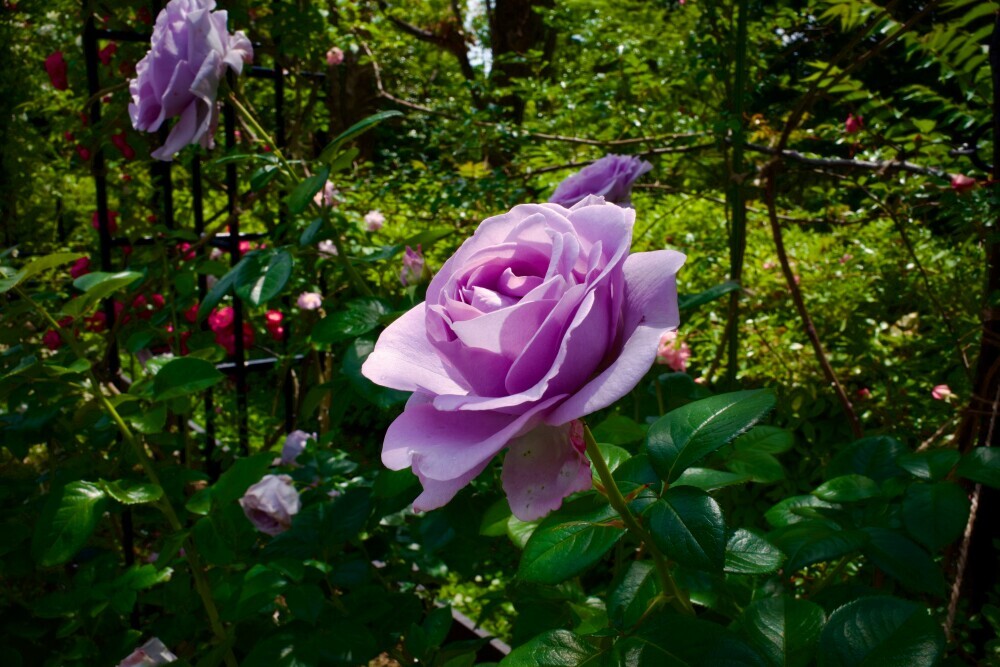
Popular Lavender Rose Cultivars Worth Trying
- ‘Blue Moon’: A classic hybrid tea with large, classic blooms and a sweet fragrance. Handles containers and garden beds well, though it prefers moderate climates.
- ‘Sterling Silver’: Known for silvery lavender petals and a strong, spicy scent. Has a reputation for being a bit fussy but stands out in any garden.
- ‘Lavender Ice’: A modern compact shrub with clusters of pale lavender flowers, great for smaller spaces or patio containers.
- ‘Angel Face’: This floribunda pumps out mauve blossoms with a ruffled edge and citrusy perfume, blooming in flushes through summer.
These roses grow fairly well in gardens, containers, or even greenhouses if you’re in a harsher area.
Their unique look makes them worth checking out if you want something a bit different from traditional rose colors.
Which Is Actually Rare?
How Rare Are Blue Roses?
From a science perspective, true blue roses don’t exist naturally, which makes them rare in a technical sense.
But since any “blue” bloom is either dyed or specially engineered, you just can’t get your hands on them for normal garden use.
Most of the time, blue roses pop up in novelty bouquets and special events, not backyard borders or flowerbeds.
Are Lavender Roses Rare?
Lavender roses are less common in nurseries than red, pink, or yellow types, but they are fully natural and available to ordinary gardeners.
For those who want something outside the usual, tracking down a lavender rose can take a little more effort, and sometimes you’ll pay a bit more, especially for a brand new or fancier variety.
Still, they are totally possible to buy, plant, and grow at home.
Getting Your Hands on These Roses: Real-World Availability
Blue roses, the dyed or GMO kind, are almost always sold as cut flowers, not as plants for your garden.
That makes them out of reach for most gardeners.
Lavender roses, though, can be ordered from specialty nurseries, mail-order catalogs, or at local garden centers with a wider selection.
On price, lavender roses sometimes cost a bit more up front, but the investment pays off if you want an unusual, living plant.
Blue roses as cut flowers are typically pretty expensive, since they are processed and often shipped from specialty growers.
Between the two, lavender roses are the realistic choice for gardeners who want to enjoy unique color in their own space year after year.
Which Rose Is Easier to Grow?
Can You Grow Blue Roses in the Garden?
If you’re hoping to fill a flowerbed with blue, there’s bad news here.
Blue roses, whether dyed or lab-made, can’t be grown from seed or cuttings in your garden.
Even the GMO “blue” roses out there don’t have true blue color and aren’t available to the public as live plants.
Some folks try to dye their own white roses at home (and that can be fun for bouquets), but it’s never a long-term garden solution.
How Do Lavender Roses Grow in Real Gardens?
Lavender roses need the same basic care as most modern roses: full sun, well draining soil, and regular water.
They often do best in climates with mild summers and lots of airflow, since hot and humid conditions can make them more prone to disease.
Some cultivars are a little fussier or more sensitive to black spot and powdery mildew, so I always keep an eye on them during damp weather.
A layer of mulch and a steady feeding schedule really helps boost bloom quality and keep the color looking its best.
While not as rugged as some classic reds or pinks, most healthy lavender roses can do well with a bit of extra care, especially if you choose disease resistant varieties or grafted plants from a reputable nursery.
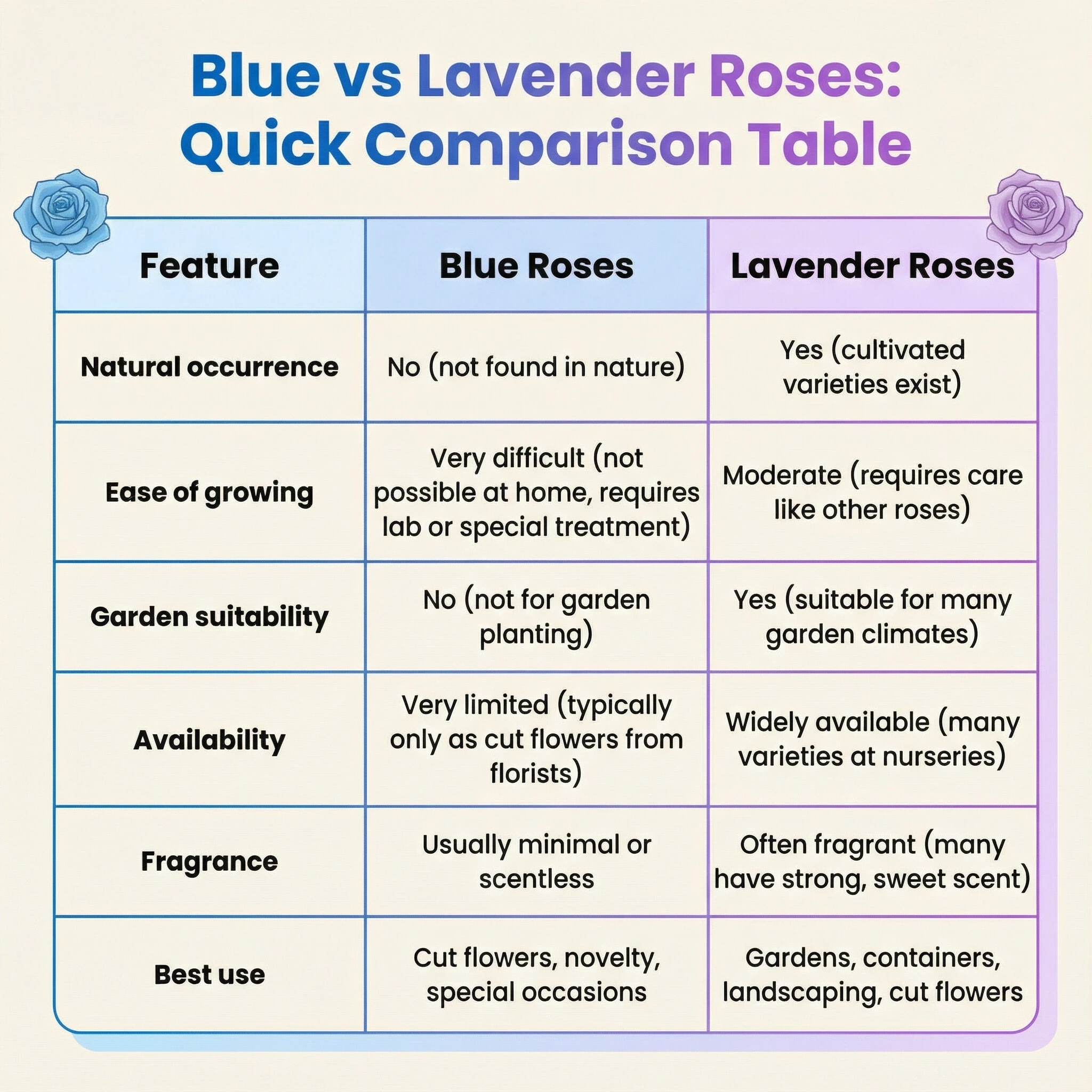
Fragrance & Looks: More Than Just a Color
One thing lavender roses have in spades is fragrance.
Many of the best varieties smell amazing, ranging from sweet, citrusy, or even spicy.
Dyed or lab altered blue roses usually don’t have any scent, since their base is often a less fragrant white rose or engineered flower.
Lavender roses also offer some cool tricks under different kinds of light.
Their color can look more blueish at dusk or in cool shade, creating what lots of gardeners call a “blue illusion” effect in garden beds.
If you care about variety, shades, and a garden that smells as good as it looks, lavender roses are tough to beat.
For more on color range and the mood these roses bring, I’d recommend checking out Lavender & Purple Roses – Unique Varieties and Their Meanings.
Which Should You Plant: Blue Roses or Lavender Roses?
Best Uses for Blue Roses
- You love novelty and want something unusual for a special occasion bouquet.
- You enjoy experimenting with cut flower dyeing projects at home.
- You don’t need a long term garden plant, just a cool floral conversation piece.
Best Uses for Lavender Roses
- You want an eye catching, living rose for your flowerbed, container, or border.
- You appreciate real fragrance, repeated bloom cycles, and authentic garden beauty.
- You prefer roses that thrive season after season and add genuine color to your landscape.
Buyer Mistakes to Avoid With Blue and Lavender Roses
- Believing “blue rose seeds” are real (they’re not; don’t waste your cash).
- Thinking that lavender roses turn blue with a fertilizer or gimmick.
- Assuming all lavender roses stay the same color in every garden or through the whole season. Temperature and soil can change things up a bit.
- Overfeeding roses in hopes of boosting their color (which can actually hurt the plant).
- Not checking disease resistance on fussier lavender cultivars if you live in a damp climate.
FAQs About Blue and Lavender Roses
- Are blue roses real or fake? True blue roses don’t occur naturally. Cut flower blue roses are dyed white roses, and the rare “blue” GMO varieties are mainly lavender toned and not sold as live plants.
- Can lavender roses turn blue? Lavender roses can sometimes look more blue in cool light or early evening, but they never develop pure blue petals.
- Why do lavender roses change color? Weather, soil, garden location, and age of bloom can switch up lavender shades toward pink or purple, and sometimes more silvery tones show up.
- Are lavender roses harder to grow than red roses? Many lavender varieties are a bit more sensitive to disease or climate, but with good care, they can be just as healthy. Choosing a robust cultivar makes a big difference.
- What rose color comes closest to blue? Lavender and mauve roses, like ‘Blue Moon’, are the closest natural shades to blue you’ll find in the rose world.
Which Is Truly Rare and Easier to Grow?
When it comes to actual gardening, lavender roses are the real option for anyone who wants an unusual, beautiful, and long lived plant.
Blue roses are mostly a novelty for those who love the idea, but don’t expect to grow them in your backyard.
Lavender types are available, surprisingly fragrant, and come in a range of cool shades close to blue.
If you want a rose that stands out and holds its own through the growing season, go for lavender.
Related Rose Resources
- Unusual Rose Colors: A Complete Guide
- Lavender & Purple Roses – Unique Varieties and Their Meanings
- Keep an eye out for future comparisons: Green and Black Roses, plus posts on repeat flowering roses for those who want more blooms per season.
Recommended extras:
If you want to take things up a notch with lavender roses, look for good mulch, well balanced rose fertilizer, and a disease control spray if you’re in a humid region.
Neem oil based insecticide for all nasty pests.
Take a step further by growing lavender roses in a passive greenhouse with a drip irrigation system.
Sourcing healthy plants from a trusted nursery can make the difference between frustration and a garden you love.