
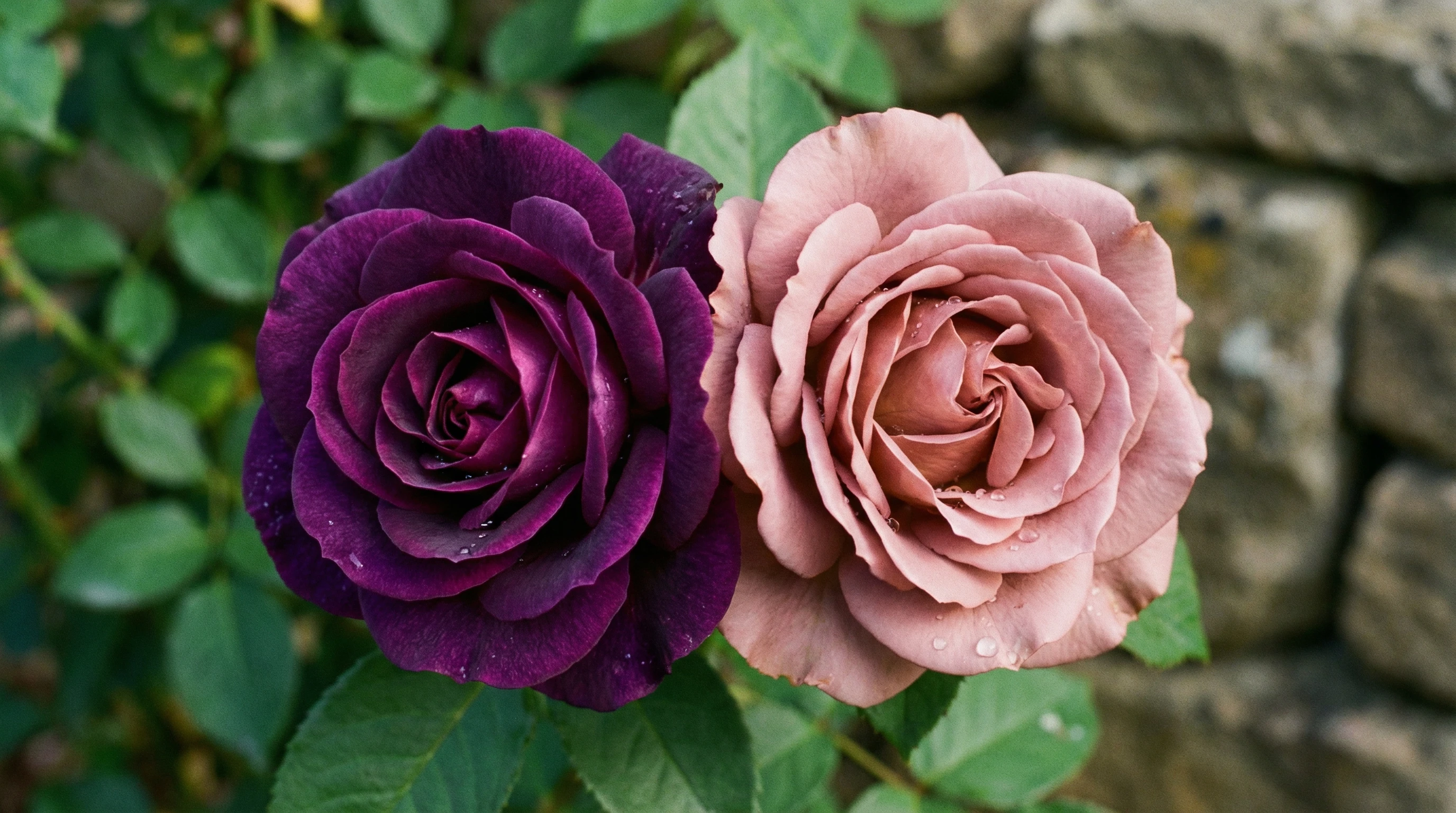
For most gardeners, rose colors are pretty straightforward.
You’ve got reds, yellows, and pinks. But when it’s time to add a purple rose or a mauve rose to a new bed, things get confusing fast.
I’ve seen plenty of people (myself included) wonder about the real difference between these two shades.
They’re often listed side by side in rose catalogs, and those online images rarely tell the full story.
But the distinction is real; it’s not just splitting hairs over what shade goes where.
Purple and mauve roses can set totally different moods in your garden.
The difference in color isn’t just about looks.
It also creates a different atmosphere in your space, especially when you blend them with other colors or garden designs.
Here, I’m breaking down the subtle science, garden experience, and real-life impact of purple versus mauve roses.
You’ll get the basics on why color matters, why these two get mixed up, and how making the right call can really freshen up your next planting bed.
Related guides worth checking out: Unusual Rose Colors: A Complete Guide | Lavender & Purple Roses – Unique Varieties and Their Meanings.
Why Purple and Mauve Roses Get Mixed Up
The confusion between purple and mauve roses shows up everywhere.
Whether you’re at your local nursery, scrolling through garden websites, or flipping through fancy catalogs, it’s common to see the terms tossed around as if they mean the same thing.
Lighting plays a big role here. The same rose might look deeply purple in the morning’s cool light but soften to a smoky hue by midday.
Photos are tricky too, as editing and screen settings mess with the colors. Even experienced gardeners sometimes question their choices as the season moves along.
Marketing is another culprit in the confusion.
To catch buyers’ attention, some breeders stretch their color descriptions. The actual horticultural terms may not match what’s on the tag or website.
This makes it key to figure out what’s going on with the words “purple” and “mauve” when it comes to roses—not just how they look online.
What Sets Purple Roses Apart
Color Chemistry: When a Rose Is Truly Purple
Purple roses stand out due to a strong dose of anthocyanin pigments. This creates deep, rich color drifting toward violet and plum.
That bold shade sometimes even looks a little blue, especially if the weather’s cool or the rose is in a shaded spot.
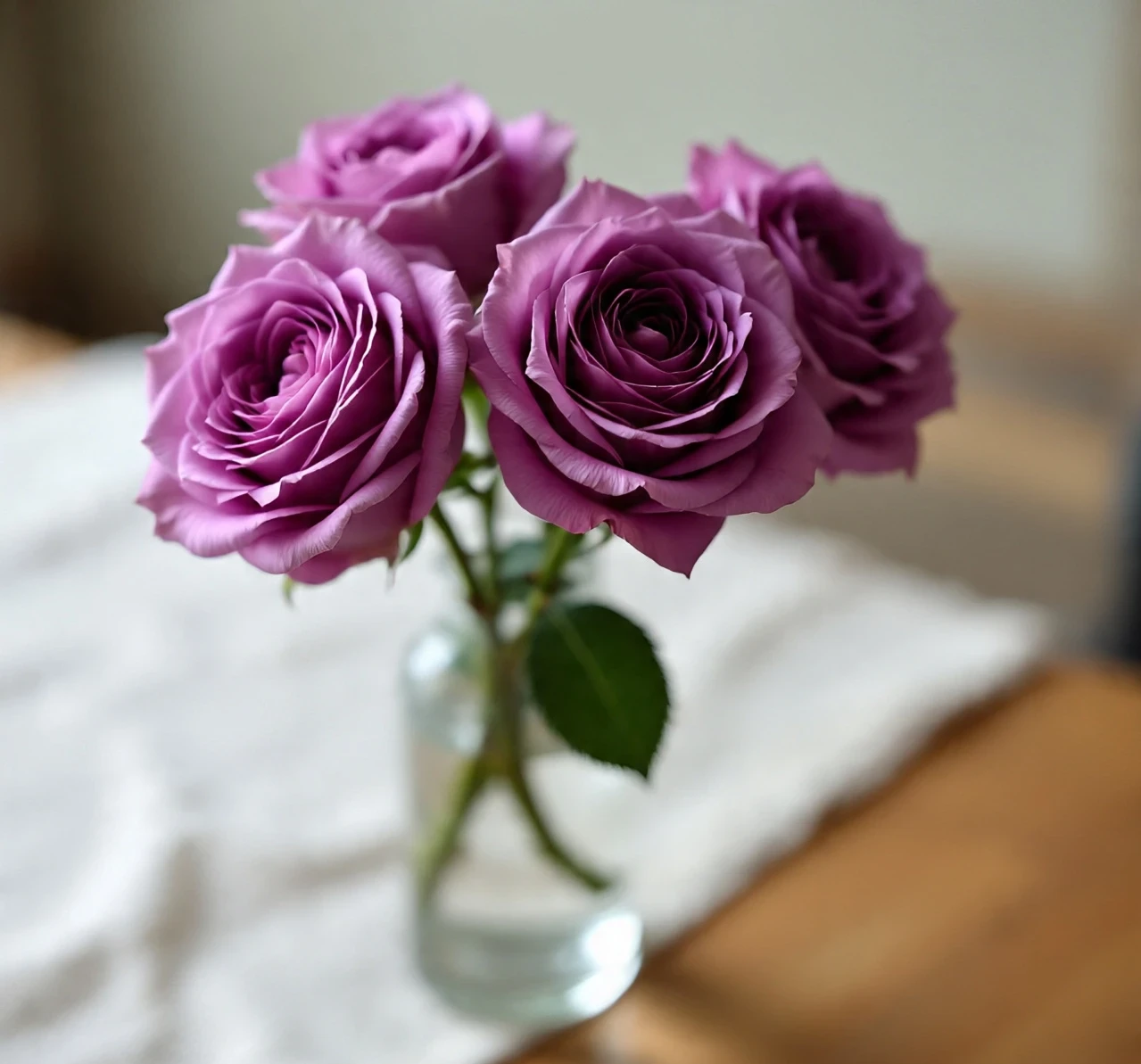 Cooler nights can deepen the color, giving an electric tone you’ll never see in softer varieties.
Visual Traits of Purple Roses
True purple roses make a statement in the garden.
They’re vibrant and dramatic, really popping against green leaves. It’s a fantastic way to create contrast, making these roses perfect as a centerpiece or border highlight.
They can feel regal, mysterious, or even a bit moody, drawing attention from anyone passing by.
Many growers who crave an eye-catching garden go with purple varieties to instantly grab attention.
Mauve Roses: Defining a Softer Shade
What Makes Mauve Different in Roses
Mauve roses, by contrast, are about subtlety.
Instead of a hit of vibrant purple, mauve brings in silvery gray, pink, or beige tones.
There’s less pigment, so the color feels more delicate and vintage—almost antique at times.
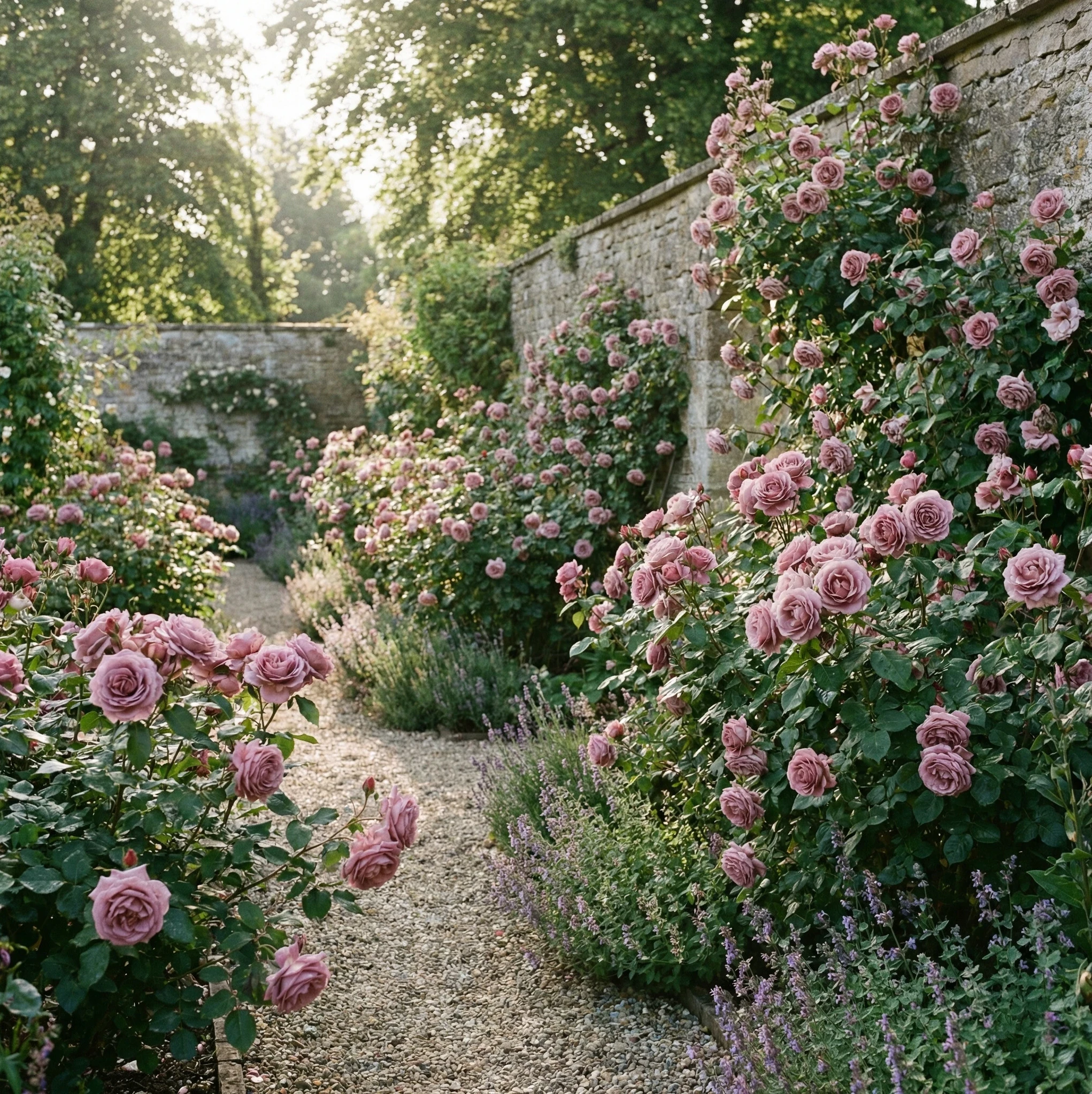
Mauve roses are famous for their ability to switch shades throughout the day, depending on sunlight and temperature.
That ever-changing palette gives them their unique allure.
Visual Traits of Mauve Roses
Mauve roses deliver a smoky, powder-soft look.
They blend right in with other flowers, lending a peaceful and romantic atmosphere.
While purple is bold and up front, mauve slips quietly into the background, adding depth and softness.
You’ll notice a garden with clusters of mauve roses feels calming, like stepping into a dreamy painting.
I often hear mauve roses called nostalgic or even wistful by fellow gardeners.
The Color Science: What’s Actually Happening?
Pigments and Soil Influence
What really causes the color differences in these roses?
Mostly, it’s the amount and type of pigment. Purple roses are loaded with anthocyanins for intense color.
Mauve roses, though, have less pigment and get extra undertones from other plant compounds, especially those that bring in a hint of gray or soft blush.
Soil makes a difference too. If you grow roses in acidic soil, purple tones become more vibrant. In alkaline soil, shades might turn lighter and shift towards mauve.
High heat and strong sunlight can fade any rose, but it’s especially tough on mauve.
They often lose their deepest color by noon on a hot day, returning to a dusty pastel as the sun sets.
Sun, Shade, and Season
No matter which variety you choose, outdoor conditions really affect the color.
Lots of sun or heat tends to lighten both purple and mauve roses, while cool nights help them keep rich hues.
As the garden season changes, so do the flowers.
The first big spring flush might be bold and dramatic, while midsummer blooms can look much paler. Sometimes, a “mauve” rose even looks pink for part of the year.
Popular Purple Rose Varieties
After an attention-grabbing splash of purple?
A few roses stand out year after year. ‘Ebb Tide’ sports a deep plum color and a spicy scent that fills the air.
‘Midnight Blue’ and ‘Night Owl’ are also garden staples, pumping out deep purple blooms on sturdy shrubs.
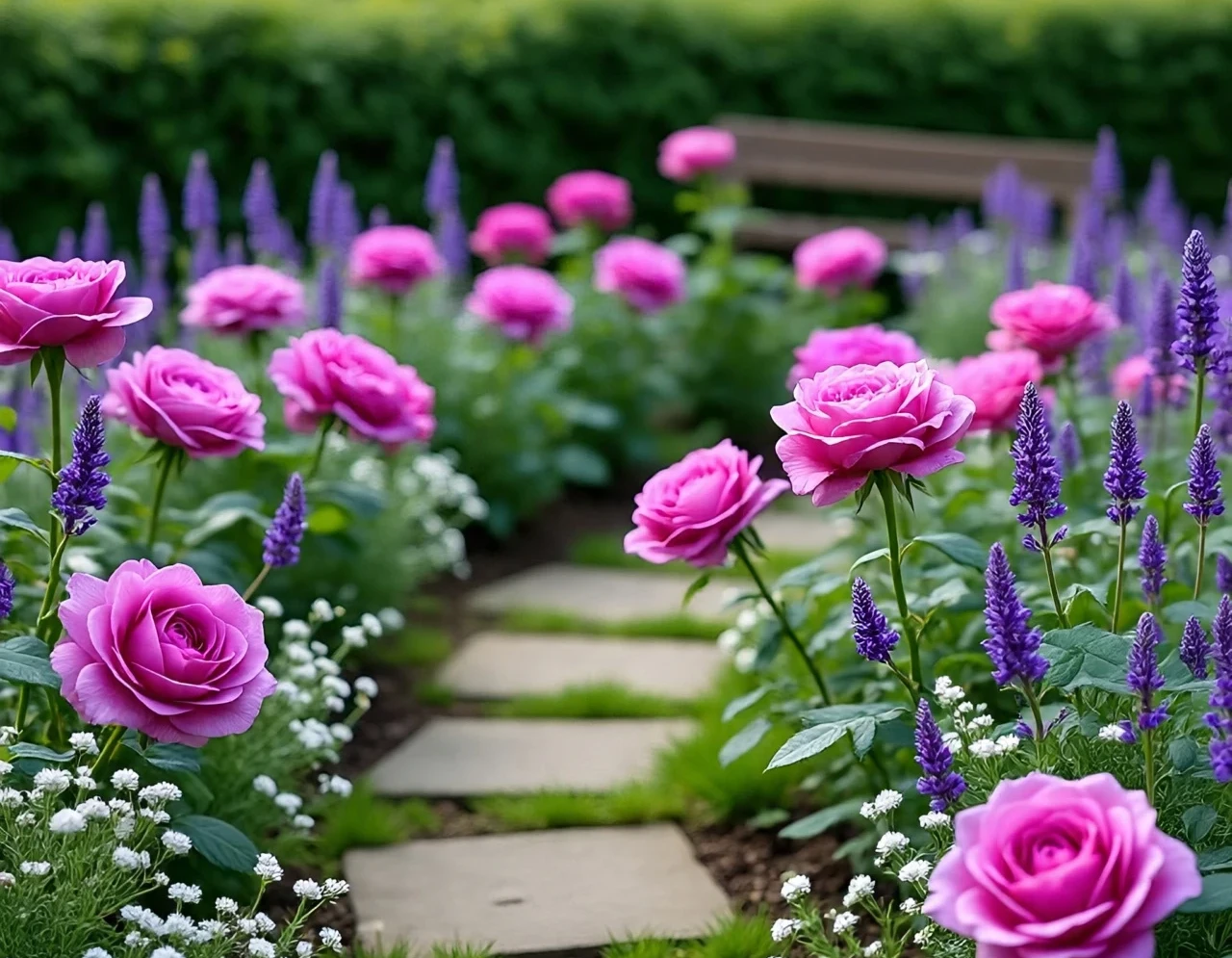
These roses are often bushy and mid-sized, producing lots of flowers surrounded by soft green leaves.
They work especially well in containers or as highlights in beds.
If you live somewhere with cooler springs and summers, the color lasts even longer and appears especially rich.
Favorite Mauve Rose Varieties
Mauve roses lean romantic.
‘Blue Moon’, ‘Charles de Gaulle’, and ‘Sterling Silver’ are all favorites that add that muted lavender vibe.
They bloom steadily through the growing season, though you’ll often see the color slip from blue-mauve to light pink in hot weather.
These blooms also tend to carry a stronger scent—perfect for cutting and arranging.
Mauve roses are a great fit for cottage gardens, soft natural layers, and dreamy mixed borders, partnering easily with pale blues, greens, and whites.
Making Garden Design Decisions
Purple Roses: When You Want Drama
Purple roses demand attention.
They work best in spots where you want the eye to land—a main entry, a showy container, or as a single standout in your yard.
Pairing purple roses with stark whites, silvery leaves like lamb’s ear, or plants with really dark foliage makes your whole display look even bolder.
If your style is clean, modern, or a touch formal, purple is for you.
Mauve Roses: When You Want Harmony
If you prefer your garden to feel peaceful, mauve is the way to go.
These roses mix beautifully with pastel perennials, wispy grasses, and delicate shrubs.
They round out natural or cottage garden designs and soften the scene.
You rarely have to worry that mauve will clash—it practically disappears into the group, letting every color shine in its own way.
How Rare Are They, Really?
Rich, pure purple roses aren’t common.
Breeders have spent decades chasing a true purple, and only a handful of varieties actually stay strong in normal gardens.
This rarity makes them more expensive and sought after. Mauve roses are easier to find and frequently turn up in rose collections as classic or vintage types.
They may be easier to buy, but fans love their unique style.
For many, purple feels exclusive, while mauve stands out for its refined, gentle layers.
Your choice depends partly on the kind of vibe you want in your yard.
How Do Purple and Mauve Roses Perform?
Growing Experience: Purple Roses
Purple roses are a little more particular about where they live.
They really dislike summer heat and bright afternoon light, which can strip their color fast.
Some purple types also face more fungal issues if the garden is humid. Cooler and drier climates help purple roses hold their vibrancy.
To keep the rich shade in hot areas, a layer of shade cloth on scorching days can give your blooms a major boost.
Growing Experience: Mauve Roses
Mauve roses are friendlier to grow.
Their color naturally shifts, so a little fading isn’t a big deal—it adds character.
Mauve types tend to shrug off different climates and generally don’t need much special attention.
Most of the time, they keep blooming and blending in, whether your yard is sunny, a bit shaded, or somewhere in between.
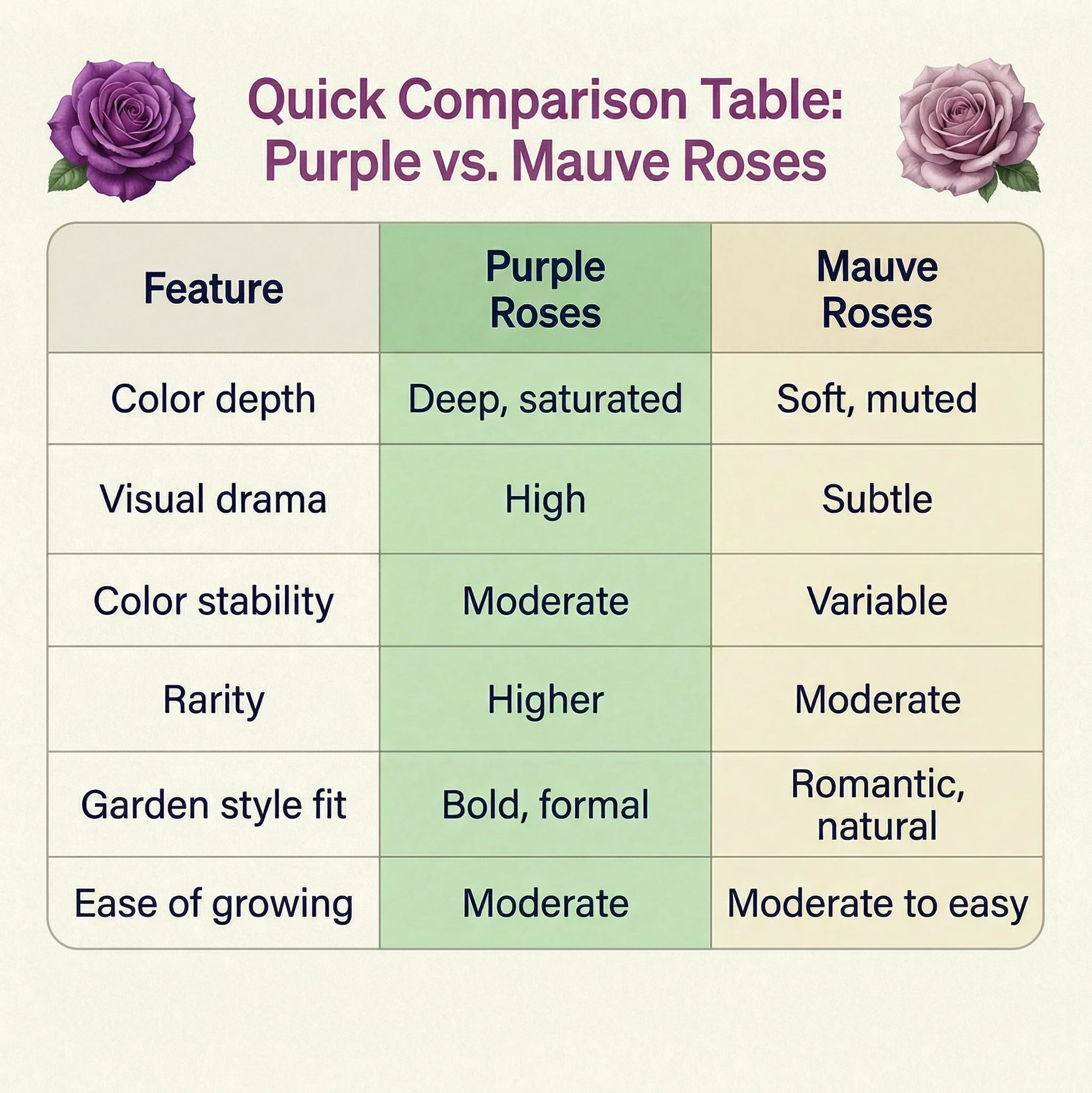
Symbolism and Emotional Vibe
Purple roses are loaded with meaning—royalty, mystery, admiration, and more.
The intense color comes across as almost magical, making it a top pick for special bouquets or garden moments where you want serious wow factor.
Mauve roses, with their faded charm, evoke feelings of gentle romance, nostalgia, and grace.
Choosing between the two can help set the tone for your space; it’s about more than just which color you like, but the whole look and mood you want to build.
Which Should You Plant and When?
Purple Roses: Great For
- You want bold focal points that instantly catch the eye
- You love rich, saturated colors that stand out
- Your garden style leans formal or dramatic, or needs a splashy highlight
Mauve Roses: Great For
- You appreciate gentler colors that fit right in with lots of plants
- You enjoy flowers that change with the weather and season
- You prefer relaxed, vintage, or romantic looks in the garden
Common Traps and Mistakes to Avoid
- Expecting mauve roses to hold a purple tone all season—these blooms are meant to shift and mellow out with time
- Planting purple roses in hot, sunny beds without any protection—intense light can fade the color fast
- Trusting all catalog or website photos—editing and lighting can really change how a rose appears
- Mixing purple and mauve roses at random, without a game plan—this can leave the look muddled instead of intentional
Frequently Asked Questions
Are purple roses the same as mauve roses?
Not exactly. Purple roses are deeper with saturated color, while mauve roses are softer, blending in gray or pink for a pastel feel.
Why do mauve roses change color?
Mauve roses have less pigment and are more affected by temperature, weather, and soil—they’re designed to shift gently as they bloom.
Which is rarer: purple or mauve roses?
True purple roses are harder to track down and often carry a higher price. Mauve roses are more common and available in more types.
Are purple roses harder to grow?
Some purple roses need extra care if you want to keep them vibrant, especially in the heat or if you get lots of leaf diseases.
Can soil change rose color from mauve to purple?
Soil acidity and nutrients can nudge a rose one direction or another, but the plant’s genetics matter most. You probably won’t swing a mauve rose to purple by tweaking soil alone.
Garden Upgrades: Where This Fits With Other Unique Roses
Curious about even more unique rose colors or more side-by-side breakdowns?
Check out: Unusual Rose Colors: A Complete Guide, Blue Roses vs Lavender Roses, Striped Roses vs Two-Tone Roses, and browse the Extremely Fragrant Roses series for some next-level cool rose inspiration.
If you’re looking to order roses online, give specialty nurseries a look—many carry rare purple or mauve types specifically.
Accessories like light shade cloth, organic mulch, organic fertilizers, and even pH adjusters can give your roses a boost.
Ask your local garden center what products they recommend if you want to experiment with colors.
Here’s a little transparency: Our website contains Amazon affiliate links. This means if you click and make a purchase, we may receive a small commission. Don’t worry, there’s no extra cost to you. It’s a simple way you can support our mission to bring you quality content.”